Alexander Baron is back!
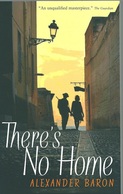
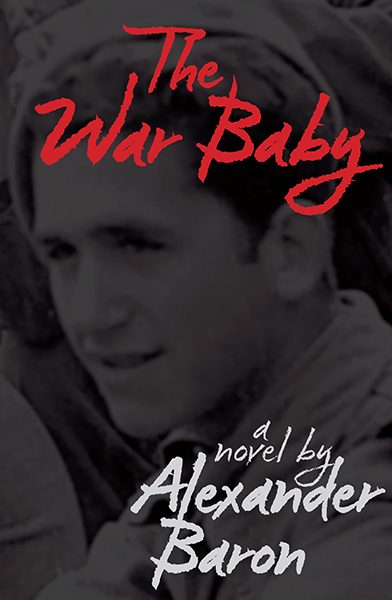
In recent years, many of Alexander Baron's novels - both his gripping accounts of the Second World War and his commanding London fictions - have been republished. From the City, From the Plough has been republished by the Imperial War Museum in its war classics series. A novel unpublished in Baron's lifetime, The War Baby, is now in print. His memoirs, Chapters of Accidents, have been published for the first time. I wonder whether even in Baron's lifetime so many of his books were in print at the same time. Baron is back in vogue!
And on this page, you will be get more of a sense of one of the most accomplished British writers about the 'poor bloody infantry' experience of war and of post-war London.
And on this page, you will be get more of a sense of one of the most accomplished British writers about the 'poor bloody infantry' experience of war and of post-war London.
|
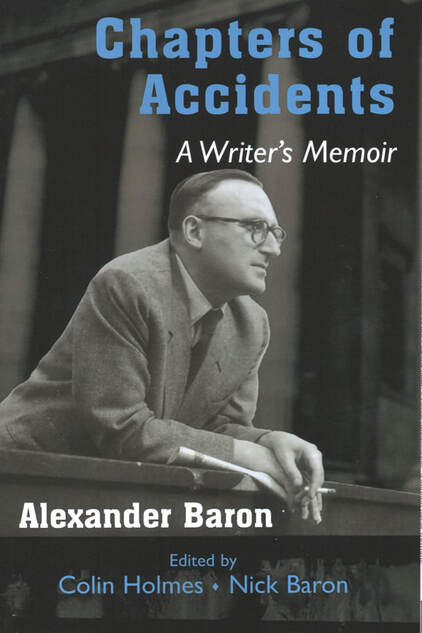
The publication of Alexander Baron's memoir Chapters of Accidents - the publishers are Valentine Mitchell and it sells for the very reasonable price of £16.95 - is a landmark occasion.
In this book, Baron reflects on his childhood and connection with the East End and his recruitment into and key role in the Communist Party (including a rivetting account of the CP's preparations for being banned during the early stages of the war) along with his wartime service, The memoir ends just as Baron makes the decision shortly after the Second World War to devote himself to writing. It's a wonderful book, handsomely produced, with many photographs and illustrations. The historian Colin Holmes provides a valuable introduction, and it's co-edited by Alexander Baron's son, Nick Baron. |
|
|
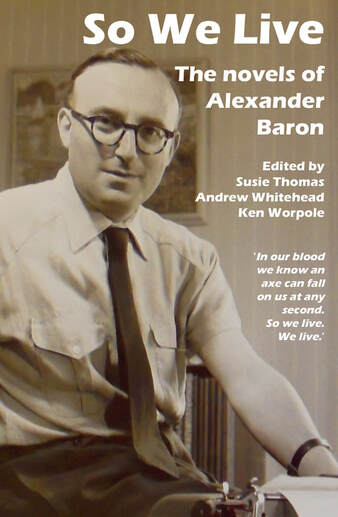
And now there's a compelling book about Baron - So We Live: the novels of Alexander Baron, edited by Susie Thomas, Andrew Whitehead and Ken Worpole.
The book also has contributions by Sean Longden, Nadia Valman and Anthony Cartwright. It's published by Five Leaves and contains six pieces about Baron as well as photos and brief extracts from his writing. So We Live also includes a 'walk round Baron's manor' of Stoke Newington with a map and commentary - and that's also available online. |
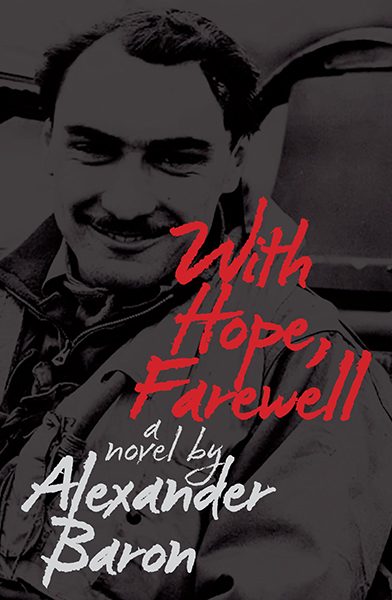
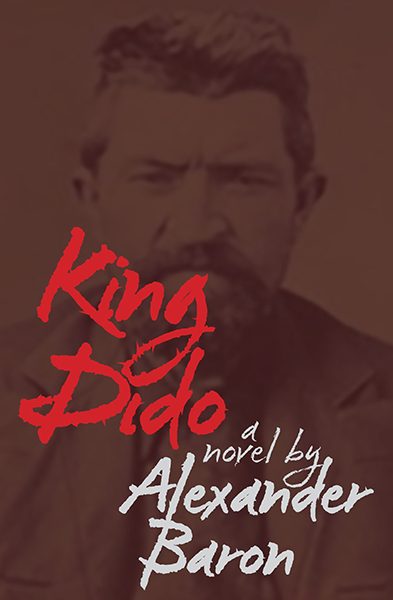
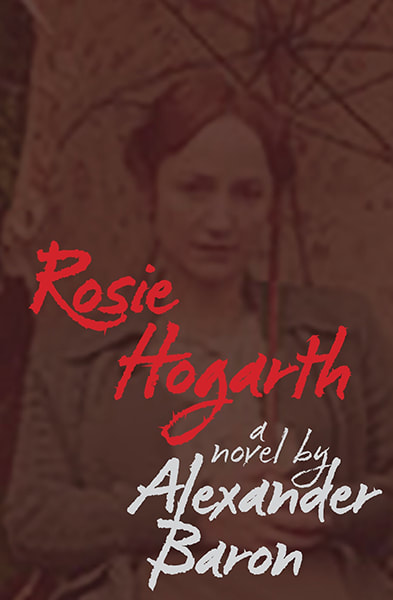
Five Leaves have also published or republished four of Baron's novels
|
|
|
|
Alexander Baron
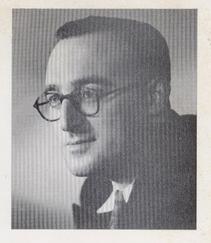
Alexander Baron c1952
Alexander Baron (1917-1999) was a commanding author of post-war London, renowned above all for The Lowlife, and also one of the most compelling novelists of the infantry man's experience of the Second World War. His first novel, From the City, From the Plough, sold massively on its publication in 1948. It was based on his own war service, fighting across France from the Normandy D-Day beaches, and won acclaim for depicting both the boredom and the brutality of the battlefield, and for its account of the strong sense of camaraderie among those brought together by combat. Baron's London novels - and click here for more about London in fiction - were similarly based largely on personal experience and observation. The Lowlife harked back to the street where he grew up on the cusp of Stoke Newington and Dalston - Rosie Hogarth is a compassionate evocation of a working class back street near Chapel Market in Islington - and King Dido, set in the early years of last century, recalled visits to grandparents in Spitalfields and Bethnal Green.
From Bernstein to Baron ... from the CP to screenwriting
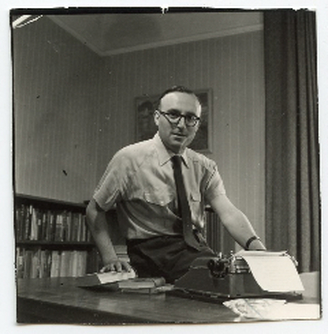
Baron was known as Alec Bernstein until he began to be published. He became active in left-wing politics in north London while still a teenager, and had a close allegiance to the Communist Party for fifteen years. During the war, his links with the CP diminished, but it was only in the late 1940s - just as he started to make his mark as a novelist - that he made the final break.
One of Baron's later novels, The In-Between Time, borrows heavily from his period as a political activist in the late 1930s. After the war, Baron worked initially in the theatre, mainly as a writer about the stage. He was later a successful screenwriter for TV dramas.
The photo to the left shows Baron in his early years as a writer - I don't know quite when. Many thanks to Baron enthusiast, Jennifer Houlton, for sending this on. In 1985, Baron was asked for a signed photograph - and he provided this, torn from a contact sheet, and dating from perhaps thirty years earlier. A very engaging picture.
The writers Ken Worpole and Iain Sinclair have done a huge amount to bring Alexander Baron's novels to a new readership. There is a renewed interest in his work, and several of his key titles - including The Lowlife and From the City, From the Plough - have been republished in recent years.
One of Baron's later novels, The In-Between Time, borrows heavily from his period as a political activist in the late 1930s. After the war, Baron worked initially in the theatre, mainly as a writer about the stage. He was later a successful screenwriter for TV dramas.
The photo to the left shows Baron in his early years as a writer - I don't know quite when. Many thanks to Baron enthusiast, Jennifer Houlton, for sending this on. In 1985, Baron was asked for a signed photograph - and he provided this, torn from a contact sheet, and dating from perhaps thirty years earlier. A very engaging picture.
The writers Ken Worpole and Iain Sinclair have done a huge amount to bring Alexander Baron's novels to a new readership. There is a renewed interest in his work, and several of his key titles - including The Lowlife and From the City, From the Plough - have been republished in recent years.
A Unity Theatre outing from 1948
This wonderful photo is of a Unity Theatre outing to Box Hill in 1948 - the year Baron's first novel was published. Alexander Baron was very involved in this left wing theatre in the years immediately after the Second World War, and edited the its influential journal 'New Theatre'.
From the photos above, you should be able to spot Baron easily enough. He's sitting down, wearing glasses and rather solitary to the left of centre, with his arms rather awkwardly wrapped around his knees. I am posting this photo through the kindness and with the permission of Muriel Walker. I am trying to identify the others featured in the photo - you can keep up with my progress, and give me a helping hand, here.
From the photos above, you should be able to spot Baron easily enough. He's sitting down, wearing glasses and rather solitary to the left of centre, with his arms rather awkwardly wrapped around his knees. I am posting this photo through the kindness and with the permission of Muriel Walker. I am trying to identify the others featured in the photo - you can keep up with my progress, and give me a helping hand, here.
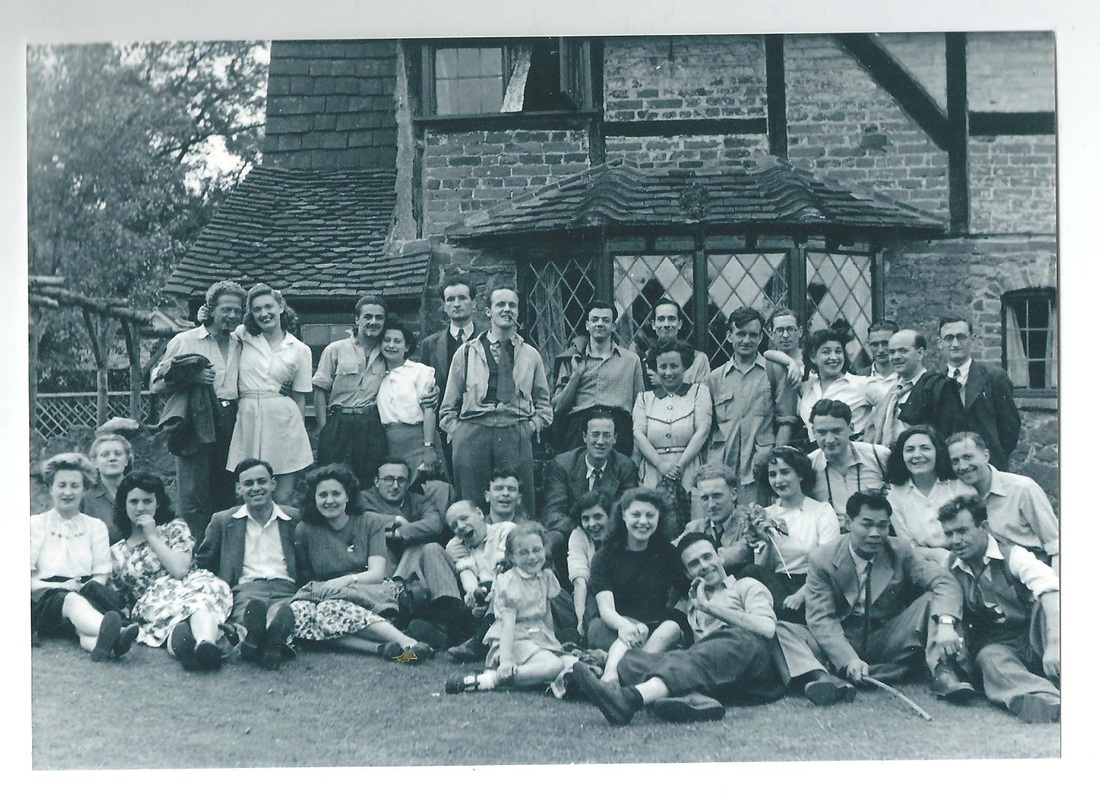
Unity Theatre outing to Box Hill, 1948. Courtesy of Muriel Walker.
'From the City, From the Plough'
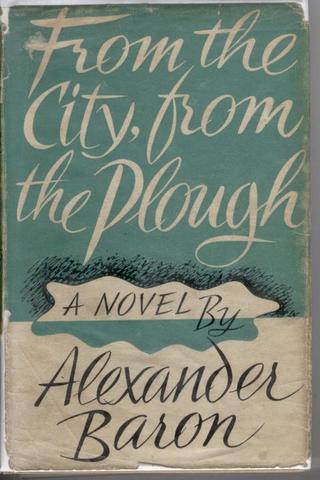
This is Baron's first novel, published in 1948 - and viewed by many as his best. The military historian Antony Beevor has described it as 'undoubtedly one of the very greatest British novels of the Second Word War'.
From the City, From the Plough is the story, told from the infantry soldier's perspective, of D-Day. In the summer of 1944, a battalion of the Wessex Regiment waits patiently and nervously, close to the south coast, for the order to embark. The novel follows these soldiers - some, as the title suggests, city wide boys and others from the farms - as they travel to Normandy, suffer devastating casualties as they land, and then fight their way across France.
It's a taut and powerful novel, which won wide acclaim and huge sales. Baron borrows from his own role in the D-Day landing and then fighting inland - though it would be wrong to regard this as autobiographical. This is the first of three war novels. The next, There's No Home, is again based in part on Baron's own war service, this time in Sicily in 1943.
'I went through two campaigns between July 1943 and December 1944', Baron wrote in later life. 'I have written three books about the lives of men and women in the war. I made use in these books of my own experiences as well as of scenes that I witnessed and stories that others told to me.'
The writer V.S. Pritchett described From the City as the 'only war book that has conveyed any sense of reality to me. Often touching, often funny, sometimes tragic and in the battle scenes. precise and without hysteria.'
From the City, From the Plough is the story, told from the infantry soldier's perspective, of D-Day. In the summer of 1944, a battalion of the Wessex Regiment waits patiently and nervously, close to the south coast, for the order to embark. The novel follows these soldiers - some, as the title suggests, city wide boys and others from the farms - as they travel to Normandy, suffer devastating casualties as they land, and then fight their way across France.
It's a taut and powerful novel, which won wide acclaim and huge sales. Baron borrows from his own role in the D-Day landing and then fighting inland - though it would be wrong to regard this as autobiographical. This is the first of three war novels. The next, There's No Home, is again based in part on Baron's own war service, this time in Sicily in 1943.
'I went through two campaigns between July 1943 and December 1944', Baron wrote in later life. 'I have written three books about the lives of men and women in the war. I made use in these books of my own experiences as well as of scenes that I witnessed and stories that others told to me.'
The writer V.S. Pritchett described From the City as the 'only war book that has conveyed any sense of reality to me. Often touching, often funny, sometimes tragic and in the battle scenes. precise and without hysteria.'
... and an inscription with a story
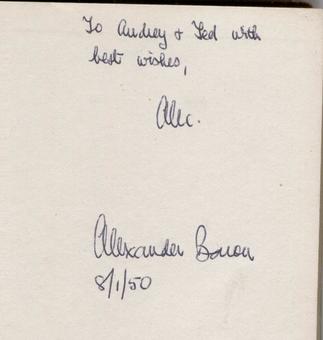
A copy of From the City, From the Plough inscribed by Alexander Baron to his close friend Ted Willis and Ted's wife, Audrey. Willis was a formative influence on Baron. Ted and Alec were the key activists in adjoining North London branches of the Labour League of Youth. Ted was the older by a few years. Both became active, though discrete, Communists - and it's reasonable to suppose that Ted helped guide Alec's political development.
After the war, Ted Willis helped Alec get a job editing a theatre magazine. He encouraged Alec to turn to writing novels. The curious aspect of the inscription is that it's dated a couple of years after Baron's first novel was published. Perhaps it was to replace an earlier copy.
Willis - the writer who devised 'Dixon of Dock Green', the landmark TV police drama - also helped along Baron's career as a TV drama screenwriter.
After the war, Ted Willis helped Alec get a job editing a theatre magazine. He encouraged Alec to turn to writing novels. The curious aspect of the inscription is that it's dated a couple of years after Baron's first novel was published. Perhaps it was to replace an earlier copy.
Willis - the writer who devised 'Dixon of Dock Green', the landmark TV police drama - also helped along Baron's career as a TV drama screenwriter.
A debut bestseller
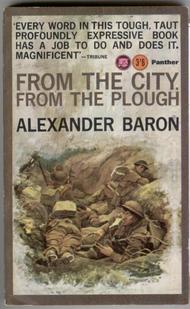
This is a Panther paperback edition from the early 1960s. To judge from the printing history, From the City, From the Plough sold exceptionally well - eight impressions within two years of puplication, a ninth in 1958, out in Panther in 1960, and reprinted three years later.
'From the City, From the Plough took a year to write', states the blurb. 'The author worked on it between midnight and 8 a.m., for during the day he was assistant editor of a theatre magazine and had to spend most evening seeing plays.'
Curious perhaps to choose a quote from 'Tribune' for the cover. Inside there's an excerpt from a review in the 'Scotsman' - 'few other [novels] have portrayed the ordinary soldier so imaginatively yet realistically'. Absolutely right!
The cover design is at least tolerably loyal to the novel's subject matter - which is something that couldn't always be said of Panther's covers ... see below.
'From the City, From the Plough took a year to write', states the blurb. 'The author worked on it between midnight and 8 a.m., for during the day he was assistant editor of a theatre magazine and had to spend most evening seeing plays.'
Curious perhaps to choose a quote from 'Tribune' for the cover. Inside there's an excerpt from a review in the 'Scotsman' - 'few other [novels] have portrayed the ordinary soldier so imaginatively yet realistically'. Absolutely right!
The cover design is at least tolerably loyal to the novel's subject matter - which is something that couldn't always be said of Panther's covers ... see below.
And a new edition
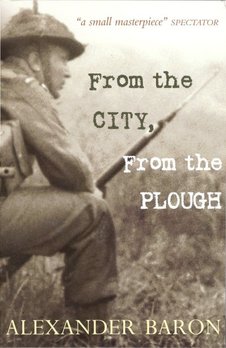
A few years ago, Black Spring published a new edition - the first for decades. It has an excellent introduction by Sean Longden, who has used Baron's novels and unpublished memoirs in his own writings about the rank-and-file experience of the Second World War. Longden chronicles Baron's own war service - 'what is clear is that Baron landed among the earliest groups on D-Day' - and the manner in which his partial memories of the landing and then moving inland are reflected in this novel. His introduction takes account of Baron's difficult weaning away from communism, and of the toll that the strain of war took on his health. He points out that, in distinction to many left-wing writers, Baron at no time lectures his readers.
In a valuable postscript, Longden shows how the '5th Wessex' troops of the novel were based on the 5th Wiltshires, which was indeed in 1944 a mix of those 'from the city' and 'from the plough' - or more prosaically, the 'doggy boys' and the 'swedebashers'. The climax of the novel is based on the Wiltshires' costly battle for Mont Pincon. 'One figure is starkly revealing', Longden writes: 'the 5th Wiltshires landed in France in the last week of June 1944 with a compliment of 36 officers. By May 1945 just two of them remained with the battalion ...'.
At some stage in 2019, the Imperial War Museum is bringing out a fresh edition of the novel. in their Wartime Classics series.
In a valuable postscript, Longden shows how the '5th Wessex' troops of the novel were based on the 5th Wiltshires, which was indeed in 1944 a mix of those 'from the city' and 'from the plough' - or more prosaically, the 'doggy boys' and the 'swedebashers'. The climax of the novel is based on the Wiltshires' costly battle for Mont Pincon. 'One figure is starkly revealing', Longden writes: 'the 5th Wiltshires landed in France in the last week of June 1944 with a compliment of 36 officers. By May 1945 just two of them remained with the battalion ...'.
At some stage in 2019, the Imperial War Museum is bringing out a fresh edition of the novel. in their Wartime Classics series.
'There's No Home'
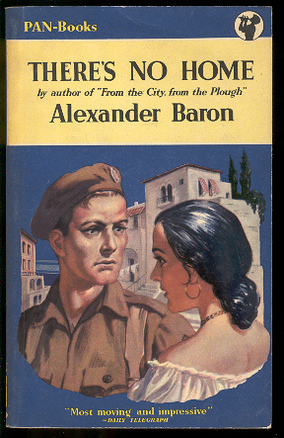
'This is not a story of war', Baron's second novel begins, 'but of one of those brief interludes in war when the almost forgotten rhythms of normal living are permitted to emerge again; and when it seeps back into the consciousness of human beings - painfully, sometimes heart-breakingly - that they are, after all, human.'
For two months in the summer of 1943, battle weary British troops are billeted in a coastal town in Catania in Sicily. This is the story of that encounter - in part tender, in part brutal, in part tragic. Told with a wonderful humanity.
At its heart is the haunting story of the romance between Sergeant Craddock and a young Sicilian mother, Graziella. And the rupture of that relationship when the British troops are ordered north in pursuit of the retreating Germans.
Again, Baron draws richly on his own wartime experiences. And again, this novel sold strongly. It was published in 1950 and was a Reader's Union choice of the month, though the RU 'Readers News' carried a brief notice: 'THERE'S NO HOME IN EIRE. Will Irish members please note that this month's choice is a prohibited book under the Censorship of Publication Acts?'
This novel was also published under the title The Wine of Etna.
For two months in the summer of 1943, battle weary British troops are billeted in a coastal town in Catania in Sicily. This is the story of that encounter - in part tender, in part brutal, in part tragic. Told with a wonderful humanity.
At its heart is the haunting story of the romance between Sergeant Craddock and a young Sicilian mother, Graziella. And the rupture of that relationship when the British troops are ordered north in pursuit of the retreating Germans.
Again, Baron draws richly on his own wartime experiences. And again, this novel sold strongly. It was published in 1950 and was a Reader's Union choice of the month, though the RU 'Readers News' carried a brief notice: 'THERE'S NO HOME IN EIRE. Will Irish members please note that this month's choice is a prohibited book under the Censorship of Publication Acts?'
This novel was also published under the title The Wine of Etna.
... as it looked at first
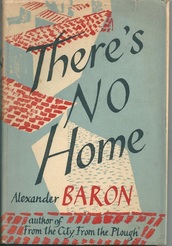
A simple but effective design - the original dust jacket of There's No Home. The red tiled rooves and whitewashed walls, and the suggestion of bright sunlight, suggests the Mediterranean. The copy was lent to me by a friend - a Baron enthusiast, whose great-grandfather, the renowned Yiddish writer Sholem Asch, was given this copy by the author.
Baron tended to regard himself as determinedly secular - though some of his novels, notably With Hope, Farewell and The Lowlife, focus on the Jewish experience in post-war London. He was active in the literary group associated with the 'Jewish Quarterly', and wrote frequently for that publication. This is a further reminder that Baron was keenly interested in Jewish culture and literature, and it is a link of sorts between him and the Yiddish-speaking environment his grandparents would have known well when they settled in the East End.
Baron tended to regard himself as determinedly secular - though some of his novels, notably With Hope, Farewell and The Lowlife, focus on the Jewish experience in post-war London. He was active in the literary group associated with the 'Jewish Quarterly', and wrote frequently for that publication. This is a further reminder that Baron was keenly interested in Jewish culture and literature, and it is a link of sorts between him and the Yiddish-speaking environment his grandparents would have known well when they settled in the East End.
.... with an inscription
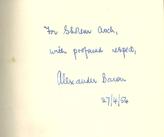
And here's the inscription. Sholem Asch was in 1954 - my friend tells me - living in London at his daughter's home in St. John's Wood. The circumstances of this dedication are lost beyond easy retrieval. Perhaps Baron sent the book to him, or maybe they met at a talk or literary even.
The inscription is notably warm - 'with profound respect' - which suggests that Baron was at the least well aware of Asch's reputation, and quite possibly familiar with his work.
The inscription is notably warm - 'with profound respect' - which suggests that Baron was at the least well aware of Asch's reputation, and quite possibly familiar with his work.
'There's No Home' finds a new publishing home
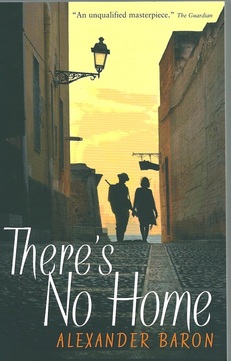
Sort of Books republished There's No Home - a very handsome paperback edition, with a hugely atmospheric cover, and an excellent afterword by John L. Williams. As Williams says, this exceptional novel is 'a wonderful example of a writer sidestepping the reader's expectations. This is a war novel all right, but it's one that contains no scenes of armed combat. This despite the fact that it's set in Sicily, where Baron had been in the thick of bloody battle ...'
For this novel, Baron reaches back to his experiences before the D-Day landings, to his time billeted in Catania, a newly liberated town without men. The brief relationships which blossomed between British soldiers and Sicilian women are told tenderly - as much from the woman's point of view as the man's. And of course, you know that however much the women yearn for their new men to stay, they will soon be moving on.
It is about the humanity which resides alongside the inhumanity of modern warfare - a novel which deserves a new readership.
For this novel, Baron reaches back to his experiences before the D-Day landings, to his time billeted in Catania, a newly liberated town without men. The brief relationships which blossomed between British soldiers and Sicilian women are told tenderly - as much from the woman's point of view as the man's. And of course, you know that however much the women yearn for their new men to stay, they will soon be moving on.
It is about the humanity which resides alongside the inhumanity of modern warfare - a novel which deserves a new readership.
And with some marvellous photos
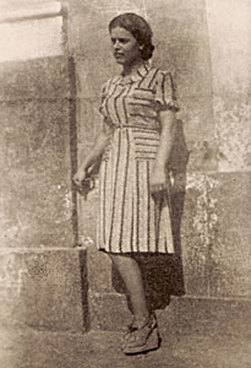
This edition of There's No Home contains some quite remarkable photographs. This one is of an unnamed Sicilian woman, found among Baron's papers after his death. It is hugely evocative. And of course, the temptation is to believe that this is 'Graziella', that she was in some manner the model for the main character in the novel, or had some association with Baron which drew him back to write about his two summer months in Catania.
At a talk a few years ago, Baron's son, Nick, said neither he nor his mother had any idea whether this unnamed woman was the inspiration for Graziella. Sean Longden, on the same panel, interrupted to comment that Baron's widow had told him that this was indeed a photo of Graziella. It's a mystery, which is perhaps the way it should be.
This edition also has two marvellous photographs of Baron during the war, which are included below with the permission of both publisher and the copyright owner. Both photos date from 1943 - the year in which Baron found himself in Sicily - and show Baron in the uniform of and while serving with the Eighth Army.
At a talk a few years ago, Baron's son, Nick, said neither he nor his mother had any idea whether this unnamed woman was the inspiration for Graziella. Sean Longden, on the same panel, interrupted to comment that Baron's widow had told him that this was indeed a photo of Graziella. It's a mystery, which is perhaps the way it should be.
This edition also has two marvellous photographs of Baron during the war, which are included below with the permission of both publisher and the copyright owner. Both photos date from 1943 - the year in which Baron found himself in Sicily - and show Baron in the uniform of and while serving with the Eighth Army.
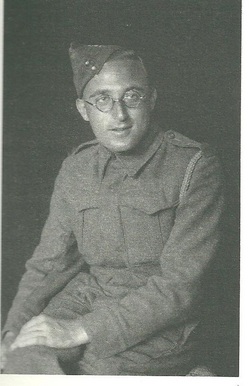 With permission of the copyright owner |
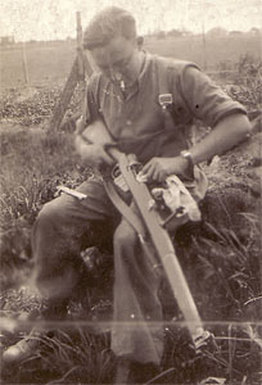 With permission of the copyright owner |
'Rosie Hogarth'
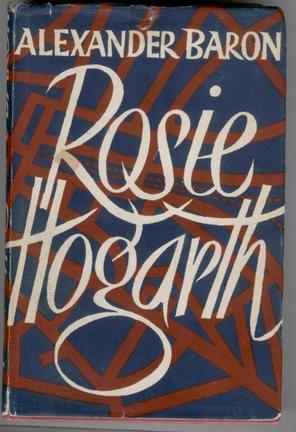
A personal favourite of mine. Of all Baron's London novels, Rosie Hogarth is the most tender evocation of place. It was his first novel set in his home city, published in 1951 - an account of an inward-looking working class community in the immediate post-war years. Baron on a back street in Islington, which he called Lamb Street, as the setting of his novel.
The story concerns Jack Agass's return after war, and a few years working abroad, to the street where he grew up. There's a big gash where a flying bomb landed demolishing Jack's old home and killing the woman he regarded as his mother. He moves in as a lodger, and pursues an awkward courtship of his landlady's daughter, Joyce Wakerell. Baron takes the reader into the parlour and the music hall, the pub and the bonfire party. Lamb Street is respectable working class, but solidly unambitious, and cocooned from the world.
The title character grew up alongside Jack - they were childhood buddies, and Jack is disturbed by stories that she's taken to selling sex. Rosie now has a flat of her own in Russell Square, She is sophisticated, modern - and, as we discover in the closing pages, an underground political activist. I won't spoil the story - Rosie Hogarth has been republished by Five Leaves - but it speaks of Baron's own difficult break with the Communist Party.
The story concerns Jack Agass's return after war, and a few years working abroad, to the street where he grew up. There's a big gash where a flying bomb landed demolishing Jack's old home and killing the woman he regarded as his mother. He moves in as a lodger, and pursues an awkward courtship of his landlady's daughter, Joyce Wakerell. Baron takes the reader into the parlour and the music hall, the pub and the bonfire party. Lamb Street is respectable working class, but solidly unambitious, and cocooned from the world.
The title character grew up alongside Jack - they were childhood buddies, and Jack is disturbed by stories that she's taken to selling sex. Rosie now has a flat of her own in Russell Square, She is sophisticated, modern - and, as we discover in the closing pages, an underground political activist. I won't spoil the story - Rosie Hogarth has been republished by Five Leaves - but it speaks of Baron's own difficult break with the Communist Party.
... but where is Lamb Street?
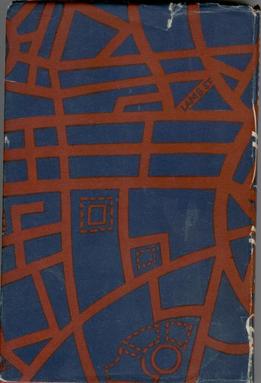
Look carefully at the front of the dust jacket of Rosie Hogarth, and you realise that the red lines aren't simply part of an abstract design. They are a map. A road map (the canal's there as well) of the district of south Islington which is the novel's setting.
On the rear cover, Lamb Street is marked inconspicuously on the map. There was no Lamb Street - but the dust jacket makes absolutely clear where Alexander Baron had in mind. The street lay out is fairly precise.Pentonville Road runs east- west across the middle of the map, along the northern edge of the covered reservoir on Claremont Square.
Lamb Street sprouts out of Chapel Market, close to its junction with White Conduit Street. And do you know what? There was no street exactly where Lamb Street is marked - leading from Chapel Market to Liverpool Road. A huge Sainsbury's now marks the site.
A matter of yards away, there was - and is - a Baron Street leading north from Pentonville Road to Chapel Market. Coincidence? Possibly. But just perhaps it was a street name which attracted the author's attention. Maybe even prompted the choice of his pseudonym - he changed his name a little before his first novel was published.
On the rear cover, Lamb Street is marked inconspicuously on the map. There was no Lamb Street - but the dust jacket makes absolutely clear where Alexander Baron had in mind. The street lay out is fairly precise.Pentonville Road runs east- west across the middle of the map, along the northern edge of the covered reservoir on Claremont Square.
Lamb Street sprouts out of Chapel Market, close to its junction with White Conduit Street. And do you know what? There was no street exactly where Lamb Street is marked - leading from Chapel Market to Liverpool Road. A huge Sainsbury's now marks the site.
A matter of yards away, there was - and is - a Baron Street leading north from Pentonville Road to Chapel Market. Coincidence? Possibly. But just perhaps it was a street name which attracted the author's attention. Maybe even prompted the choice of his pseudonym - he changed his name a little before his first novel was published.
Rosie in paperback
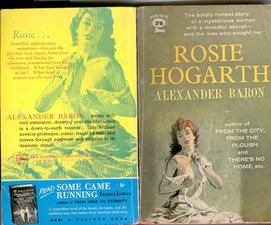
Since Rosie Hogarth does involve some sex, I suppose it was inevitable than when Panther republished the novel - in 1958 - the cover should feature Rosie disrobed. Neither Lamb Street, nor 'the Party', finds any place in the design. Instead, the novel is portrayed as 'the boldly honest story of a mysterious woman with a dreadful secret'.
The inside blurb states: 'Alexander Baron writes with cool assurance and perfect mastery of his gifts for tolerant and humorous sympathy with characters - real-life London characters - whom he understands more fully than any other novelist can.' All very well, until that last curious phrase. Why Baron is so much better equipped than other writers to depict 'real-life' metropolitan personalities, well, that's not explained.
The inside blurb states: 'Alexander Baron writes with cool assurance and perfect mastery of his gifts for tolerant and humorous sympathy with characters - real-life London characters - whom he understands more fully than any other novelist can.' All very well, until that last curious phrase. Why Baron is so much better equipped than other writers to depict 'real-life' metropolitan personalities, well, that's not explained.
And another sexed-up Rosie
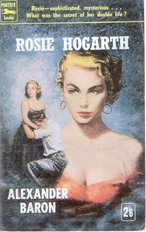
I can't quite work out why Panther came up with two different sexed-up covers for the same novel in the same year - both aimed, as far as I can make out (the 2/6 is a bit of a give away) for the British market. But here it is - with the sex much more prominent than the politics, and not even the slightest hint of south Islington.
'Rosie - sophisticated, mysterious ... What was the secret of her double life?', the cover asks. She is clearly a little less disrobed than above - and I wonder whether author, or someone else, though that the cover above went a little too far. The novel deserved better than this - and I am not sure that even racked up the sales. Certainly, the more sexy paperback editions are not too easy to find.
'Rosie - sophisticated, mysterious ... What was the secret of her double life?', the cover asks. She is clearly a little less disrobed than above - and I wonder whether author, or someone else, though that the cover above went a little too far. The novel deserved better than this - and I am not sure that even racked up the sales. Certainly, the more sexy paperback editions are not too easy to find.
Rosie's back in print
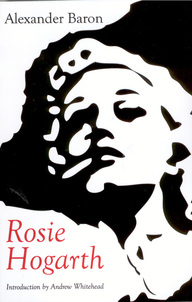
For the first time in decades, Rosie Hogarth is back in print - courtesy of the Five Leaves imprint, New London Editions, which has also republished Baron's King Dido. It has an introduction by Andrew Whitehead, which suggests that this has 'the most profound sense of place and moment' of all Baron's London novels. The republication is further evidence of the resurgence of interest in Baron. I suspect this may be the first time for half-a-century, perhaps the first time ever, that so many of his novels have been available.
And in 2019, Five Leaves are bringing out a fresh edition of Rosie Hogarth- hallelujah!
And in 2019, Five Leaves are bringing out a fresh edition of Rosie Hogarth- hallelujah!
'With Hope, Farewell'
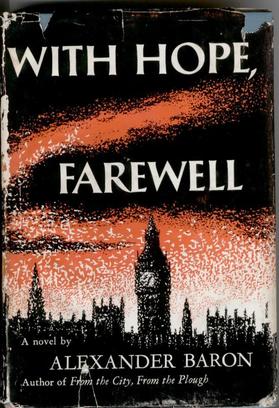
'It was not until after the war', Baron recorded in his unpublished memoirs, 'that I thought hard about the business of being a Jew. It was part of my rendering of accounts with the Communist Party ...'. He was a secular Jew from a secular-minded family. While Baron resisted any notion of being a Jewish writer, he was involved in the literature wing of the 'Jewish Quarterly'. And he wrote two Jewish novels. The Lowlife, the work for which he is most remembered, is the story of a Jewish gambler - but his first attempt to capture the Jewish experience in fiction is this novel, published in 1952.
Mark Strong endures petty anti-semitism but achieves his wartime ambition to become a fighter pilot. After the war, blighted by injury and a desolation brought on by conflict, Mark and his wife, Ruth, seek to set up home in Hackney. 'The bombing of the East End during the war had sent thousands of homeless Jews outwards in wave after wave', Baron asserts in this novel. 'They had penetrated to every corner of Hackney.' They face organised anti-semitism, and the climax of the novel comes amid a Mosleyite rally in Dalston during which Ruth suffers a miscarriage.
It's a dispiriting novel, with little of the jauntiness and sense of human resilience which otherwise distinguishes Baron's writing. Some of the characters prefigure The Lowlife, his classic London novel, which appeared a decade later. With Hope, Farewell is being republished for the first time by Five Leaves in 2019.
Mark Strong endures petty anti-semitism but achieves his wartime ambition to become a fighter pilot. After the war, blighted by injury and a desolation brought on by conflict, Mark and his wife, Ruth, seek to set up home in Hackney. 'The bombing of the East End during the war had sent thousands of homeless Jews outwards in wave after wave', Baron asserts in this novel. 'They had penetrated to every corner of Hackney.' They face organised anti-semitism, and the climax of the novel comes amid a Mosleyite rally in Dalston during which Ruth suffers a miscarriage.
It's a dispiriting novel, with little of the jauntiness and sense of human resilience which otherwise distinguishes Baron's writing. Some of the characters prefigure The Lowlife, his classic London novel, which appeared a decade later. With Hope, Farewell is being republished for the first time by Five Leaves in 2019.
'The Human Kind'
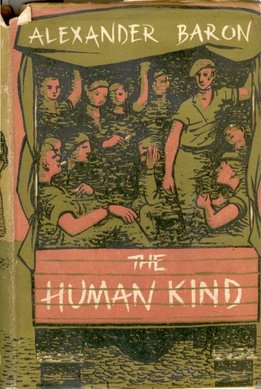
The last of Baron's books drawing directly from his wartime years as a soldier - and in some ways the most effective. The Human Kind is a linked set of short stories, in chronological order through the war from the balmy summer before the conflict to the routine of peacetime again.
Most of the stories are brief, and all (except the last) are written in the first person. They amount to, as always with Baron, a very human and humane take on war - and of the degradations and diminshing of the human spirit, and occasionally the intense camaraderie, brought about by conflict.
The final story is set in Korea, where again combatants in a distant conflict lose sight of the humanity of those they are fighting, and sometimes of those they are supposed to be protecting. That story apart, there is a keen sense that these accounts are more directly autobiographical than his two wartime novels. And indeed in one story, 'The Indian', Baron recounts the true version of an episode retold in one of these novels.
Most of the stories are brief, and all (except the last) are written in the first person. They amount to, as always with Baron, a very human and humane take on war - and of the degradations and diminshing of the human spirit, and occasionally the intense camaraderie, brought about by conflict.
The final story is set in Korea, where again combatants in a distant conflict lose sight of the humanity of those they are fighting, and sometimes of those they are supposed to be protecting. That story apart, there is a keen sense that these accounts are more directly autobiographical than his two wartime novels. And indeed in one story, 'The Indian', Baron recounts the true version of an episode retold in one of these novels.
More of 'The Human Kind'
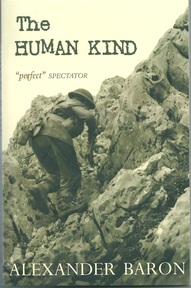
Republished in paperback by Black Spring Press - who also brought out From the City, From the Plough - this edition has a foreword by Sean Longden, a historian of the Second World War. It's a brief but telling introduction, which also looks at Baron's youthful involvement in the Labour League of Youth and the CP. Longden has spoken to Harry Ratner, who was also in the LLOY and served with Baron during the war.
'By 1936', Ratner told Longden, the LLOY has become polarised into bitterly opposed Trotskiyst and Stalinist factions with hardly any ordinary "Labourites" in between.' While Ratner was a Trot, Baron was a CPer - which goes quite a long way towards explaining why the two kept their distance when they were in the same army unit.
'Now, looking back on it, I'm very sorry I didn't try to get into discussion with him because we might have found out that we agreed more than we disagreed.'
'By 1936', Ratner told Longden, the LLOY has become polarised into bitterly opposed Trotskiyst and Stalinist factions with hardly any ordinary "Labourites" in between.' While Ratner was a Trot, Baron was a CPer - which goes quite a long way towards explaining why the two kept their distance when they were in the same army unit.
'Now, looking back on it, I'm very sorry I didn't try to get into discussion with him because we might have found out that we agreed more than we disagreed.'
'Seeing Life'
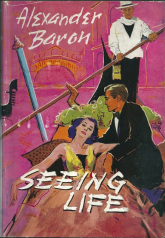
This 1958 novel is not among the best regarded of Baron's work, and the dust cover is a curious fit for the storyline (though there are a few pages based in Venice). But it's an interesting book. The central characters are a hugely ambitious singer, Matt Anderson, whose career plummets after he's wrongly outed as gay - and his lover, a young, zesty journalist, Jessie Macleod (I wonder whether she was based at all on Alison Macleod of the 'Daily Worker', a good friend of Baron - certainly the choice of name can't have been simply coincidence).
The book examines, anxiously, the growing power of TV and the murky world of the music and PR industries. Interwoven is a fairly damning account of the Communist Party, with a character said to be based loosely on Baron's onetime mentor, John Gollan.
The book examines, anxiously, the growing power of TV and the murky world of the music and PR industries. Interwoven is a fairly damning account of the Communist Party, with a character said to be based loosely on Baron's onetime mentor, John Gollan.
'The Lowlife'
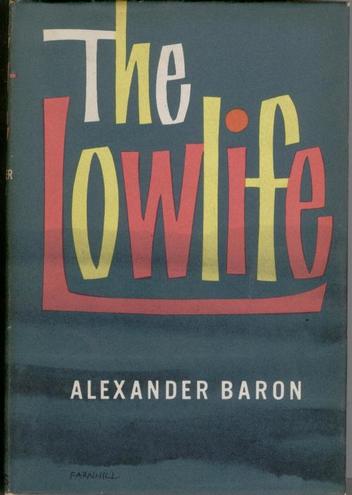
On the opening page, Harryboy Boas - with £30 in the world - is musing about the merits of a dog running at White City that evening. Harryboy is Baron's most memorable character. The Lowlife - published in 1963 and set in the early 1960s - is the novel for which he is now best known.
The Lowlife is the story of an obsessive gambler who lives in a boarding house in Dalston. He works as a tailoring presser when needs must - but what he does best is bet. It's a very Jewish novel - 'I should have such luck', Harrboy exclaims on the opening page - and Harryboy's sister, Debbie, who has married well and lives with her bookmaker husband in 'the smart part' of Finchley, is persistently trying to redeem him and marry him off.
The reader warms to Harryboy. He's a loser, but he has style. He's in part shackled by war, the holocaust and his memories of a lost relationship. He's also tender, striking up a strong relationship with the son of fellow lodgers. I love the novel most for its powerful evocation of place and time. The Lowlife borrows from Baron's own memories of growing up on Foulden Road, just north of Dalston. It captures, in a kindly manner, early Caribbean migration into east London - Pakistani cafe owners in the old East End - and Maltese 'toughs' on Soho street corners.
For Baron, it was a one-off. He wrote a sequel, Strip Jack Naked, which simply didn't work.
The Lowlife is the story of an obsessive gambler who lives in a boarding house in Dalston. He works as a tailoring presser when needs must - but what he does best is bet. It's a very Jewish novel - 'I should have such luck', Harrboy exclaims on the opening page - and Harryboy's sister, Debbie, who has married well and lives with her bookmaker husband in 'the smart part' of Finchley, is persistently trying to redeem him and marry him off.
The reader warms to Harryboy. He's a loser, but he has style. He's in part shackled by war, the holocaust and his memories of a lost relationship. He's also tender, striking up a strong relationship with the son of fellow lodgers. I love the novel most for its powerful evocation of place and time. The Lowlife borrows from Baron's own memories of growing up on Foulden Road, just north of Dalston. It captures, in a kindly manner, early Caribbean migration into east London - Pakistani cafe owners in the old East End - and Maltese 'toughs' on Soho street corners.
For Baron, it was a one-off. He wrote a sequel, Strip Jack Naked, which simply didn't work.
American Lowlife
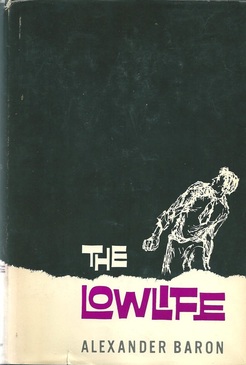
This is the dust jacket of the American edition of The Lowlife, which came out in 1964, published by Thomas Yoseloff. None of Baron's London novels had what you could call memorable covers - indeed quite a few, as you can see from this page, are distinctly humdrum. This design (no designer named) isn't exactly exceptional, but it is at least a little more interesting than many of the others.
The dust jacket also made a stab at enticing the interest of a US readership in a peculiarly London novel. 'Harryboy Boas will take his place in literature alngside Pal Joey, Sammy Lee, and other famous protagonists of "the angle" and "the gimmick" - the men whose aim is the "quick buck".' The write-up goes on to suggest that Baron achieves the feat of 'combining the ear of a Damon Runyon, attuned to the sounds of Soho as Runyon was to Broadway, with the clear eye and warm heart of a compassionate observer'.
The jacket also said that The Lowlife 'is now being filmed and the picture is expected to be released next fall'. Alas, that never happened!
The dust jacket also made a stab at enticing the interest of a US readership in a peculiarly London novel. 'Harryboy Boas will take his place in literature alngside Pal Joey, Sammy Lee, and other famous protagonists of "the angle" and "the gimmick" - the men whose aim is the "quick buck".' The write-up goes on to suggest that Baron achieves the feat of 'combining the ear of a Damon Runyon, attuned to the sounds of Soho as Runyon was to Broadway, with the clear eye and warm heart of a compassionate observer'.
The jacket also said that The Lowlife 'is now being filmed and the picture is expected to be released next fall'. Alas, that never happened!
Harvill's London Fictions
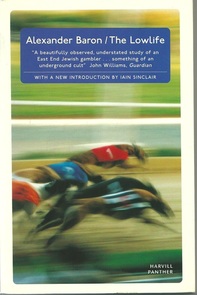
This edition of The Lowlife, curiously, is about the most difficult to come across. It was published in 2001 as part of the Harvill Press's shortlived London Fiction series. But somehow, somewhere, something went wrong - either the series wasn't marketed, or the publisher had problem and the print run was curtailed, or (I've heard say) most of the copies printed were pulped when Harvill was taken over by a rival.
A pity, because it's a rather handsome edition, with an excellent introduction. I bought this copy in the summer of 2011, as new, at the City Lights book store in San Francisco. The only Baron title in stock. When I took it to the till, the assistant ostentatiously blew the dust away. I guess it had been languishing on their shelves for a full ten years.
The Lowlife is a boarding house novel, in many ways. And so is another very different title I bought at City Lights, Armistead Maupin's wonderfully burlesque Tales of the City, a fable of San Francisco in the 1980s.
A pity, because it's a rather handsome edition, with an excellent introduction. I bought this copy in the summer of 2011, as new, at the City Lights book store in San Francisco. The only Baron title in stock. When I took it to the till, the assistant ostentatiously blew the dust away. I guess it had been languishing on their shelves for a full ten years.
The Lowlife is a boarding house novel, in many ways. And so is another very different title I bought at City Lights, Armistead Maupin's wonderfully burlesque Tales of the City, a fable of San Francisco in the 1980s.
Greyhounds again!
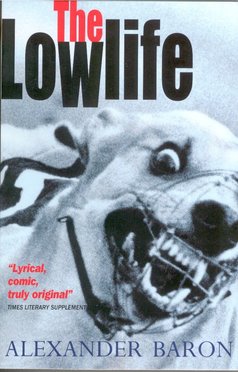
It's difficult to understand how The Lowlife managed to slip out of print for so long. Now, thanks to Black Spring, it's back. And graced with an introduction by Baron aficionado, Iain Sinclair - which he initially wrote almost a decade earlier for the Harvill edition (above). 'Baron was a true Londoner', Sinclair writes, 'which is to say a second-generation immigrant, a professional stranger; the confrontations of urban life were always a major part of his project. His novels are enactments of placed (rather than displaced) autobiography. Favoured geographical zones represent stages in the evolution of the author's sensibility. ... Aspirant Hackney tolerates the well-crafted fiction of Baron's maturity.'
As Sinclair comments in this introduction, Baron's novel is 'one of the best fictions, the truest accounts' of the borough of Hackney. 'Here it is, the book, the place, the story. Enjoy.' And on the cover - it's the dogs again!
As Sinclair comments in this introduction, Baron's novel is 'one of the best fictions, the truest accounts' of the borough of Hackney. 'Here it is, the book, the place, the story. Enjoy.' And on the cover - it's the dogs again!
For a telling article about the more sombre side of The Lowlife
- and its reflection of the Holocaust -
do read Susie Thomas's article in the Literary London online journal
- and its reflection of the Holocaust -
do read Susie Thomas's article in the Literary London online journal
'King Dido'
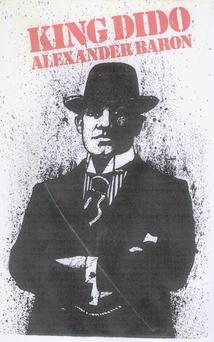
A novel which harks back to the old East End before the First World War - set in Rabbit Marsh a little east of Brick Lane. It's an account of the rise and fall of a tough guy, who took the name King Dido. Much of the detail seems to have come from memories of visits to grandparents living in Spitalfields and Bethnal Green. His mother was brought up in Hare Marsh, a small cul-de-sac by the railway line which still survives.
King Dido feels to me as if it borrows from Arthur Morrison's A Child of the Jago, which was set nearby. Where the clergyman is the insider-outsider in The Jago, a police man, Inspector Merry. takes this role in King Dido. The central character, Dido Peach, is a loner, something of a misfit. He could be said to be a Harryboy Boas of an earlier era. And of a different community - Dido is, it seems, of gipsy pedigree, and while there are tangential references to East End Jewry, this is not in any way a sentimental account of the old, rough, tough Jewish East End.
The novel was first published in 1969.
King Dido feels to me as if it borrows from Arthur Morrison's A Child of the Jago, which was set nearby. Where the clergyman is the insider-outsider in The Jago, a police man, Inspector Merry. takes this role in King Dido. The central character, Dido Peach, is a loner, something of a misfit. He could be said to be a Harryboy Boas of an earlier era. And of a different community - Dido is, it seems, of gipsy pedigree, and while there are tangential references to East End Jewry, this is not in any way a sentimental account of the old, rough, tough Jewish East End.
The novel was first published in 1969.
And Dido republished
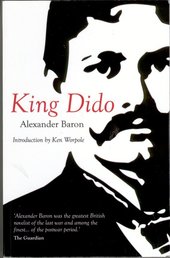
Five Leaves republished King Dido as the first title in its New London Editions imprint - and it is publishing it yet again in 2019. Ken Worpole has provided an excellent introduction to the novel which includes biographical details of Alexander Baron, a writer who Ken has done so much to champion over the years.
Worpole draws from a long interview he conducted with Baron towards the end of his writing life. The seeds of the novel, and of its account of this area where Spitalfields and Bethnal Green meet, were planted during Baron's childhood visits to his East End grandparents. There's also a discussion in the introduction of the parallels between King Dido and Morrison's A Child of the Jago.
Worpole draws from a long interview he conducted with Baron towards the end of his writing life. The seeds of the novel, and of its account of this area where Spitalfields and Bethnal Green meet, were planted during Baron's childhood visits to his East End grandparents. There's also a discussion in the introduction of the parallels between King Dido and Morrison's A Child of the Jago.
'The In-Between Time'
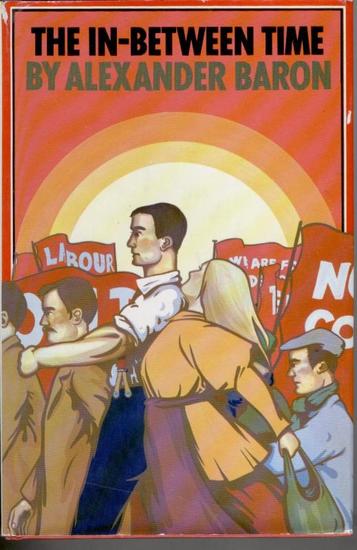
The striking dust jacket designed by Em Harrison.
Alexander Baron's widow, Delores, (who, sadly, died in September 2013) regarded this 1971 title as the most autobiographical of his novels. The in-between time refers to that brief but often formative period between school and college. It's a novel of political and sexual awakening, set in North London in the late 1930s. Vic Mason is active in the Labour League of Youth, but largely because of his attraction to a young Welsh communist, Olwen, he becomes active in the margins of Communist Party activity. He even seeks to volunteer to fight in Spain, and meets the CP leader (clearly closely modelled on Harry Pollitt), but - to his huge relief - is turned down as too young.
The novel is hostile to the Communist Party. Vic is portrayed as keeping a wary and distrustful distance, and there is a poisonous portrait of a local CP headteacher and serial womaniser, Tom Arbalest - a name which feels like it should be an anagram, but if so I haven't worked it out. You would never guess from this novel that the young Alexander Baron (or Alec Bernstein as he was known in the 1930s) was for several years a very active Communist.
According to his as yet unpublished memoirs, he maintained an allegiance to the Labour League of Youth largely to seek recruits to the CP. Although he never seems to have held a party card, he was for a few years until enlisting in the army during the war, in essence, a full-time party activist, working closely with John Gollan and other national party leaders.
The novel is hostile to the Communist Party. Vic is portrayed as keeping a wary and distrustful distance, and there is a poisonous portrait of a local CP headteacher and serial womaniser, Tom Arbalest - a name which feels like it should be an anagram, but if so I haven't worked it out. You would never guess from this novel that the young Alexander Baron (or Alec Bernstein as he was known in the 1930s) was for several years a very active Communist.
According to his as yet unpublished memoirs, he maintained an allegiance to the Labour League of Youth largely to seek recruits to the CP. Although he never seems to have held a party card, he was for a few years until enlisting in the army during the war, in essence, a full-time party activist, working closely with John Gollan and other national party leaders.
... and another inscription
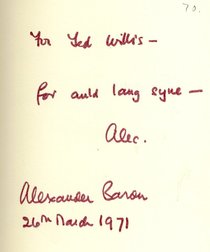
This is another lovely inscription from Baron to Ted Willis - a generation later than the one above, and bought at a different time from a different dealer. It's in The-In Between Time. What makes the inscription particularly evocative is that the novel harks back to the period when Baron and Willis first got to know each other, as north London activists, indeed entryists, in the Labour League of Youth.
While Alexander Baron didn't normally develop fictional characters based on people he knew, he did of course borrow incident, anecdote, and details of personality. So there is likely to be a bit of Ted Willis in this novel. Which bit? Who knows! If only Willis had made some notes in the margins. Alas, he didn't.
While Alexander Baron didn't normally develop fictional characters based on people he knew, he did of course borrow incident, anecdote, and details of personality. So there is likely to be a bit of Ted Willis in this novel. Which bit? Who knows! If only Willis had made some notes in the margins. Alas, he didn't.
'Franco is Dying'
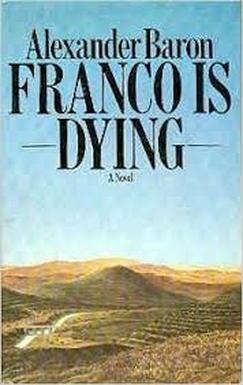
Baron's last published novel, Franco is Dying, appeared in 1977 and is set a couple of years earlier as the Spanish dictator is on his deathbed. Frank Brendan, a British man who in his youth had been a Communist and had fought in the International Brigades during the Spanish Civil War, makes a private trip to Barcelona. He chances across an old comrade, a Spanish Communist he fought alongside at the Ebro. The Spaniard is making an undercover trip back to his homeland to attend a surreptitious conference of the outlawed Spanish CP. He is concerned that being recognised by the Englishman may blow his cover and endanger plans for the conference.
This is an excellent, and dark, political thriller - perhaps the most successful of Baron's later novels. But it is also, as with The In-Between Time, a revisiting of Baron's youthful embrace of communism. It is not directly autobiographical, but it is certainly born out of Baron's own life and political experience.
This is an excellent, and dark, political thriller - perhaps the most successful of Baron's later novels. But it is also, as with The In-Between Time, a revisiting of Baron's youthful embrace of communism. It is not directly autobiographical, but it is certainly born out of Baron's own life and political experience.
'The War Baby'
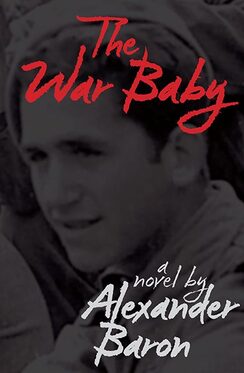
Baron wrote this as a prequel to Franco is Dying. It was revised ready for publication - but never appeared. The novel is coming out for the first time in 2019, again courtesy of Five Leaves, some forty years or more after it was written.
The War Baby is a powerful account of bravery and betrayal in the Spanish Civil War of the 1930s. Amid the last, faltering, steps to repulse General Franco's fascists, a young British Communist, Frank Brendan (see above) heads to Barcelona on behalf of the Party. He becomes part of a hedonistic elite at the helm of what's left of Republican Spain before being sent to the battle front during the ill-fated Ebro offensive of 1938 - Republican Spain's last stand against the advancing falangists. He is a political commissar to the British troops among the International Brigades; his task is to 'expose the bad elements'.
Eventually, Brendan picks up a gun and joins an increasingly brutal and unequal battle alongside ill-equipped Volunteers. Few of the British Brigaders make it out alive; none are unscathed. The War Baby is a blistering account of the corrupting of the struggle against fascism. It is deeply critical of international Communism while compassionate and generous towards those who enrolled under that flag.
The War Baby is a powerful account of bravery and betrayal in the Spanish Civil War of the 1930s. Amid the last, faltering, steps to repulse General Franco's fascists, a young British Communist, Frank Brendan (see above) heads to Barcelona on behalf of the Party. He becomes part of a hedonistic elite at the helm of what's left of Republican Spain before being sent to the battle front during the ill-fated Ebro offensive of 1938 - Republican Spain's last stand against the advancing falangists. He is a political commissar to the British troops among the International Brigades; his task is to 'expose the bad elements'.
Eventually, Brendan picks up a gun and joins an increasingly brutal and unequal battle alongside ill-equipped Volunteers. Few of the British Brigaders make it out alive; none are unscathed. The War Baby is a blistering account of the corrupting of the struggle against fascism. It is deeply critical of international Communism while compassionate and generous towards those who enrolled under that flag.
'Presented by Alexander Baron'
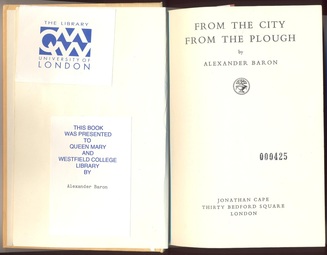
A friend, Ruth Hogarth, is both an admirer of Baron's writing and based at Queen Mary College in the East End. She's found in the QMC library quite a number of Baron's novels given by Baron himself. I'm posting the title and facing page of the copy he donated of From the City, From the Plough. The books were probably given to the college bu Baron at the time he became an honoroay fellow at QMC, in the early 1990s.
(Ruth's sister, by the way, is - yes - Rosie Hogarth and born in the year that novel was published. )
(Ruth's sister, by the way, is - yes - Rosie Hogarth and born in the year that novel was published. )
Alexander Baron on film
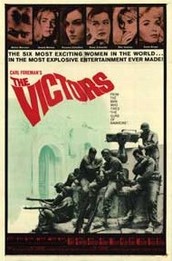
As well as the London and war novels featured here, Alexander Baron also wrote several other novels - notably historical novels. For much of his life, he wrote TV screenplays and adaptations. Alexander's son Nick Baron was asked by a browser of this site whether any of his father's novels had been turned into movies, and what of his father's TV work was available on DVD. I'm posting Nick's response with his permission:
Nick Baron writes: Film adaptations. Only 'The Human Kind' was made into a feature film, by Carl Foreman, called 'The Victors' (http://www.imdb.com/title/tt0057652/). This was re-released on DVD last year [2010], and is widely available. My father adapted his own novella 'Gentlefolk' for the BBC, sometime in the mid-seventies, but that hasn't been issued on VHS or DVD. Producers are interested in filming 'Lowlife', 'There's No Home' and 'King Dido' but at the moment [2012] we're still trying to confirm who owns the film rights to these.
Nick Baron writes: Film adaptations. Only 'The Human Kind' was made into a feature film, by Carl Foreman, called 'The Victors' (http://www.imdb.com/title/tt0057652/). This was re-released on DVD last year [2010], and is widely available. My father adapted his own novella 'Gentlefolk' for the BBC, sometime in the mid-seventies, but that hasn't been issued on VHS or DVD. Producers are interested in filming 'Lowlife', 'There's No Home' and 'King Dido' but at the moment [2012] we're still trying to confirm who owns the film rights to these.
Alexander Baron's work for TV
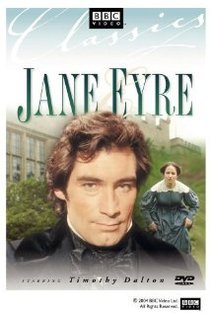
Nick Baron writes: My father's TV work. You will find a fairly full list here: http://www.imdb.com/name/nm0056192/. I don't think this is comprehensive - I haven't yet compared it against my father's own records, and am unsure even if these are complete. I'd have to go through all his private papers and contracts, etc., which are mostly now in Reading University Library archive. I need to do this sometime. But imdb.com shows the extent of his television work, and by following the links you can see which are now available on DVD, and where they can be obtained.
Off the top of my head, I know the BBC classic serial adaptations Jane Eyre and Oliver Twist are available. Sense and Sensibility was issued on VHS, but I don't think it's been out on DVD. He wrote one episode of Robin Hood in a mini-series that is available, and several for Poldark, A Horseman Riding By and By the Sword Divided. The 1984 Granada Sherlock Holmes with Jeremy Brett is available in several volumes and as a box set; I think my dad wrote more than just the one episode (A Scandal in Bohemia) that is listed on imdb.com.
Off the top of my head, I know the BBC classic serial adaptations Jane Eyre and Oliver Twist are available. Sense and Sensibility was issued on VHS, but I don't think it's been out on DVD. He wrote one episode of Robin Hood in a mini-series that is available, and several for Poldark, A Horseman Riding By and By the Sword Divided. The 1984 Granada Sherlock Holmes with Jeremy Brett is available in several volumes and as a box set; I think my dad wrote more than just the one episode (A Scandal in Bohemia) that is listed on imdb.com.
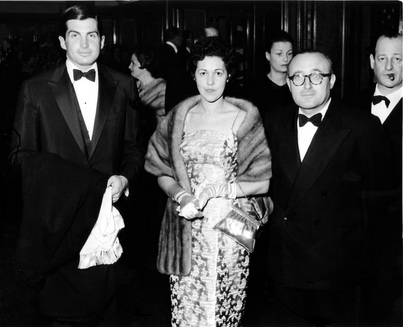 Alexander and Delores Baron at the 1963 premier of 'The Victors'. Copyright of Nick Baron and posted with permission. |
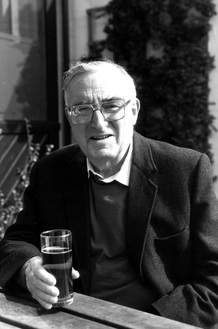 Alexander Baron in 1995. Copyright, Nick Baron. |
Alexander Baron personal papers
Alexander Baron's personal papers are held by the University of Reading - they are of huge value to those with an interest in Baron, his life and work:
Page last updated June 2019