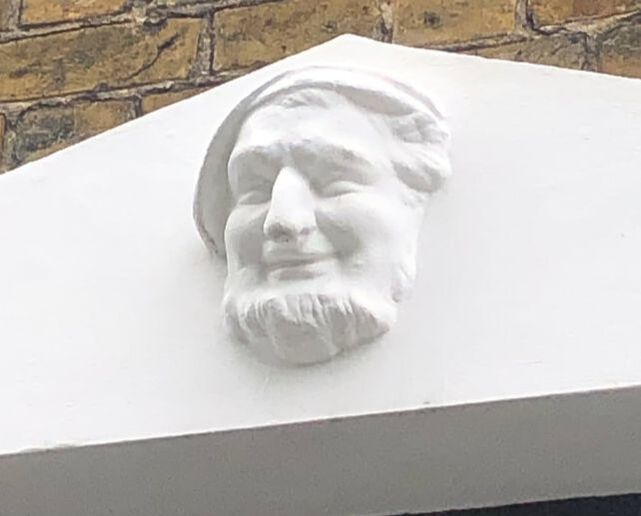
 Tavistock Terrace in Upper Holloway is home to an awful lot of gnomes. There are dozens of them above front doors and ground floor windows. We'd venture a guess that the street's gnomes almost out-number the residents. It's a global assembly of gnomes. But why? The short answer is no one knows. 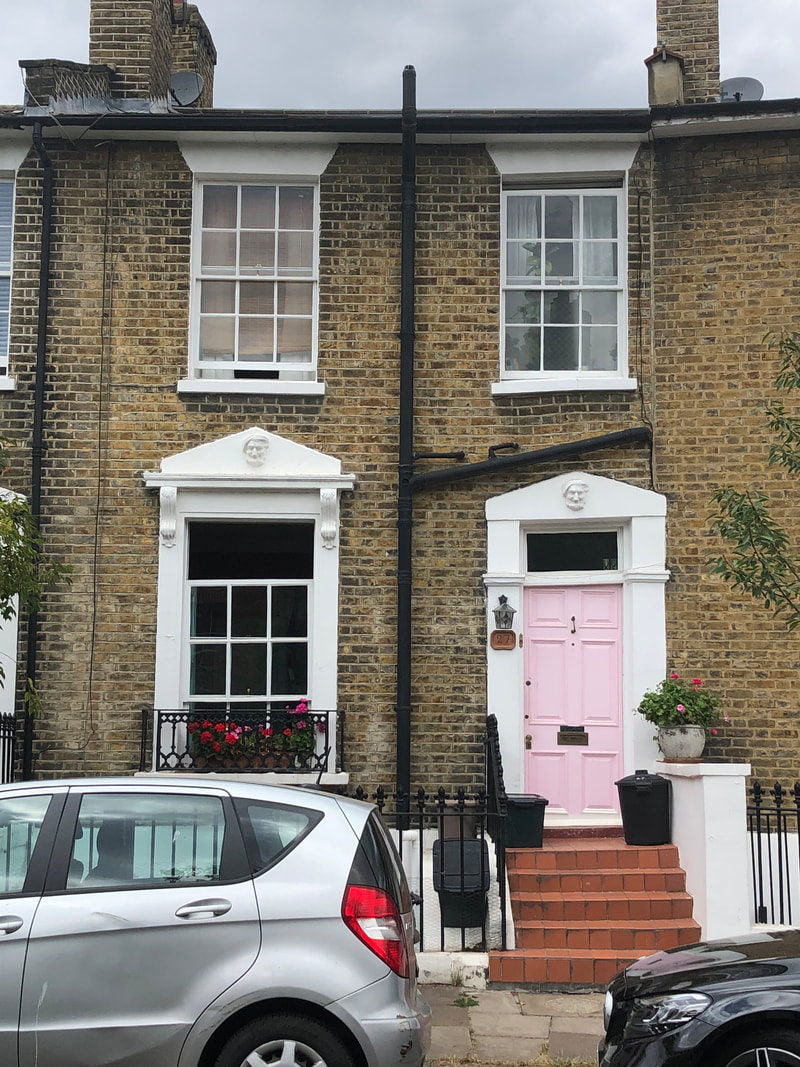 'The gnomic figures are a source of constant discussion and we often see people looking up and pointing as they walk past', one long-standing resident of the street tells me. 'For a long time we assumed they were an image of the architect or builder but I’m afraid it’s probably more mundane than that.' This fashionable street was built in around 1860 and builders were always trying to make their newly built des res's stand out. It may be that Tavistock Terrace's gnomes - or are they intended to be classical or mythical figures? - were a job lot from the local builders' yard. 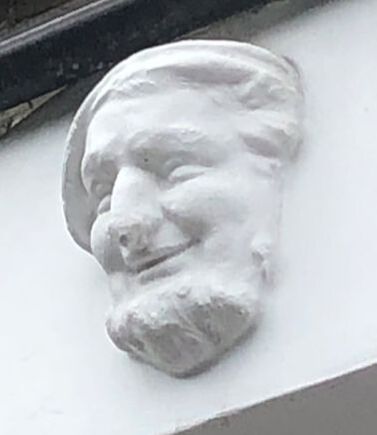 Stylised heads are not uncommon on Victorian-era terraced houses. These with gnome-like features are unusual. And a whole street of Santa's helpers is distinctly, well, distinct. But there are other examples in London. Manchester Street in Marylebone is a little older and grander, and its ornamental heads have a fuller beard, but there are in the gnomic style. Take a look: 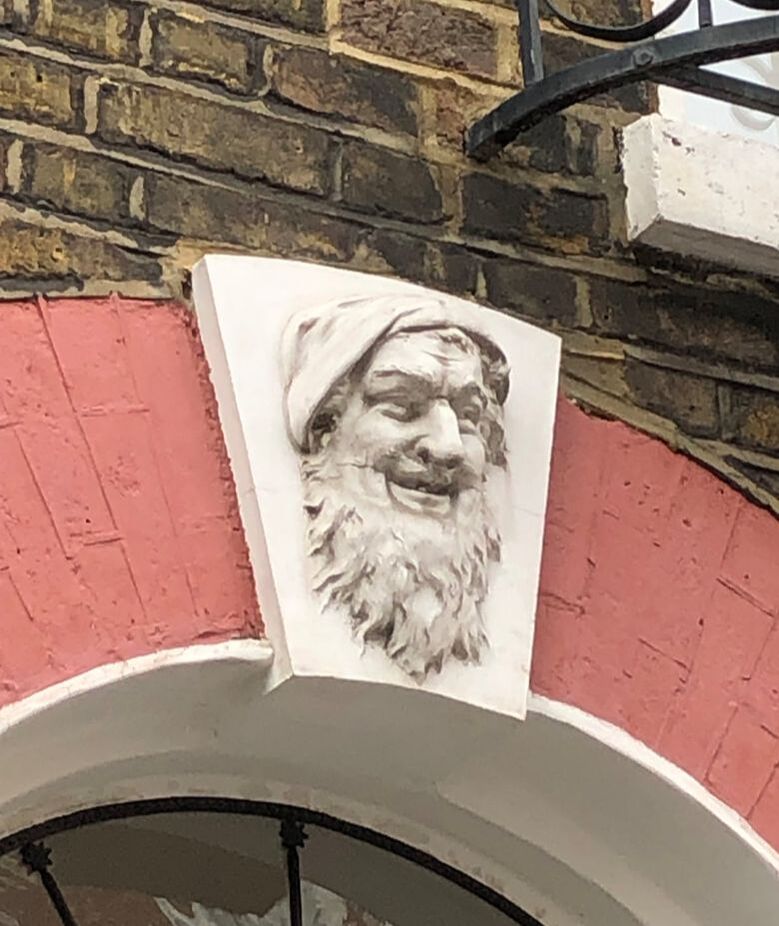 Manchester Street, Marylebone On balance, I think I prefer the Tavistock Terrace heads - they are more cheerful and welcoming. And isn't it wonderful to have these perhaps frivolous but delightful architectural survivals from another era. Of course, the uniform style suggests that Tavistock Terrace was built in one go by the same developer. And this at a time when speculative builders would often construct just a couple or a handful of houses, which is why so many North London streets consist of houses which, while similar, have minor architectural variations. If anyone knows anything more about Upper Holloway's bucolic looking figures, or any stories about them, do please get in touch!
0 Comments
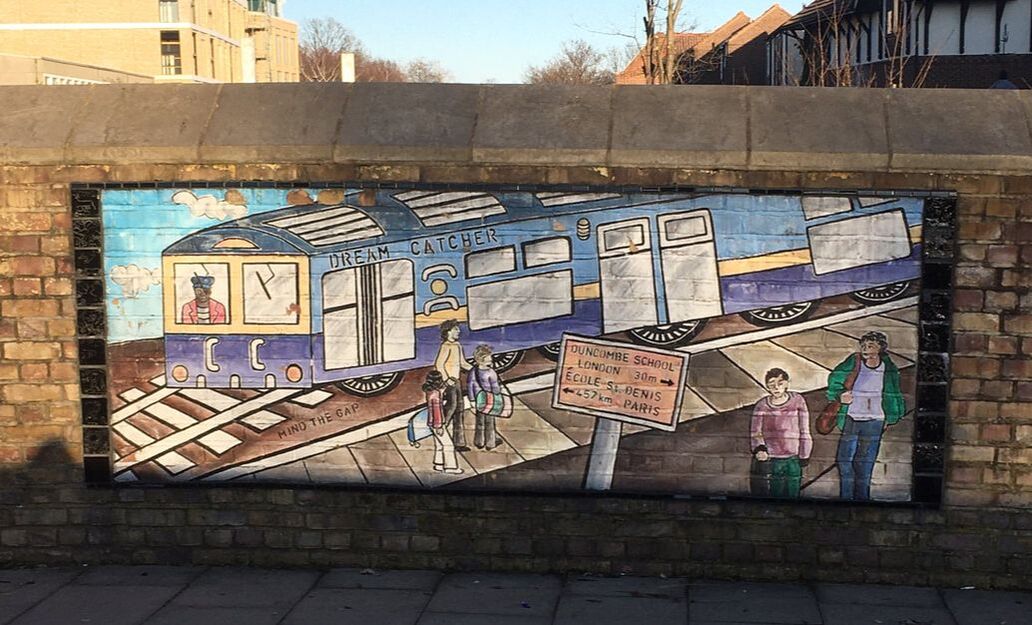 Tucked away in the back streets of Upper Holloway in North London, there's a pedestrian and cycle bridge over rail lines which is decorated by two wonderful murals. It's close to Duncombe primary school and the school and its pupils seem to have had a hand in the artwork. If you are local to the area, do seek out this spot - it's a pedestrianised section of Sussex Way just south of Fairbridge Road and only a few minutes' walk from Archway. 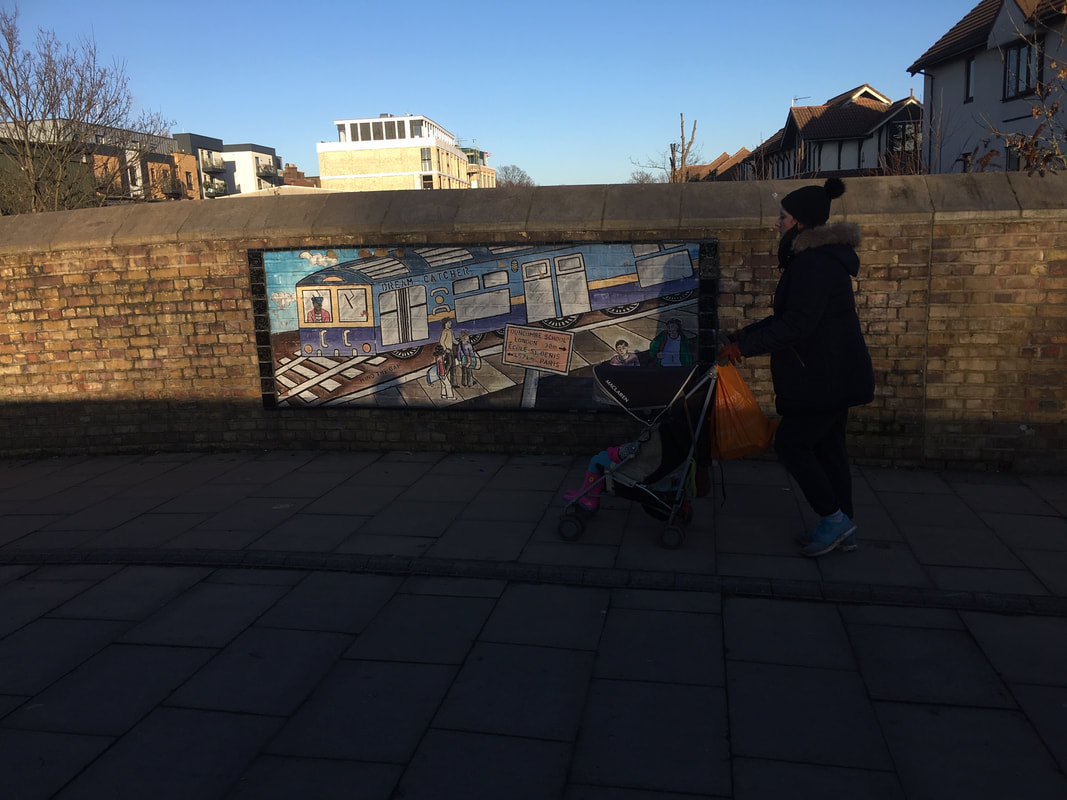 The bright winter sun caught one of the murals today, which is what captured my attention, Both are rail-themed and are bright and charming. 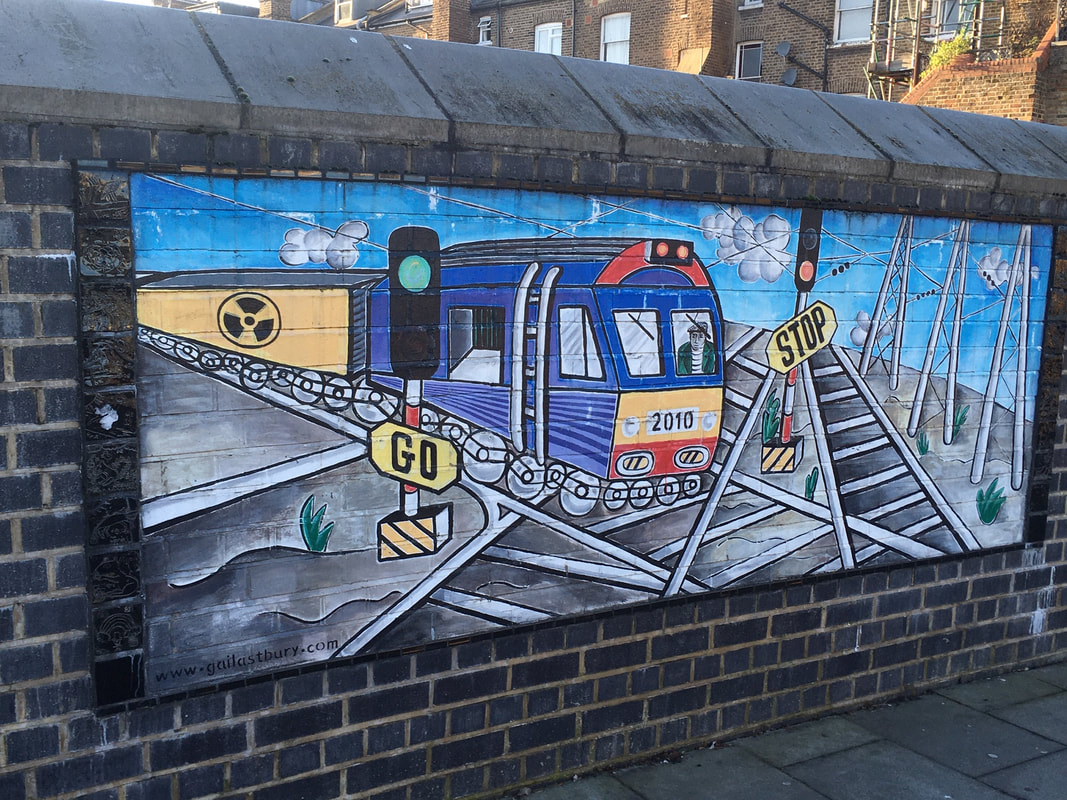 Looking more closely, you can see the name of the artist, Gail Astbury, and the designs on the black tiles which surround the murals are worth closer inspection. 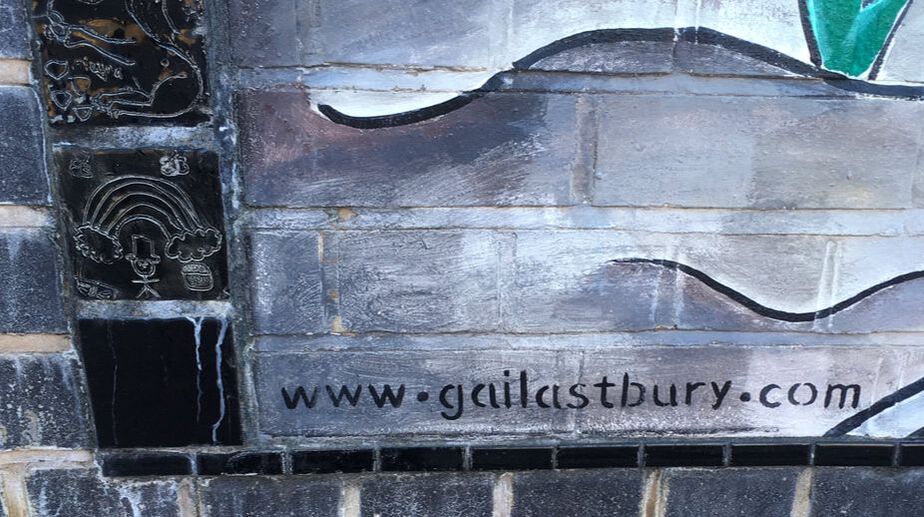 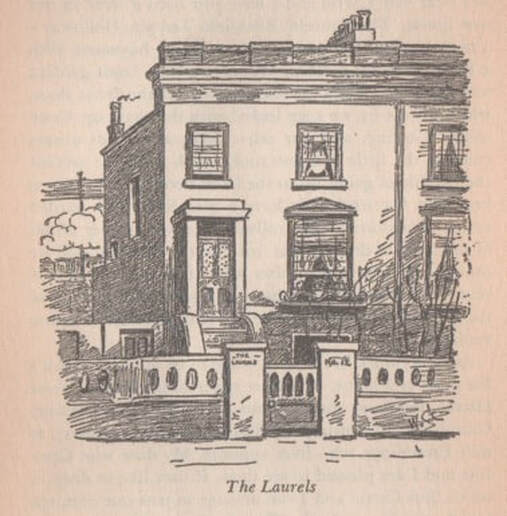 Mr dear wife Carrie and I have just been a week in our new house, 'The Laurels' ,Brickfield Terrace, Holloway - a nice six-roomed residence, not counting basement, with a front breakfast-parlour. We have a little front garden; and there is a flight of ten steps up to the front door, which by-the-by, we keep locked with the chain up. ... We have a nice little back garden which runs down to the railway. We were rather afraid of the noise of the trains at first, but the landlord said we should not notice them after a bit, and took £2 off the rent. He was certainly right; and beyond the cracking of the garden wall at the bottom, we have suffered no inconvenience. This is the opening paragraph of a comic classic, George and Weedon Grossmith's The Diary of a Nobody - which was first published in Punch from late 1888 and appeared in book form in 1892. It's a glorious comedy of manners and suburban social pretension with illustrations by Weedon Grossmith. And it immortalised the hapless City clerk, Charles Pooter, whose self-important diary we are invited to dip into . But - where was the Pooters' new home, 'The Laurels'? 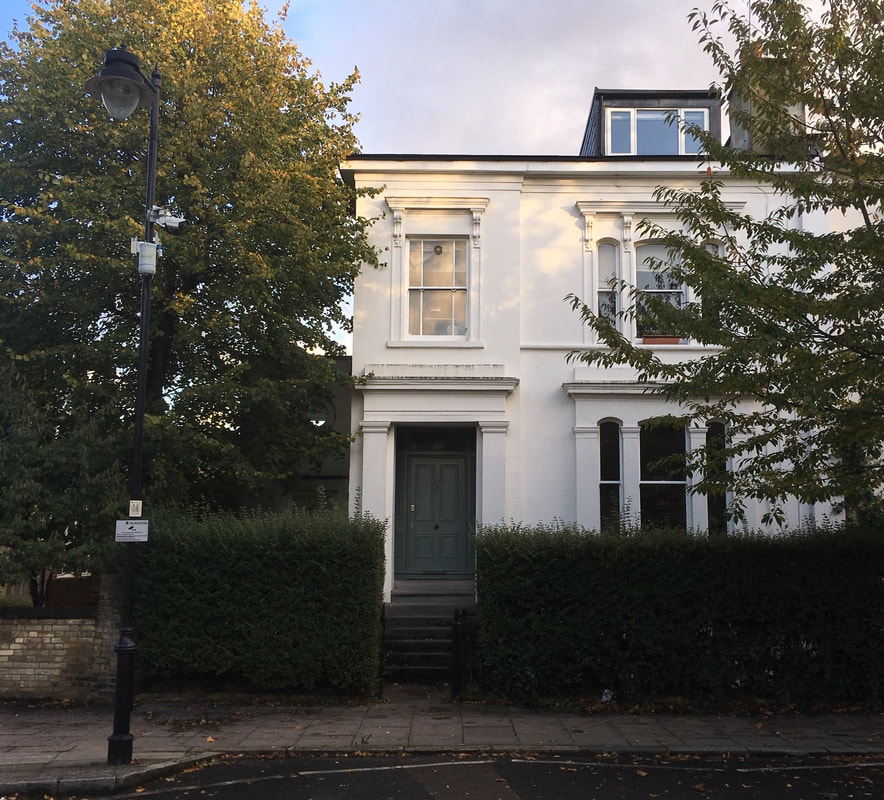 This is the most favoured model for 'The Laurels' - it's 1 Pemberton Gardens, close to St John's, Upper Holloway, on Holloway Road. It's not an exact match of either the description in the book's opening paragraph or of Weedon Grossmith's drawing, as you can see, but it's not far off - and it does back on to the rail lines at Upper Holloway station. The truth is, of course, that there is no exact match - The Diary of a Nobody is a pastiche of lower middle-class Holloway of the 1880s not a documentary. I went for a walk today around 'Mr Pooter's Victorian Holloway' and Jane, our guide, came up with an alternative theory. She believes that some of the houses fronting on to the west side of Holloway Road, close to the junction with Tavistock Terrace, are a really good fit - even though there are no railway lines to the rear. What do you reckon? 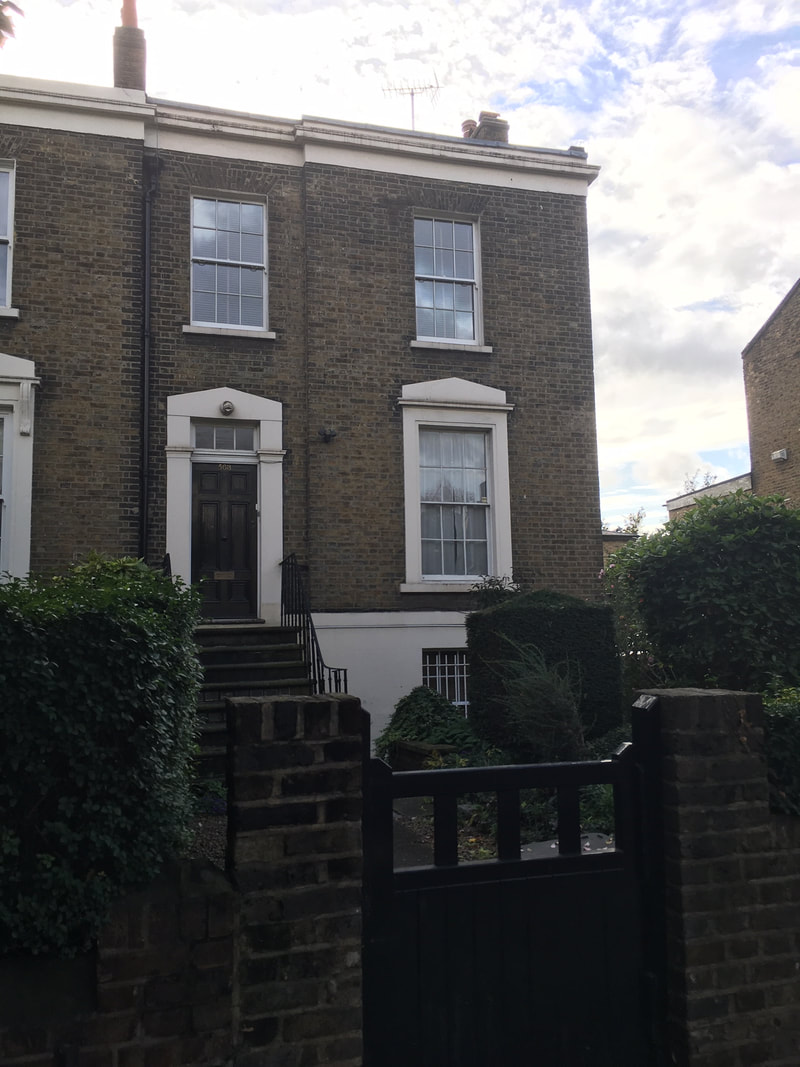 This is a good match for the architectural details in Weedon Grossmith's drawing. But the Grossmiths lived in Canonbury and he may well have drawn from houses in his own backyard for the Pooters' home.
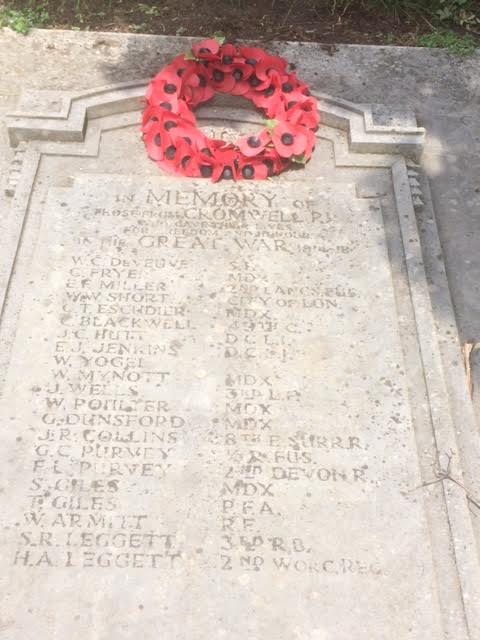
Does it matter much? No - but it is quite fun looking for Mr Pooter's "Laurels". 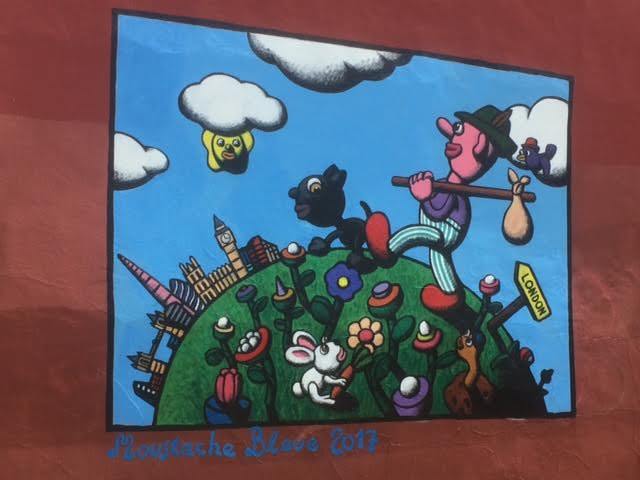 Whittington Park is one of the most unsung and under appreciated green spaces in north London. It's alongside the (still rather unfashionable) Holloway Road in Upper Holloway. And it's been spruced up a bit - including this really magical mural. 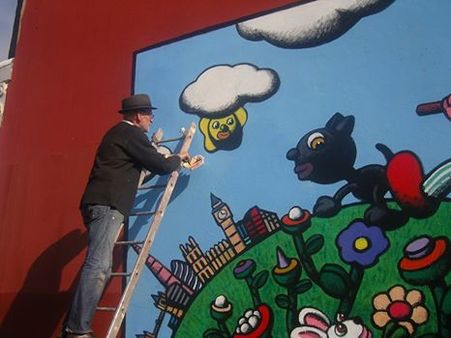 It's on the gable wall of an Irish pub - the sort with mock Celtic lettering. And it's in the unmistakable style of Moustache Bleue - this photo of him at work is lifted from his Facebook page. The theme is of course Dick Whittington and his cat - there's a lot of Whittington around, but when the park takes his name, then I don't suppose you can really object. And just to rub home the association, there's a huge topiary cat just by the park's Holloway Road entrance. 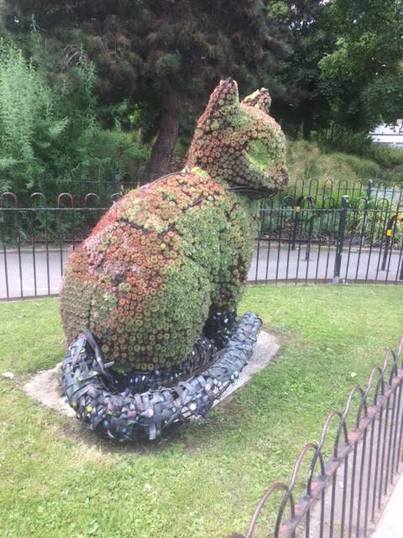 Slightly hidden away within the park is a war memorial - but with a difference. This commemorates the fallen from one particular street, Cromwell Road - a street which has been entirely obliterated by the park. It's work looking out for.
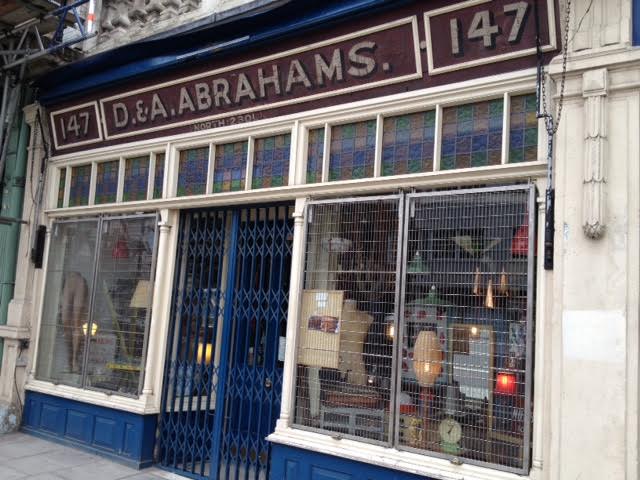 There's a heartening number of old shop signs that have been uncovered - and kept by new businesses. This example is on Holloway Road, towards the Highbury end - more-or-less opposite that very grand Islington library. It apparently used to be a butcher's shop and is now one of those 'vintage' emporiums.
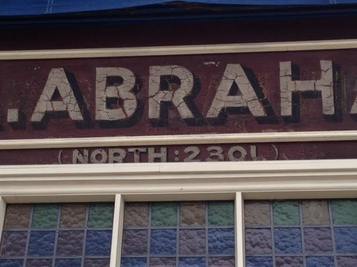
There aren't too many 01 numbers visible either - but here's one below off Oldhill Street in that enclave between Stoke Newington and Clapton (and there's an 081 also on a signboard of a Oldhill Street business which appears still to be trading). The 01 code for London was introduced from 1959, and the three letter area codes were phased out from the mid-60s. 01 was superseded by 071 and 081 in 1990. 0171 and 0181 came were introduced in 1995, and 020 five years later. 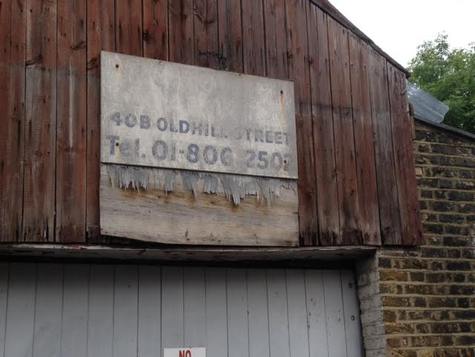 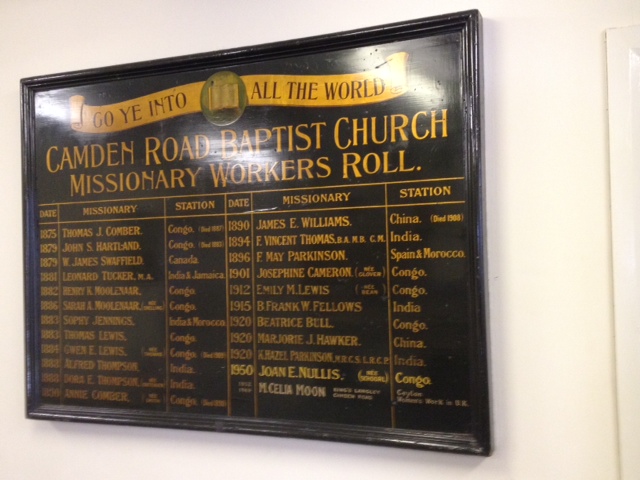
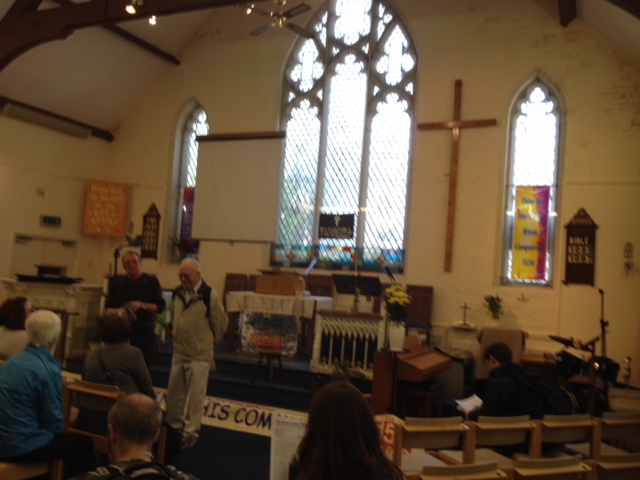
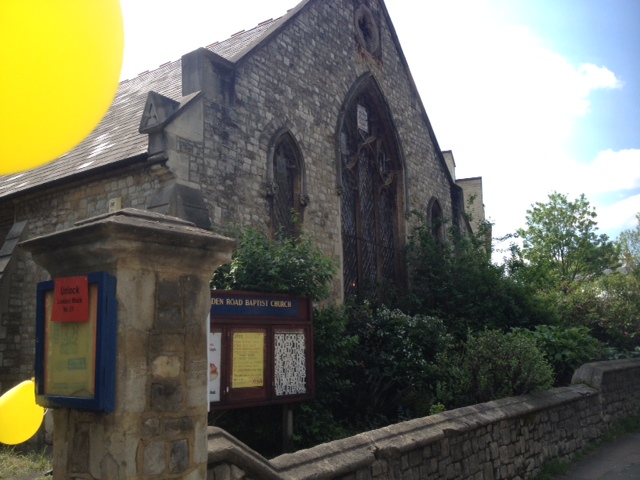
A missionary roll call in a small north London Baptist church - the first of its missionaries headed out in 1875, and the last as recently as 1950. Congo was the most popular destination, the station for eleven of the Camden Road missionaries, while seven headed out to India. 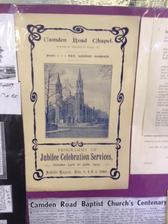 The congregation of this back street chapel has sent twenty of its own number out to preach the gospel - it feels a dated and forlorn endeavour, but it must have required courage as well as commitment to head out to Leopoldville or Calcutta. The church is just off Camden Road, on Hilldrop Road (so more in Holloway), and dates back to 1854. I called in by chance over the weekend when there was some sort of open day. The church isn't exactly thriving but it's surviving - which is quite something. It is heartening that these institutions continue to take root amid the modern city - a precarious hold no doubt, but still hanging in there. Hallelujah!
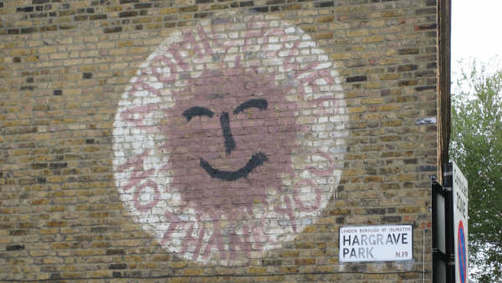
It's one of the commanding landmarks of N19 (Upper Holloway to the untutored) - and has a fair claim to be one of north London's most enduring murals. This 'smiley sun' - and doesn't the reference to "Atomic Power" date it - is painted on a gable wall at the junction of Dartmouth Park Hill and Hargrave Park. I've lived nearby for the last sixteen years, and have driven past this mural and seen it as part of my London since I moved to the city more than thirty years ago. Various attempts to find out how this smiley sun came into existence - and more details here - have thrown up two facts: it was all about the squatters' movement so evident in north London in the late '70s, and this particular piece of public art was the handiwork of Kelvin 'the mushroom maniac'. Well, I have now heard directly from Kelvin - it's only taken three years or so to track him down - and here's his account of how this landmark was born: Thanks for your interest ... in that 'smiley'! Well, can't imagine how you ever found out, but you were right, twaz me that scrolled it! How? Well, a lucky combination of circumstance I guess - A copy of that book [John W. Gofman and Arthur R. Tamplin, Poisoned Power: the case against nuclear power plants before and after Three Mile Island, 1971], a flourishing anti-nuclear movement, and me, a young headstrong hothead in thosde days, in love with life and convinced the world could be saved, (and magic mushrooms). When? Well, I can pin that down for you too - It must have been (incredibly) - 1976. How am I so certain? Well, the man who told me of your website (born at the end of '75) was a babe in our arms at the time. Homeless and living on £5 a week we heard of the incredible squatting community that thrived in that area at that time - and with a massive sign of relief we moved into that house! Why'd I graffiti my own house? Hard to say, perhaps having just got back from a nightmare demo at Aldermaston - where I'd experienced the most hideous mushroom induced vision I'd ever had in my life - (before or since) - may have had a little something to do with it! - ... Where? how? Having come across a few tins of old paint while on another blindingly enlightening anti-nuclear trip I was suddenly seized with the absolute necessity to do something about it then and there - so, in the middle of the night, much to the misgivings of my long suffering wife and convinced I'd be getting busted for it in the morning (if not while doing it) I grabbed a ladder from a building site opposite and dashed it off. (If I'd have known it was to last half a lifetime I may just have taken a little more care over it! I was in such as hurry I remember I nearly fell to my probable death in the process! - anyway, There's your story. And it's a great story, Kevin. Thank you!
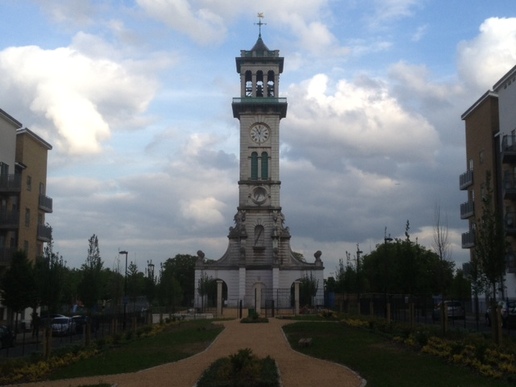
The last substantial remnant of what was once one of London's major markets - this lies between Caledonian Road and York Way. It's the clock tower of what was the Caledonian Market (or the Metropolitan Cattle Market). This was a huge live meat market which opened in the 1850s, saw steady decline in the early twentieth century and eventually became a bric-a-brac market which finally closed in 1963. The clock tower is well kept, though showing the wrong time. The wonderfully squat market pubs which were part of the original design are still standing, most of them, but barely so. 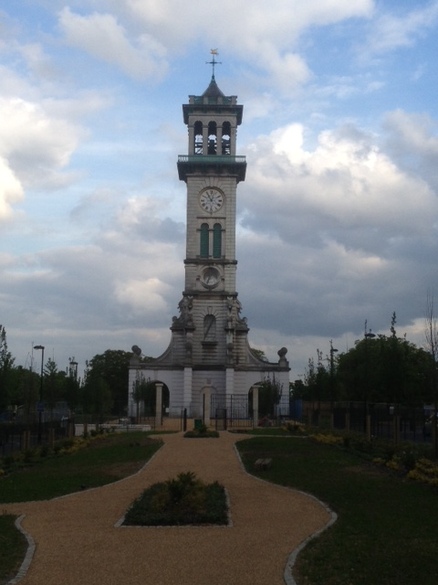
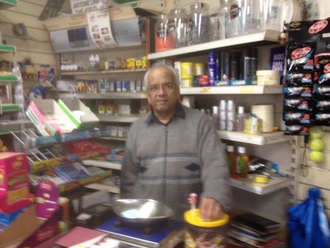 Mr Patel and his family have been delivering our morning newspapers for fifteen years or more. They have an old style corner shop on Dartmouth Park Hill - at the junction of Bickerton Road, in what oldtimers would probably call Upper Holloway. It's got papers, ciggies, sweets, a bare smattering of groceries and, that signifier of the struggling local store, top shelf porn. Mr Patel has handed over his paper deliveries to another provider. He tells me that in a few weeks the shop will undergo renovation. I am not clear how extensive that will be, or indeed whether the Patels will remain in charge. But clearly it's a landmark in the history of a local landmark. 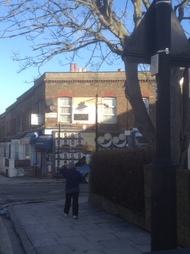 The shop has been stubbornly resistant to change - it hasn't altered in any appreciable degree since I first came to know the place in the nineties. Mr Patel and his family are often watching the TV or chatting in Gujarati in a small room just beyond the shop counter, and come out to serve as they hear the door open. It's that sort of business. A few years ago, as I recall, a modern signboard or hoarding was removed to reveal a much older sign. 'Crick's Corner'. It's still there. I've no idea whether it will outlast the renovation, but I guess it's odds against. 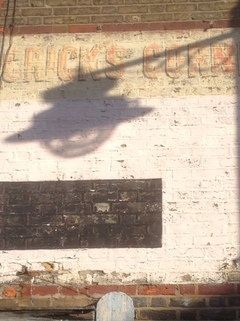 I took a photo of the old sign today - graced, in the bright morning sun, by the slightly menacing shadow of a street lamp. There are much better shots of the sign to be found online. I have often wondered about how Crick's Corner - not that I have heard anyone use the term in conversation - came by its name. Thanks to Sebastien Ardouin and his excellent website, I now know. Albert Crick ran a bookshop and lending library, flourishing in the 1920s and probably stretching back quite a bit earlier. He seems to have had two sites - here on Dartmouth Park Hill, and a short distance away on Swains Lane. By 1937, he was selling off his ex-library stock. The corner lending library, such a huge part of popular access to literature, couldn't compete with the rise of the cheap paperback. It seems that Crick's Corner came to an end - in its original manifestation - one side or other of the Second World War. Just the old painted sign survives. And if you want to see and savour this lingering vestige of an older London, don't hang around! 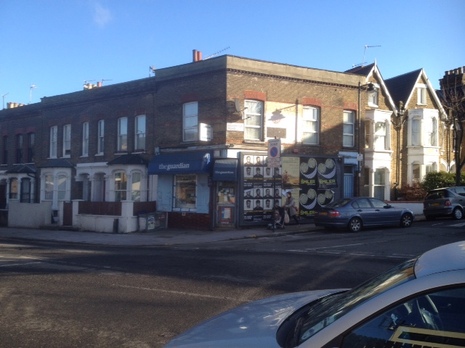 LATER: my old friend and collegue Bob Trevor, who grew up in these parts, got in touch to say: Another landmark of my life gone. Mr Crick used to cash cheques for my father, deliver newspapers and the "Boy's Own Paper" for me. His son and daughter-in-law lived next door to us in No 79. My mother and Mrs Crick jnr were great pals. In those days there was a parade of shops stretching from Chester Road to Raydon St. Happy memories.
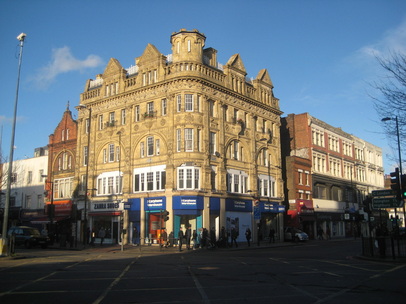 Nag's Head, Holloway Road It wasn't intended as a New Year wander. If the No. 4 had been running a regular service, I wouldn't have walked anything like as far. But today - part flaneur, part keep fit resolution - I hiked the whole distance from Dartmouth Park in north London to Dalston Junction. Do come with me! The light was wonderful - a bright winter sun. I'd never seen the Nag's Head looking quite so bright. It hasn't been a pub for the past seven years, and hasn't been the 'Nag's Head' for a great deal longer - but it still appears on bus routes, and gives its name to the neighbourhood. 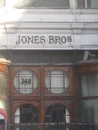 Holloway Road A little further down Holloway Road I passed a solitary, sad reminder of the wonderful Jones Brothers department store - Waitrose now stands on most of the site. Jones Brothers was much loved across north London. John Lewis stubbornly refused to listen to a lively local campaign demanding that the store be saved. It closed in 1990. Holloway Road has never been the same since it went. 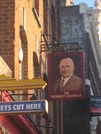 This is Arsenal territory, and in case anyone should forget, there on Holloway Road is a pub named after the club's greatest manager, at least until Arsene Wenger came along. 'The Herbert Chapman'. Earlier Chapman had managed Huddersfield Town (my boyhood team) during their golden spell in the 1920s. He is regarded as one of the greatest team managers, and a great moderniser of the game of football. 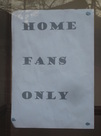 The notice in the pub window saying 'Home Fans Only' seems a touch unnecessary. But I suppose any Spurs or Chelsea fans intruding into this Gunners' pub can't say they hadn't been warned. A few yards further down, a left turn, and there it is - the Emirates stadium. The home of a club which knows, and values, its history - as you can tell from the museum, the statues, the billboards. 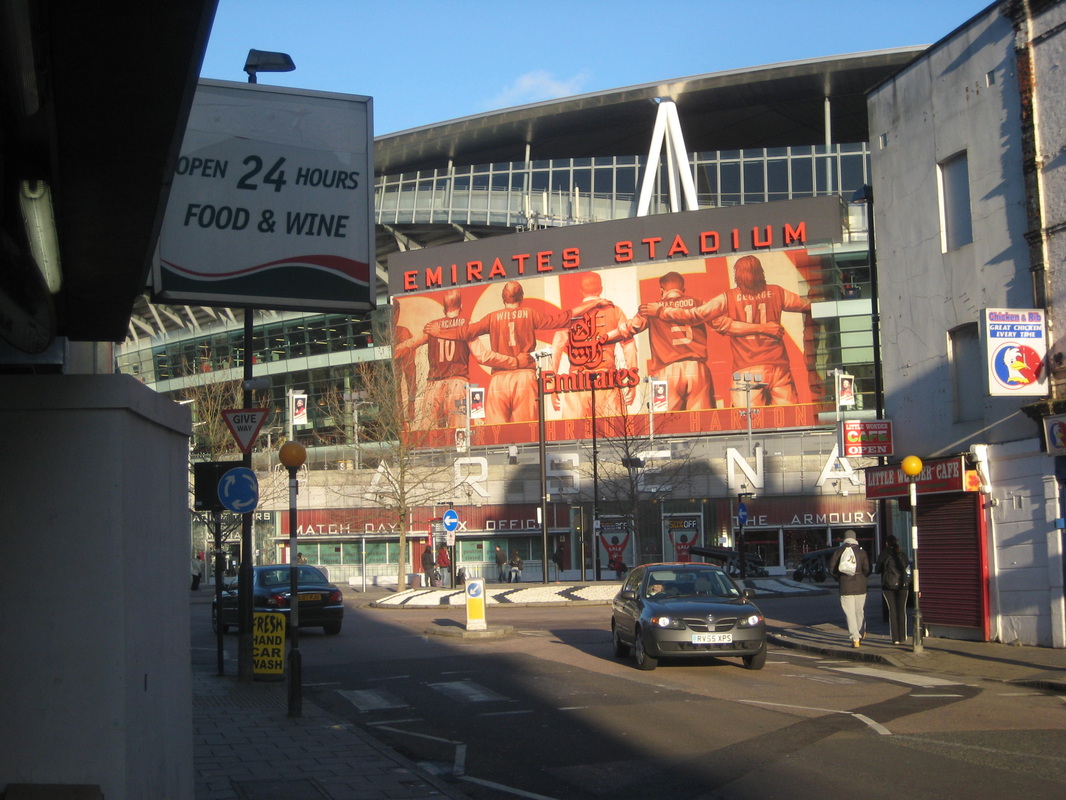 Arsenal's Emirates Stadium  From there, cutting across Highbury, along Clissold Park, to Stoke Newington. And as perhaps befits the old stamping ground of the Angry Brigade, one of the first things I spot is the skull and crossbones flying high. Can anyone explain why? On the far side of the park, the crenellated old pumping station, now a climbing centre, stands out. I seem to remember that the IRA once hid a cache of weapons in the filter beds which fed the water pumps. The site was long ago cleared and is now a housing estate. 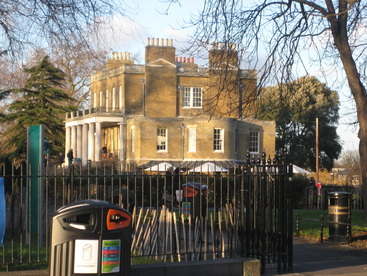 Clissold House, in Clissold Park The park has many delights, the greatest being the colonnaded Clissold House - built in the 1790s for a Quaker merchant and anti-slavery campaigner (this is Hackney after all). A little further along Stoke Newington Church Street is the old church, in part mid-16th century and hugely more elegant than the other St Mary's across the road. 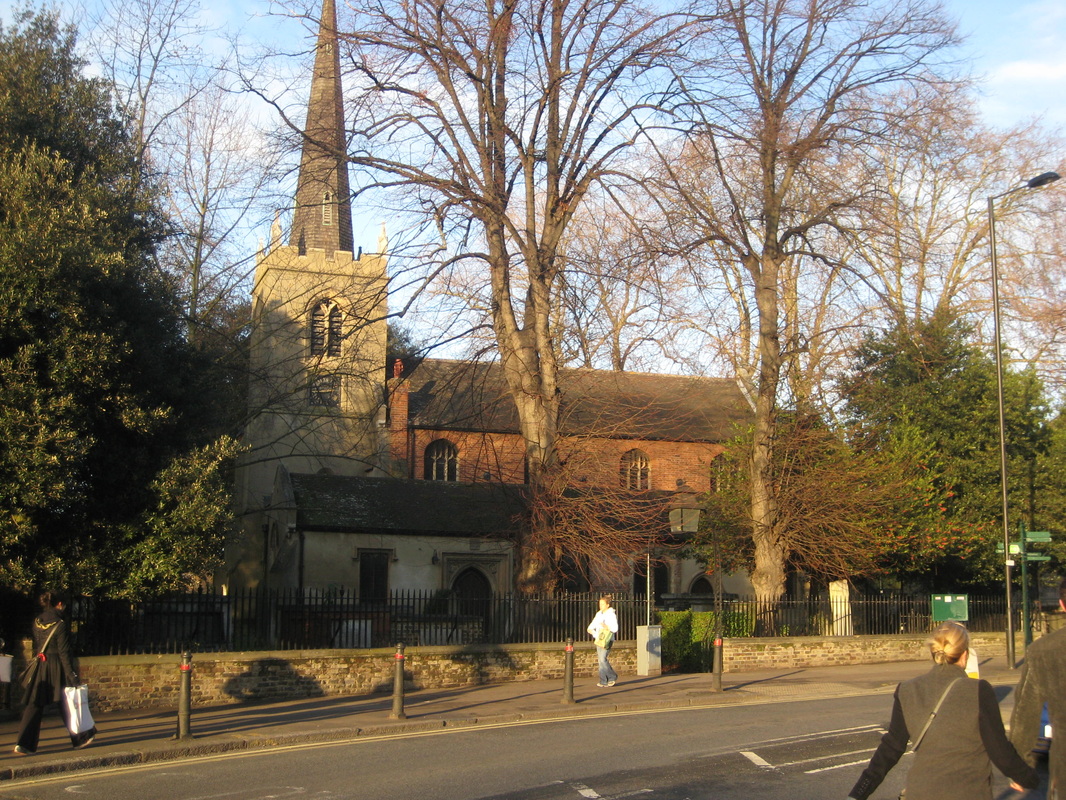 St Mary's old church, Stoke Newington Church Street 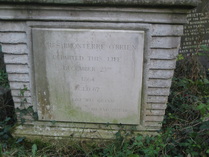 I had planned to treat myself to lunch at one of the trendy Church Street cafes, but hundreds of others had the same idea. So I ploughed on to the Victorian valhalla at the eastern end of the street - Abney Park cemetery. It's best known for the grave of William Booth, founder of the Salvation Army. But another tomb demands at least as much attention. 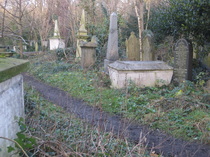 The two photos on the left show the last resting place of the Chartist leader and thinker, James Bronterre O'Brien. His remarkable followers, the O'Brienites, were key figures in London radicalism for a full quarter century after their leader's death in 1864. The inscription, spruced up in the 1980s but faithful to the original, reads rather sombrely: 'His life was grand, his death was sad and drear'. On to Stoke Newington High Street - heading south, past the excellent bookshop, and now amid an array of Turkish kebab shops. Above one is the most enticing shadow sign I've seen in a long while. Enough to prompt me to pop into the cafe, and have a chicken with honey and mustard ('no kebabs', I was told, 'haven't had a chance to marinate the meat because of the holidays'!) 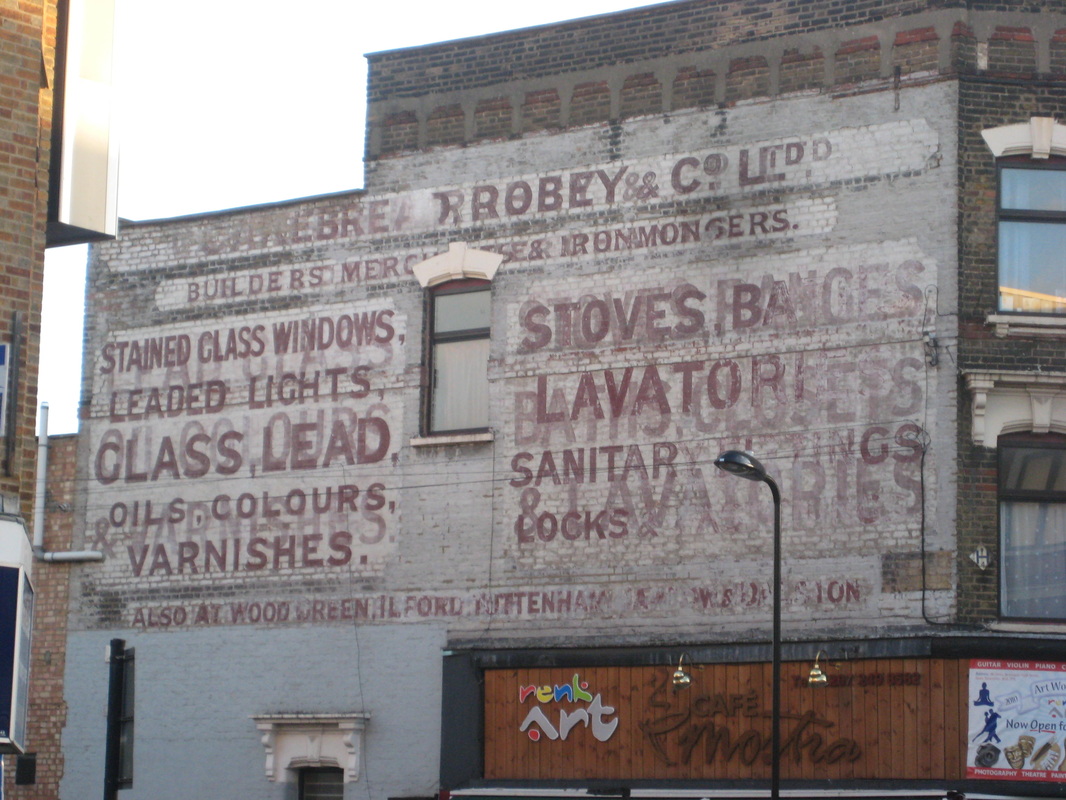 Stoke Newington High Street 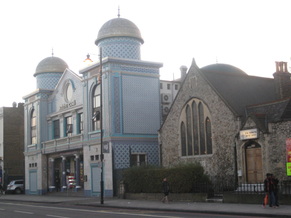 Stoke Newington Road By the time I had eaten, the light was beginning to fade. I hurried on south, past Alexander Baron's Foulden Road, stopping to admire the strange juxtaposition of places of worship just across the road. A small, homely old Baptist church, probably with a largely Caribbean congregation - overshadowed by the mosque and halal grocery next door, a converted cinema decked out with eye catching blue tiles. 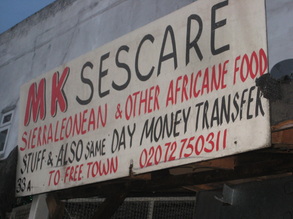 Ridley Road As Stoke Newington shades into Dalston, and Stoke Newington Road becomes Kingsland High Street, African shops, stalls and bookstores become more evident. Ridley Road market, once one of Oswald Mosley's rallying points, is part African, part Caribbean, part Pakistani. I had never seen Punjabi run fish stalls before (traditional Punjabi cuisine is not in the least piscatorial) - but Ridley Road has quite a few. 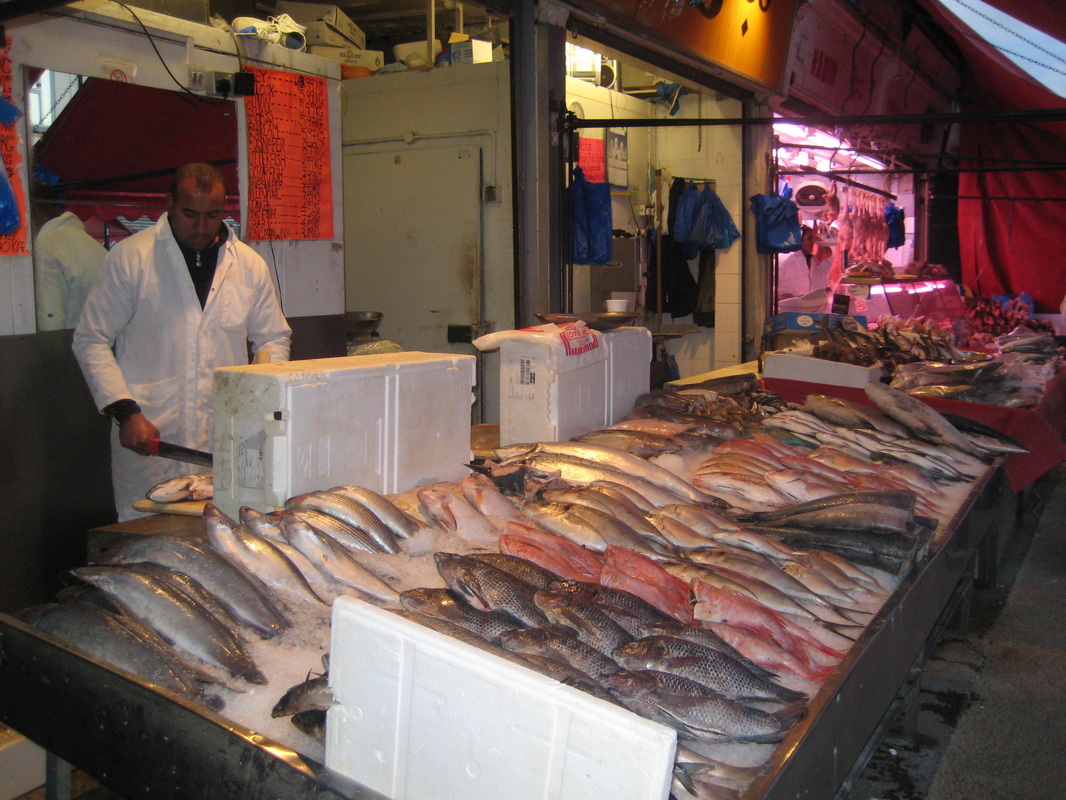 A fish stall on Dalston's Ridley Road Just a little further south to Dalston Junction, on to Balls Pond Road - and my walk's over. I hop on to a 38 to the Angel, and then take the Northern line back home. Close to three hours of wandering, I reckon. Thanks for your company.
|
Andrew Whitehead's blogWelcome - read - comment - throw stones - pick up threads - and tell me how to do this better! Archives
April 2024
Categories
All
|
 RSS Feed