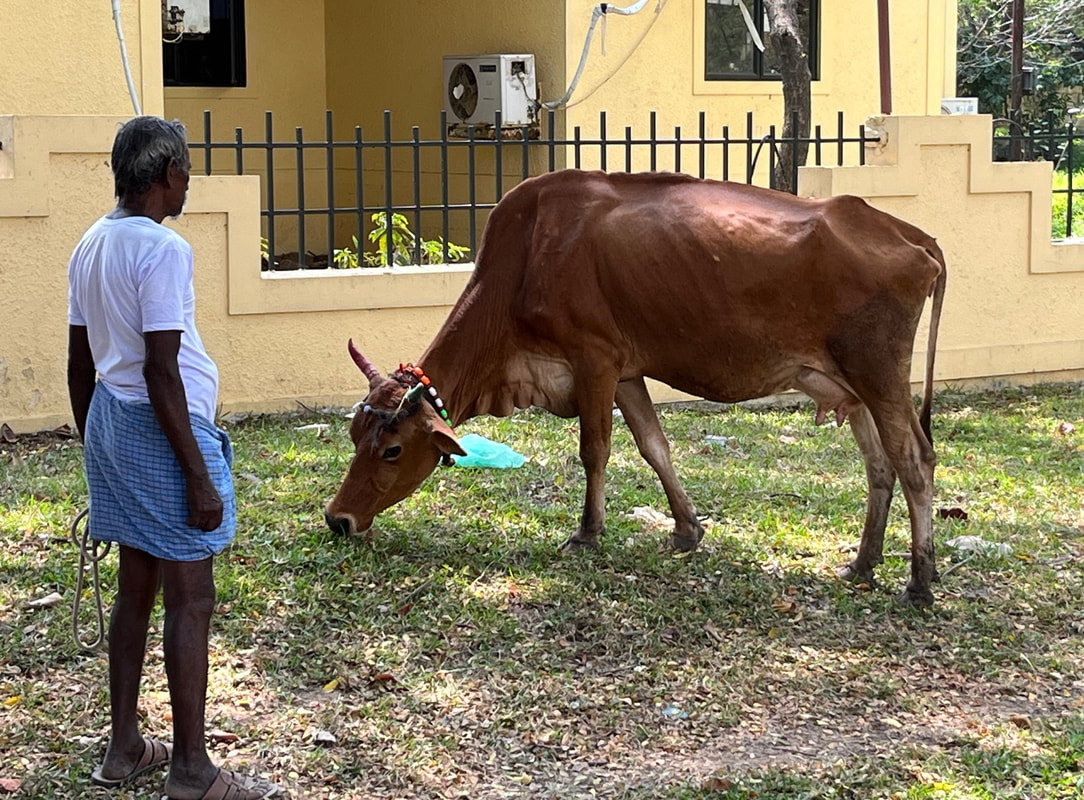
 The urban cowkeeper is an occupation which is dying out in much of India. Once it was entirely normal to see a cow strolling through city streets and snacking on the rubbish which accumulates in the gutters. Now the press of vehicles, and the meagre economics of small-scale cowkeeping, have made the big city cow, and city cowkeeper, something of a rarity, at least in the country's principal urban centres.. 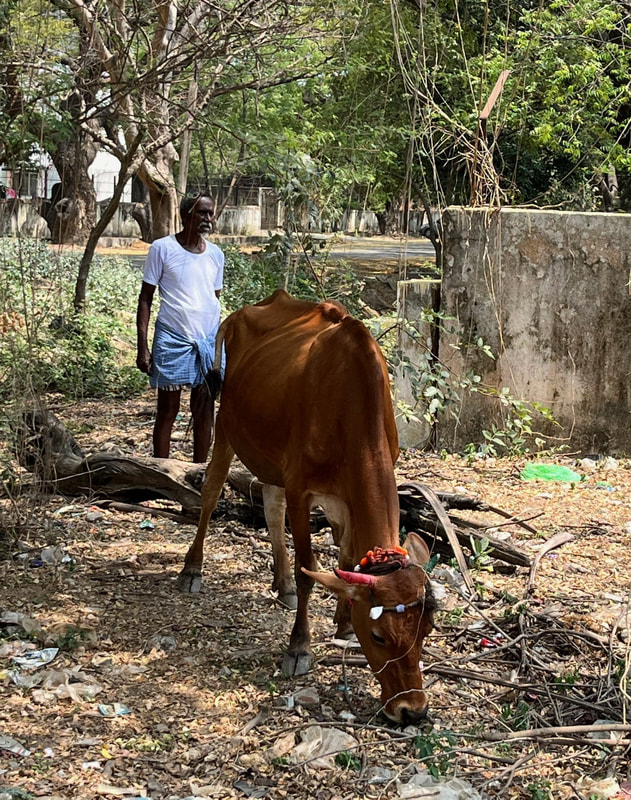 Near the college where I teach, in an area of Chennai where the roads are quiet and where there's a bit of greenery, it's still fairly standard to see cows and their keepers. It's usually a job for older men - they often are just caring for a couple of cows, and I suspect they are doing the work out of custom and habit as much as to earn a living. These two cows caught my attention because they are so clearly well cared for - with painted horns, and in one case a necklace to match. 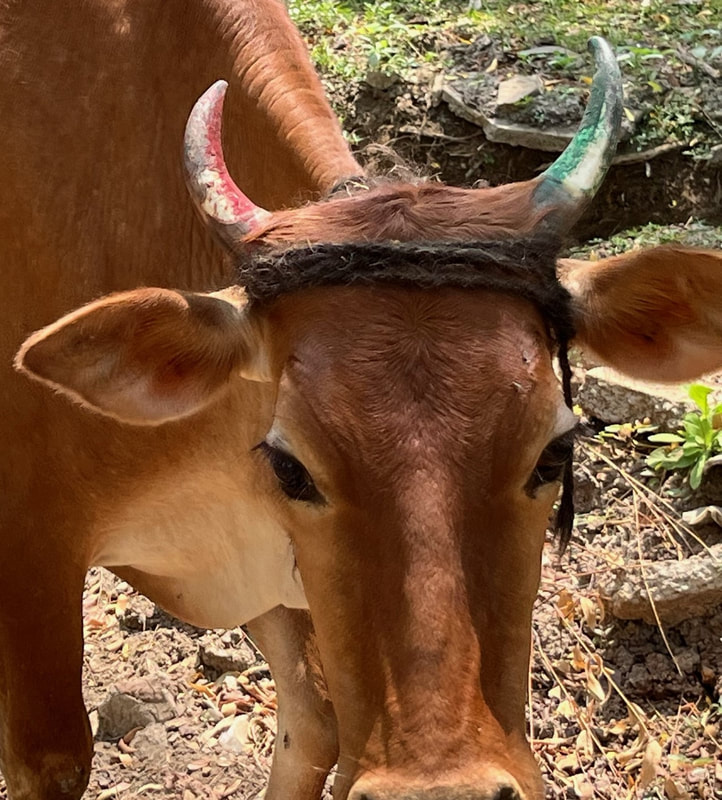 I asked what the cows were called. But my query, in basic Hindi (yes, I know the cowkeeper was almost certainly a Tamil speaker), drew the one word response: 'cow'. In English! And I never discovered the name of the cowkeeper himself. 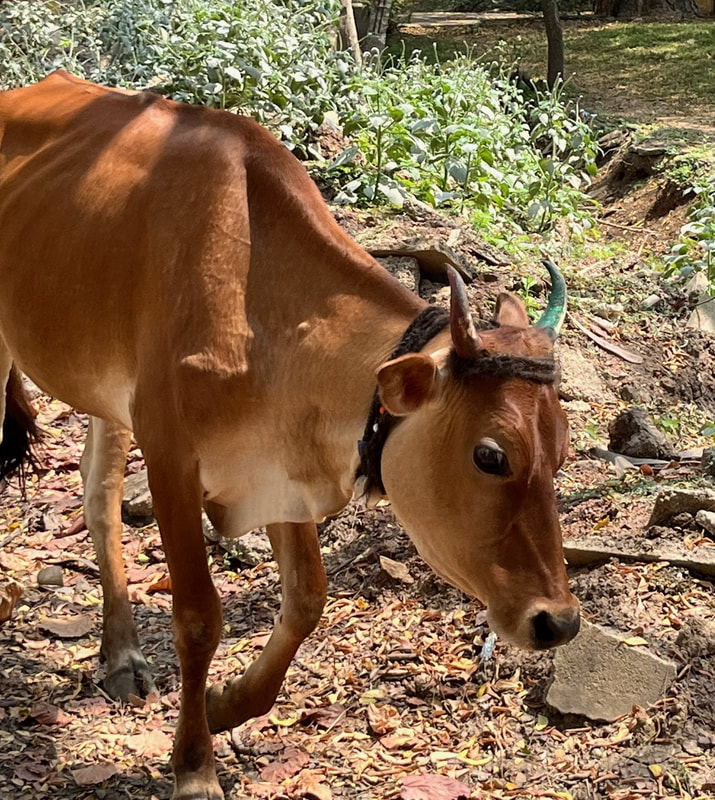 There's a little bit of grass for the cows to graze, but they also stick their noses into a lot of the rubbish which, alas, is strewn along the roadsides. Not very appetising! At least not for me - it seems to work for the cows. The two cows took divergent routes -within sight of each other but not exactly close grazing companions. But I finally managed a shot which included both beasts and their keeper. 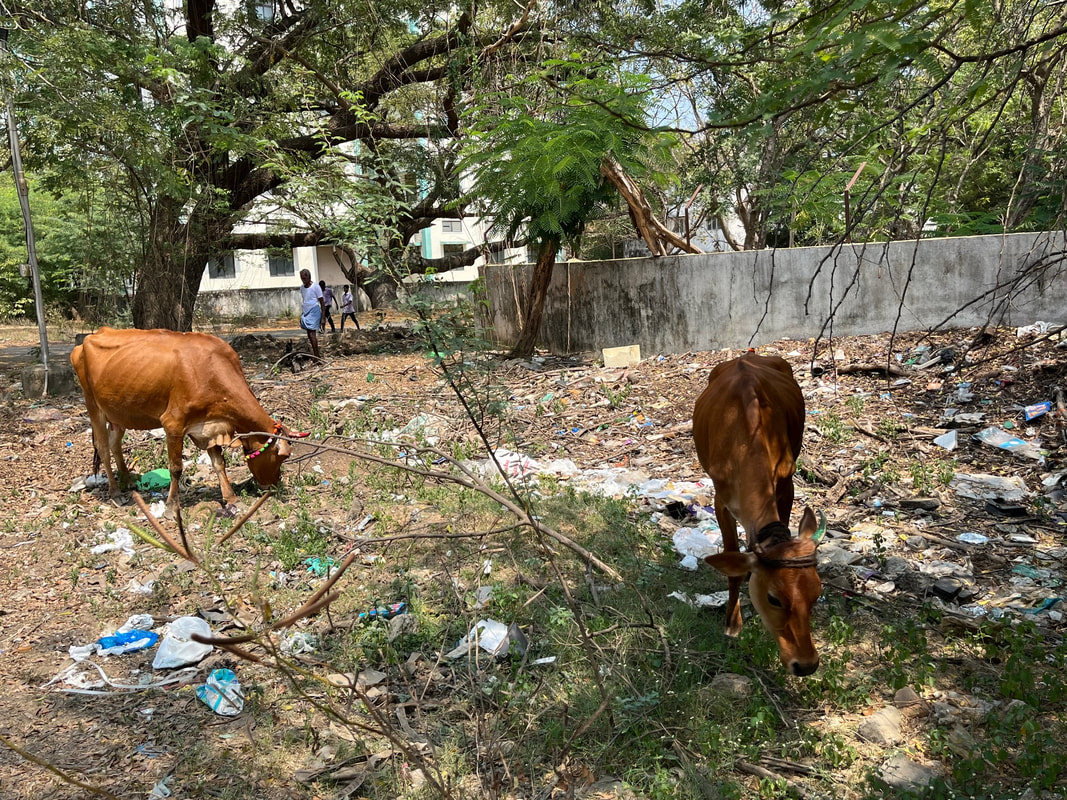
1 Comment
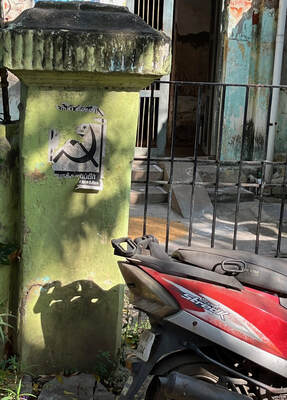
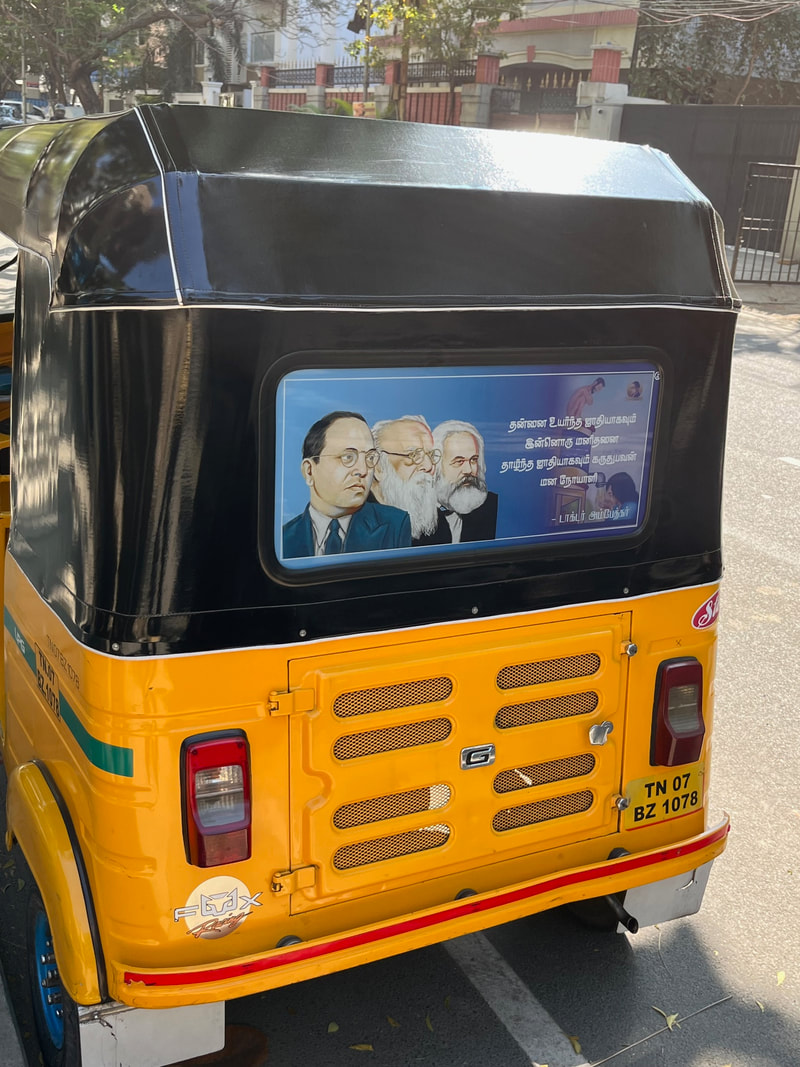
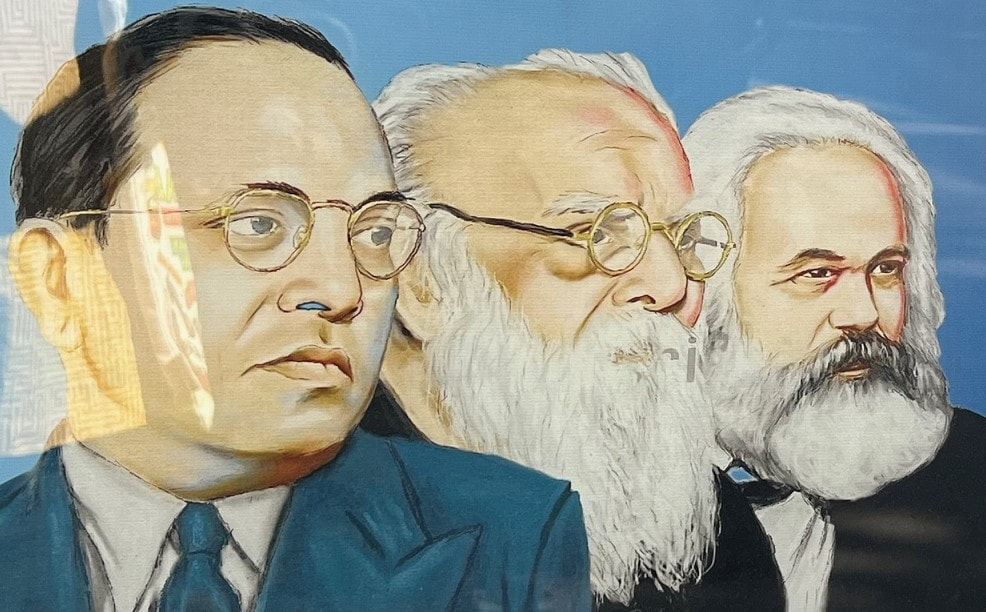 My first day back in Chennai, a wonderful city where I'm teaching for an eighth successive year. And what do I come across just outside where I am staying? This unholy trinity: Ambedkar, Periyar, Marx. 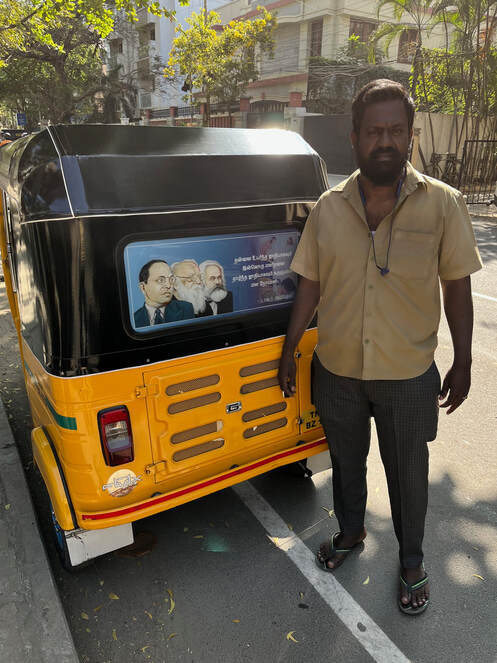 They were on the back of Ganesh's auto-rick. And he was very happy to get out of his auto - I confess I interrupted his snooze - to be photographed with his political icons. B.R. Ambedkar (1891-1956) is the great political hero of India's Dalits and a distinguished jurist who was the main figure in the drafting of India's constitution. Periyar (1879-1973) is regarded as the founder of the Dravidian moverment in Tamil Nadu, and renowned as an opponent of caste privilege and as a crusading atheist. And Karl Marx (1818-1883) is the German-born political philosopher who gave his name to Marxism and is regarded as providing the ideological foundations of communism. The quote in Tamil which accompanies the three stylised portraits is from Ambedkar. 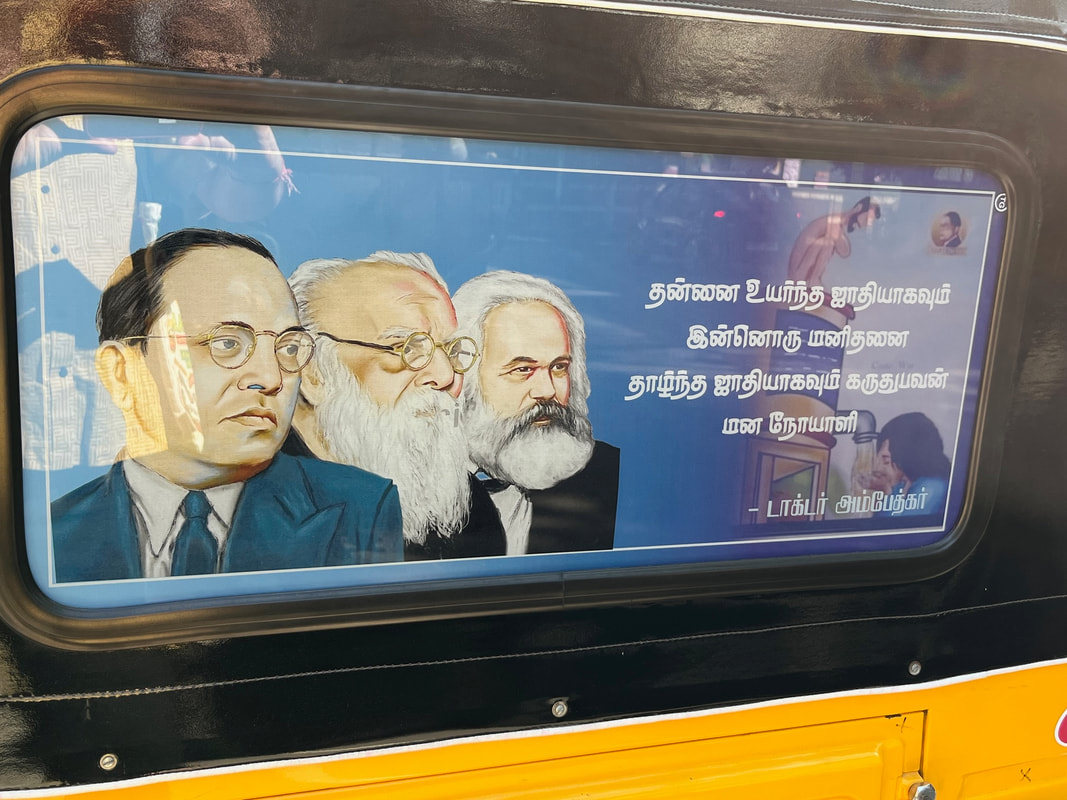 When you think of communism in India, Kerala springs to mind - the only state which currently has a communist chief minister; and also West Bengal, which was for decades a CP stronghold, though not any longer. But of the five seats in the directly elected house of the Indian Parliament currently held by the Communist Party of India (Marxist) and its rivals the Communist Party of India, four represent constituencies in Tamil Nadu. That's not because Tamil Nadu is inclining to the hard left, more a result of both parties' place in an alliance led by the DMK, the centre-left party which currently dominates Tamil politics.
To be honest, there's not much to suggest that either Marx or the hammer and sickle is making much of a mark in politics here.
But it's heartening to come across this gathering of the historical greats in an unexpected place - on the back of a Chennai auto-rick!
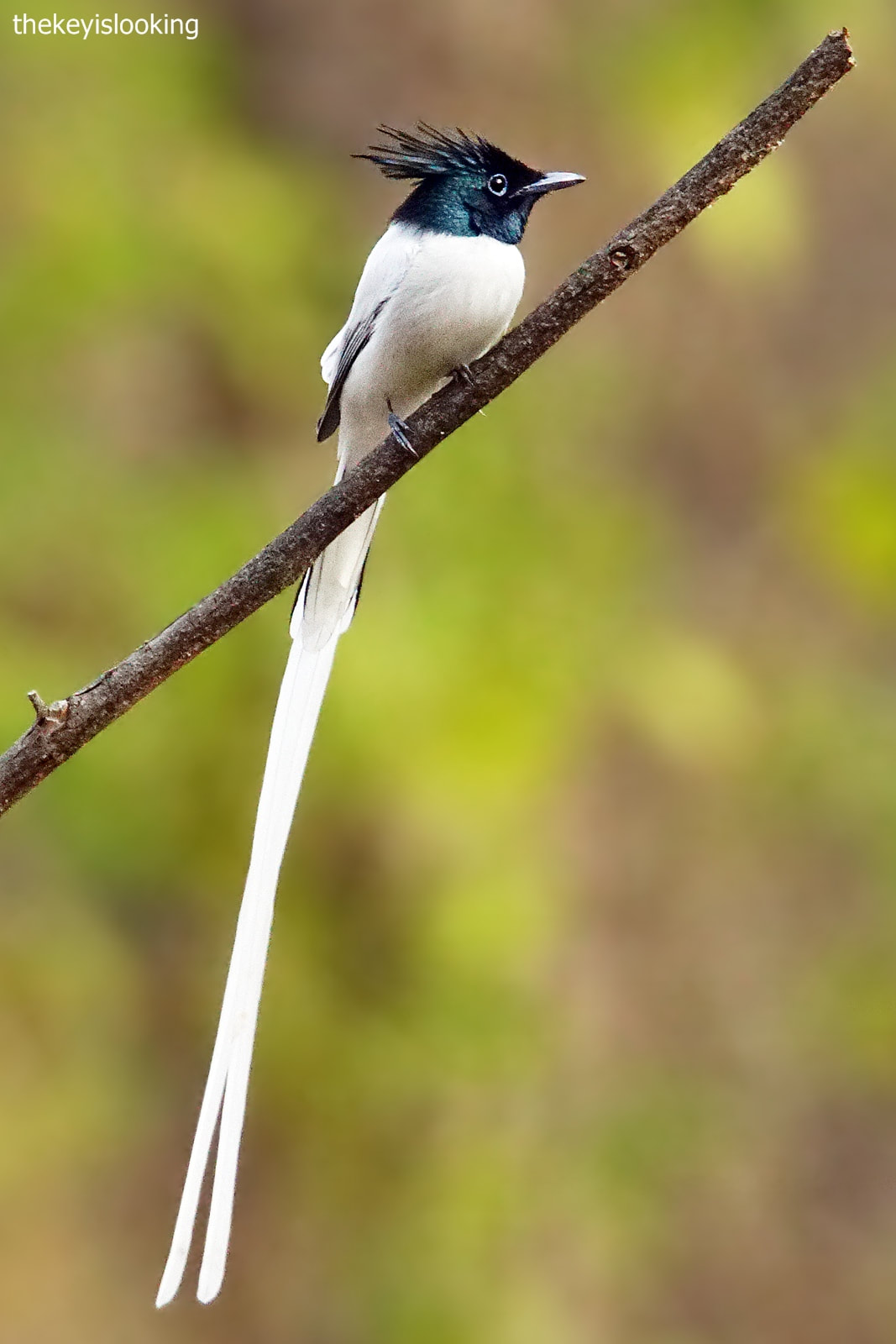
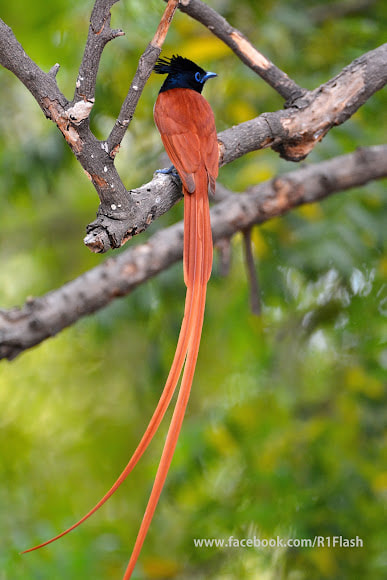
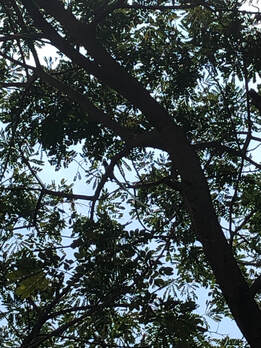
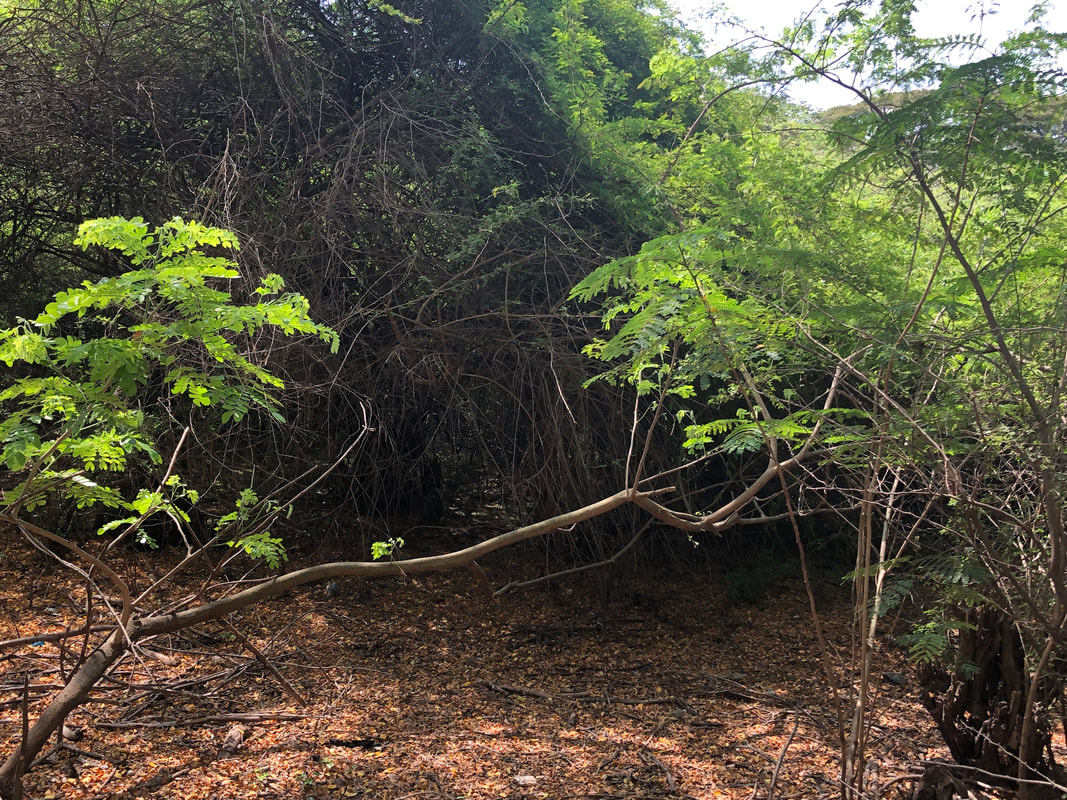
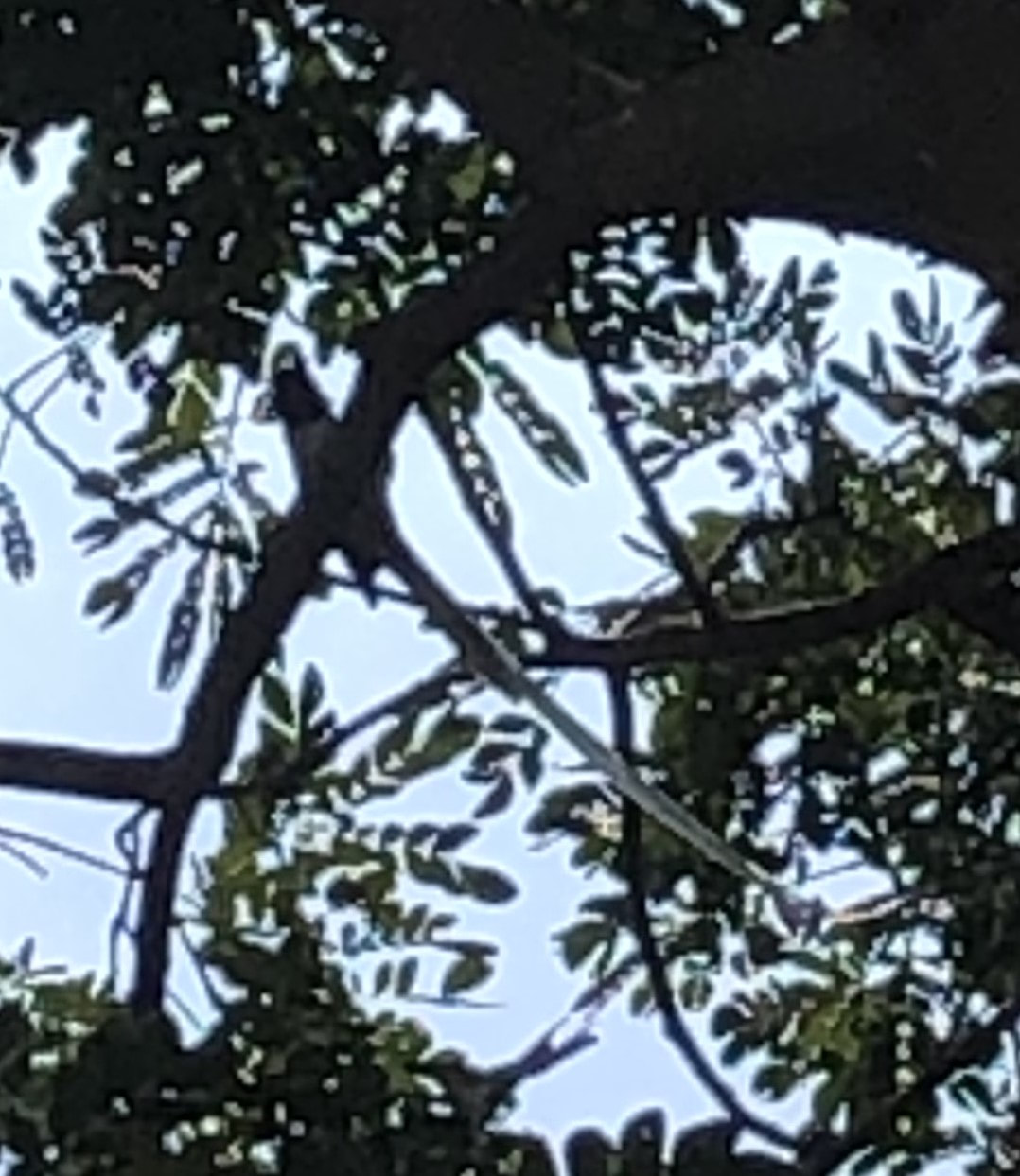
Introducing one of the most beautiful birds I've ever seen - the Indian paradise flycatcher. These are not my photos, alas. But I have had the good fortune to glimpse this elusive bird while in Chennai in both colourings. The birds pictured are both males. Alongside the college I teach at in Chennai is a piece of land which has largely reverted to jungle. It's said that there's a haunted guest house hidden behind the foliage. There, on about a dozen occasions, I've seen the white version of this magical bird. It's sometimes perched under a dense canopy of branches, biding its time. Then it moves in staccato fashion, catching the eye with the flash of its amazing tail feathers. It rests for a moment, and then it's gone. Al least, that's my excuse for not managing even a passable photo. I did get a couple of hurried shots on my phone. Here they are, as taken and then zooming in on this little dash of paradise.
No, I know they won't win any prizes. Nor will my video clips, but you do get a sense of the vivid splash of colour when it flits around And there's another touch of it here - that tail must be 40 or 50 centimetres! And then at the Theosophical Society's headquarters here the other day, I had the great good fortune to see, albeit fleetingly, the rufus-coloured version of this same species. Spectacular! Once again, my photography didn't quite live up to the moment - but here goes - 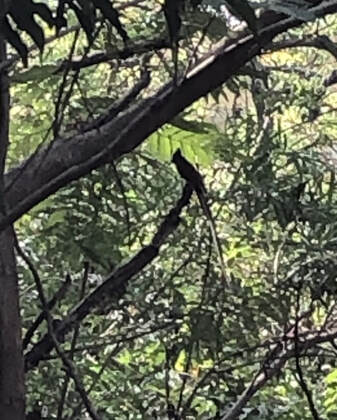 I did say it was just a glimpse of paradise - but what a joy!
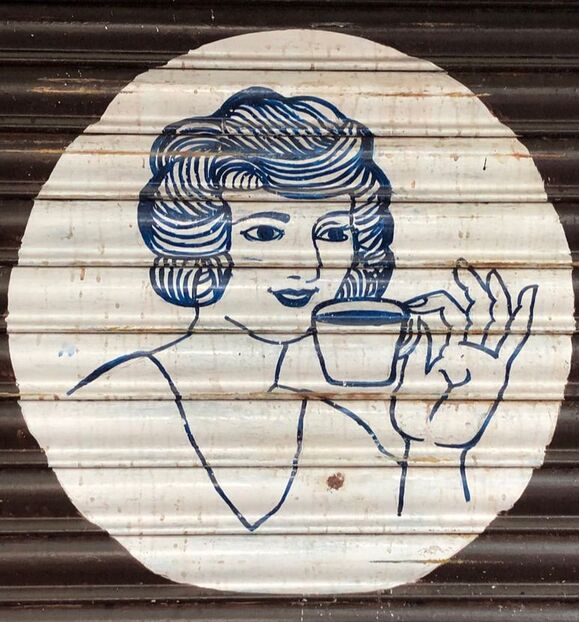 T Nagar is the beating commercial heart of Chennai. It's where the big silk and sari shops are, and the glitzy jewellery stores, and where Pondi Bazaar pulls in the punters. The locality's full name - which absolutely nobody uses - is Theagaraya Nagar and it was developed from the 1920s, though even the older commercial buildings now standing don't date back beyond the 1950s. I went for a heritage walk round T Nagar this morning with Madras Inherited, looking at - among other things - the more traditional shops and businesses and the signage they use. 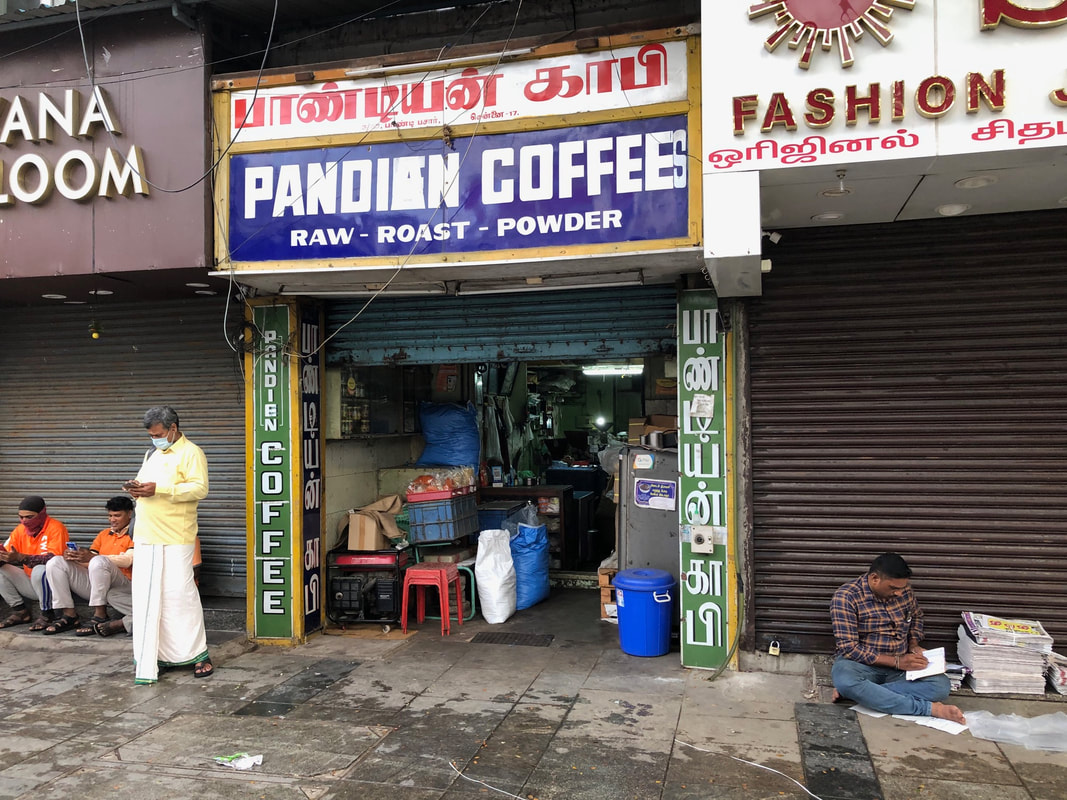 Pandian Coffees are traditional coffee roasters, producing the filter coffee for which South India is (justly) famous. The signage is in enamel - a sign of something close to antiquity in this bustling, fast evolving neighbourhood (if it doesn't look all hustle-and-bustle in this photo, that's because it was taken at half-past-six in the morning).
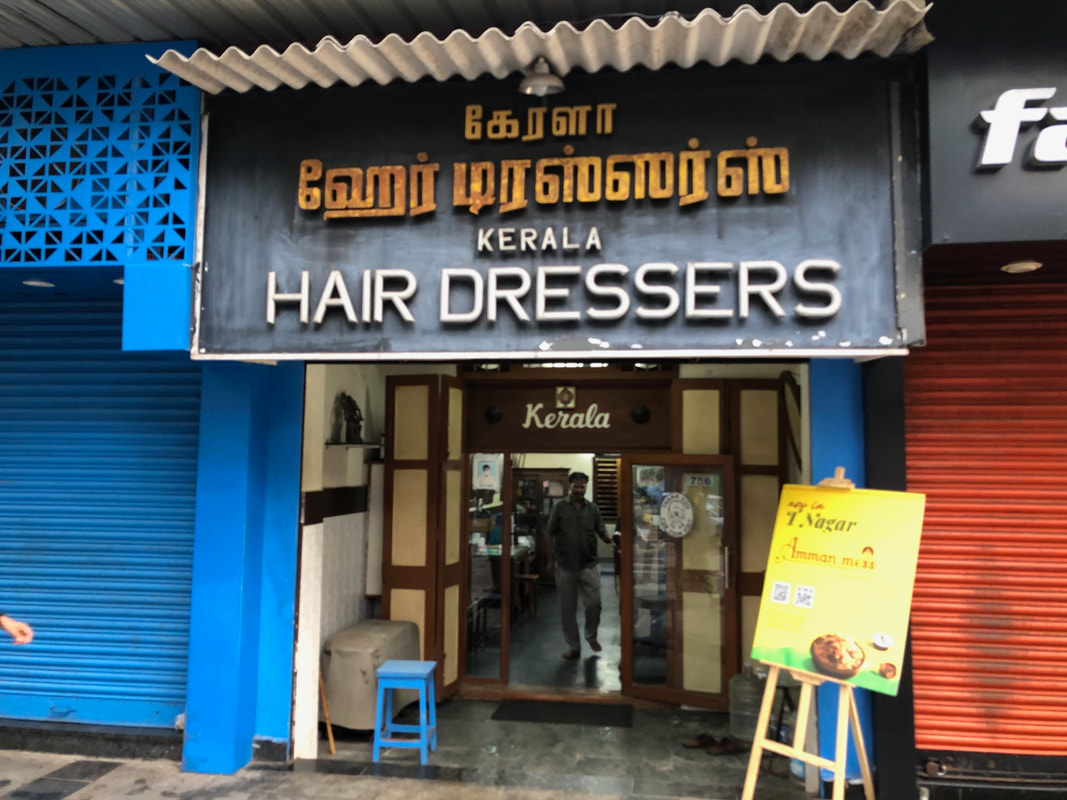
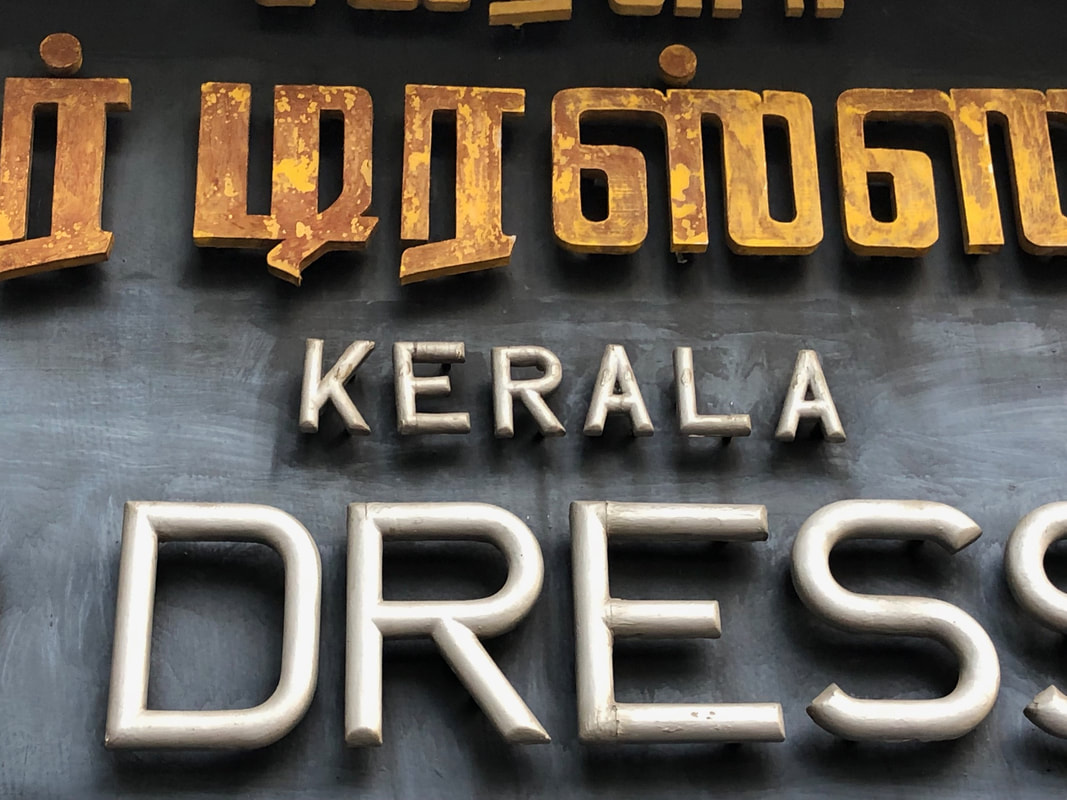
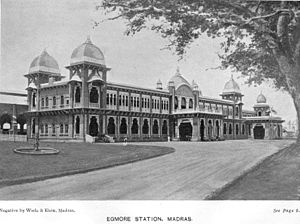
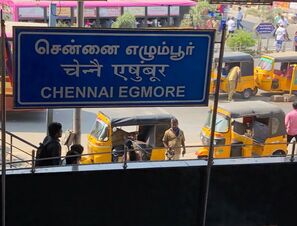
Almost next door is a traditional men's hairdressers, complete with old style barber's chairs and mirrors. The signage here is striking - it's wood, with each letter (in Tamil and English) made individually. 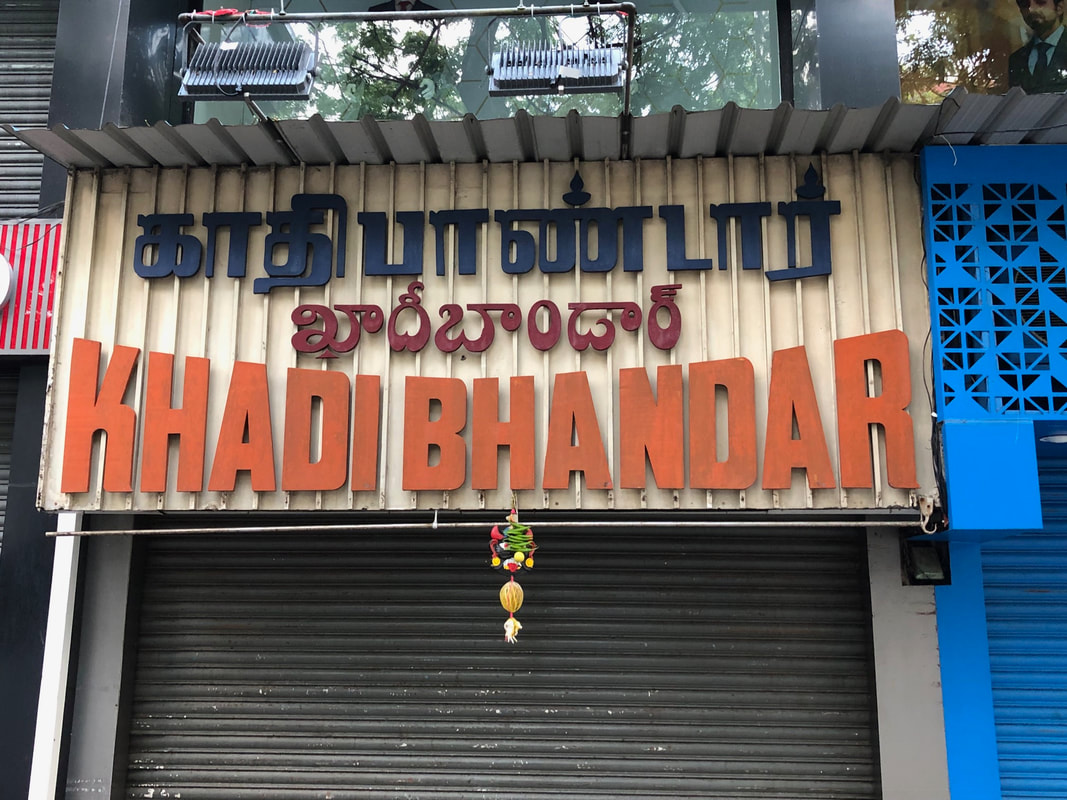 The adjoining khadi store - selling goods made from home-spun cotton - has signs in three languages. The one in the middle in purple is Telugu, principally spoken in Andhra Pradesh and Telangana, but once widely spoken here by newcomers to the city from elsewhere in the south. 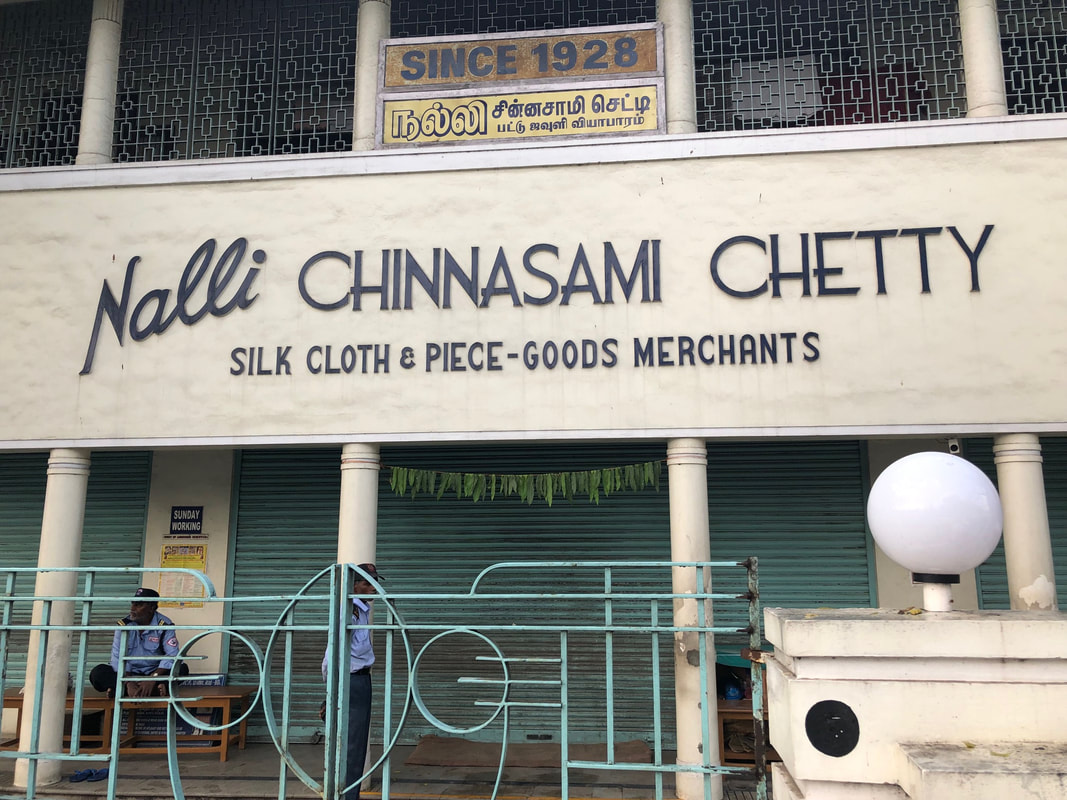 This is the most elegantly signed shopfront - the original business premises of Nalli's the famous sari shop. It has a massive store just next door. The lettering is in an Art Deco style font. Although the business was established in 1928, this shop and frontage dates from the early 1950s. 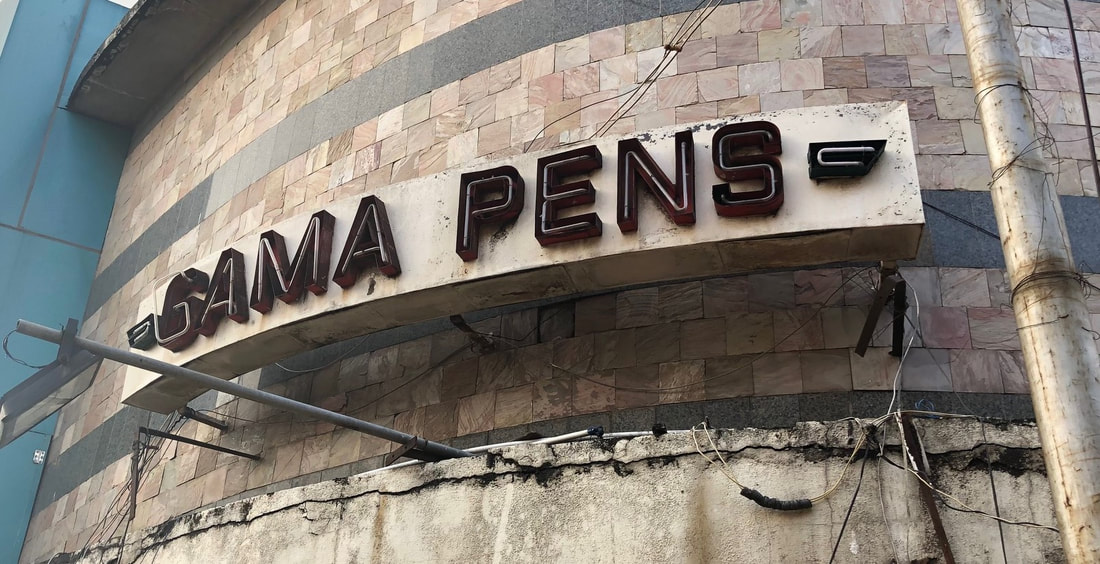 Gama Pens, famed for their fountain pens, no longer trades in T Nagar - though it still has a branch in George Town not too far away. But the electric signage remains in place, for the moment at least. 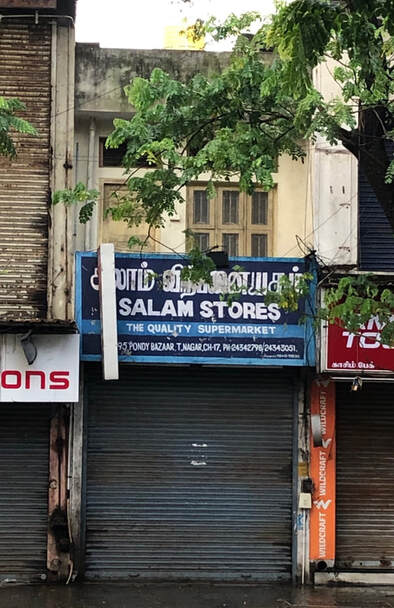 Salam Stores was still firmly shuttered when we went past, but it retains a loyal - if ageing - clientele. 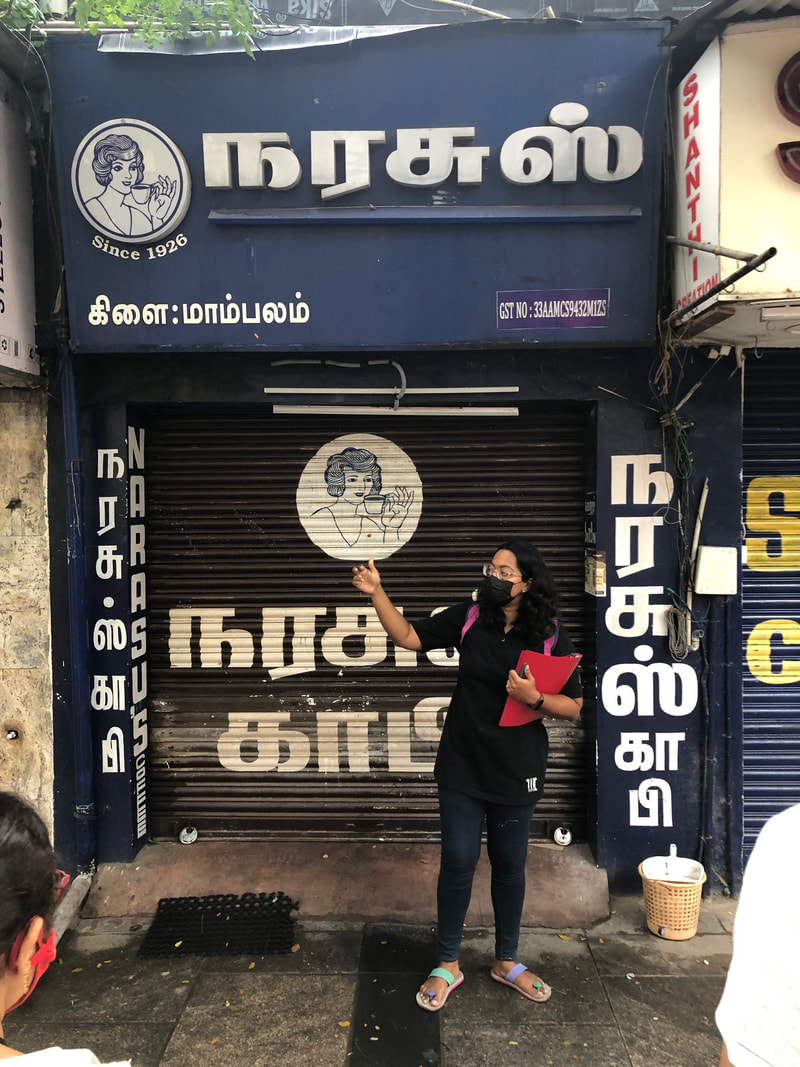 Here's Ashmitha from Madras Inherited holding forth outside a shutter which invites the passer-by to have a cuppa - a pity that when the shutter is down, there's no cuppa on offer. 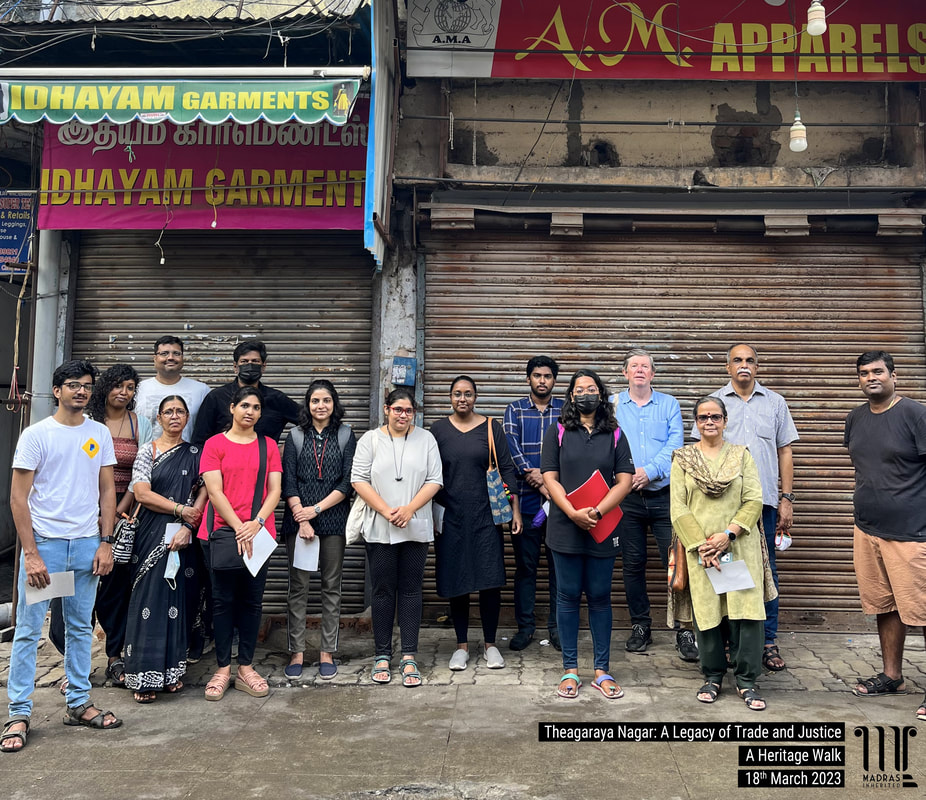 And if you are wondering what sort of people get up before dawn on a rain-soaked Saturday morning to walk round a range of shuttered shop fronts, here's your answer!  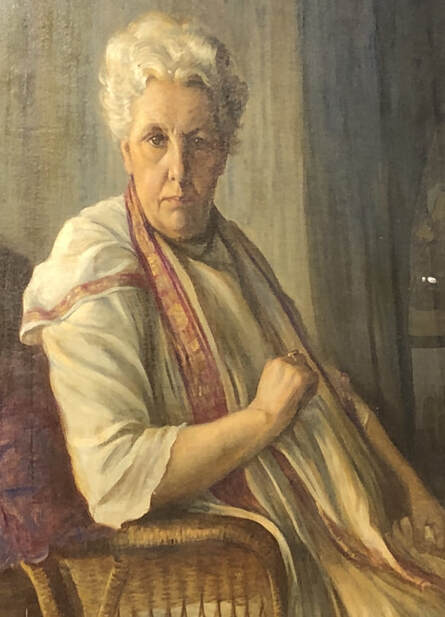 This is Annie Besant - one of the most remarkable, and complex, figures in the annals of British radicalism. She was in, the first halfof her life, a renowned and outspoken freethinker, advocate of birth control, Fabian socialist and campaigner for women's rights. Then in about 1890, when she was in her forties, she came across theosophy, a spiritual movement which sought to syncretise the best of the principal global religions and which drew particularly on Hinduism and Buddhism. Besant moved to Madras (now Chennai) in South India, the global centre of the theosophist movement, and it became her principal home for the rest of her life. She remained a radical, becoming prominent in the Indian nationalist and home rule movements, and she was an ardent supporter of women's suffrage. 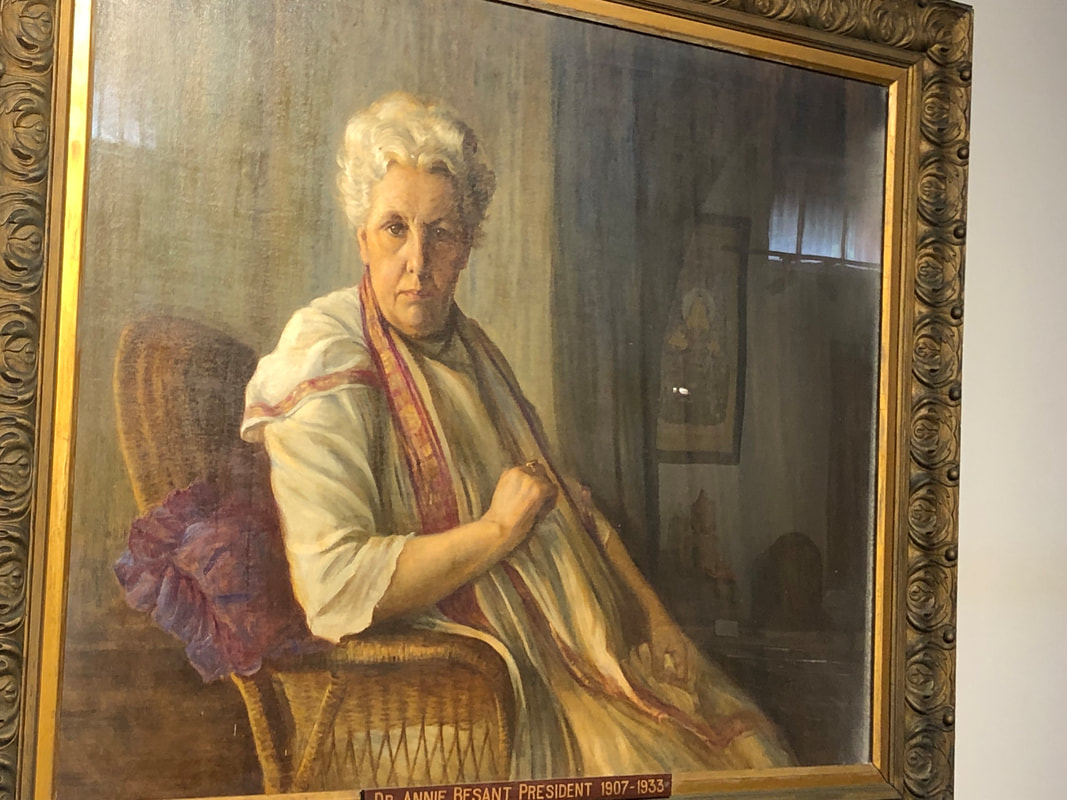 This excellent portrait - which I had never seen before - is in the small but well-kept and recently refurbished museum at the theosophists' international HQ at Adyar in Chennai. You can feel the sternness in that gaze! Adyar is where Besant died and was cremated in 1933. The theosophist HQ also has a bust of Besant. 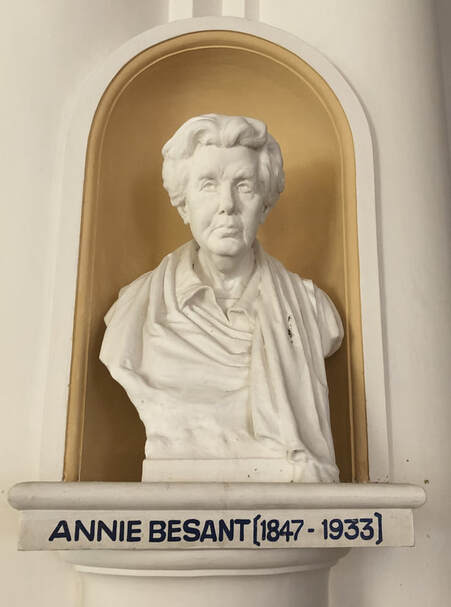 What I hadn't realised until I visited the museum was that Besant was also a very active freemason. One of the display cases exhibits dozens of engraved plasterers' trowels presented to Besant by women masons in India. When I said to the German theosophist who presides over the museum: 'Besant was a mason?!', he replied - very reasonably: 'What wasn't she?' 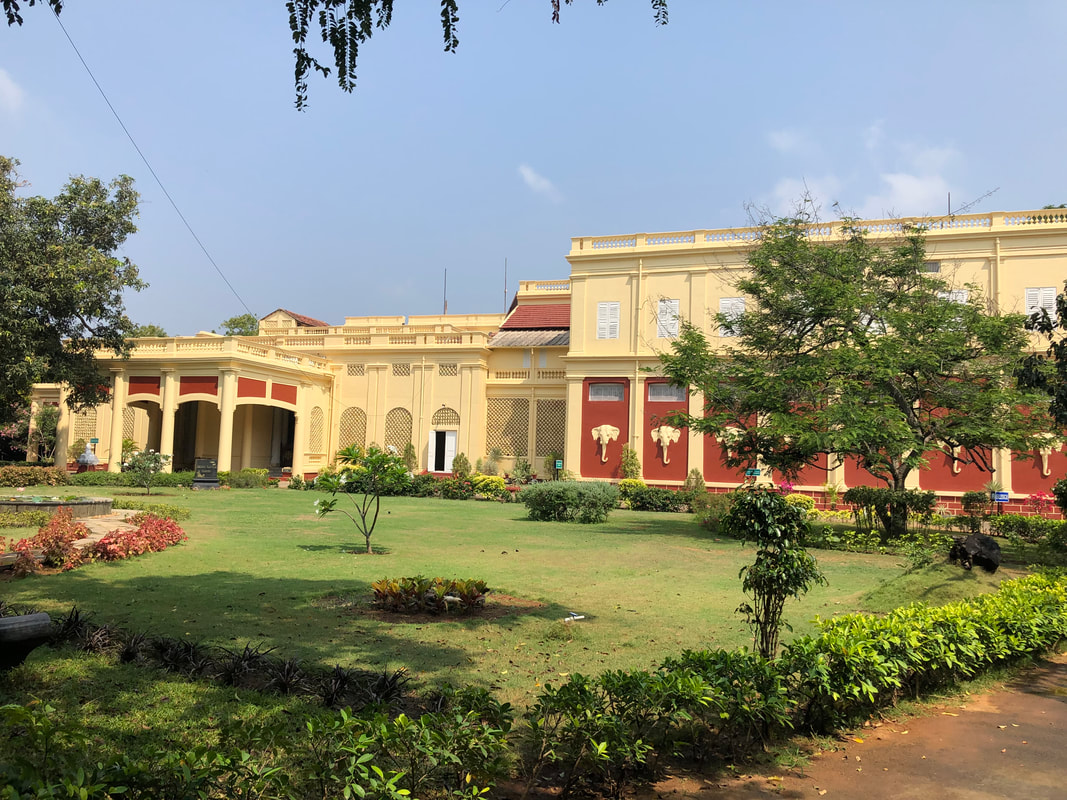 The sprawling Adyar campus, and the theosophists' headquarters building, looked serene - better cared for than on my previous visit and altogether a wonderful place to spend a couple of hours. I was a little underwhelmed by the Giant Banyan Tree, but the roosting fruit bats were something else! 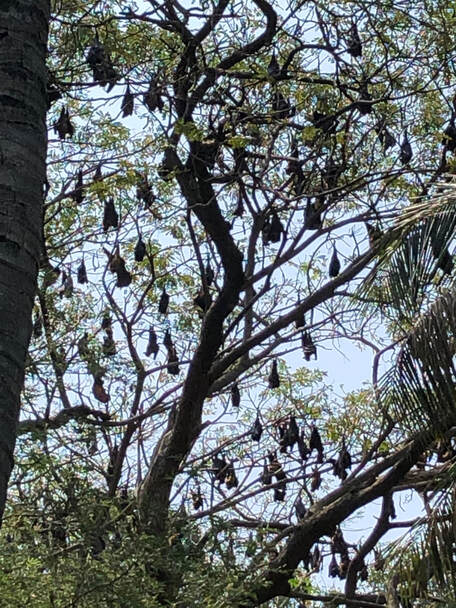 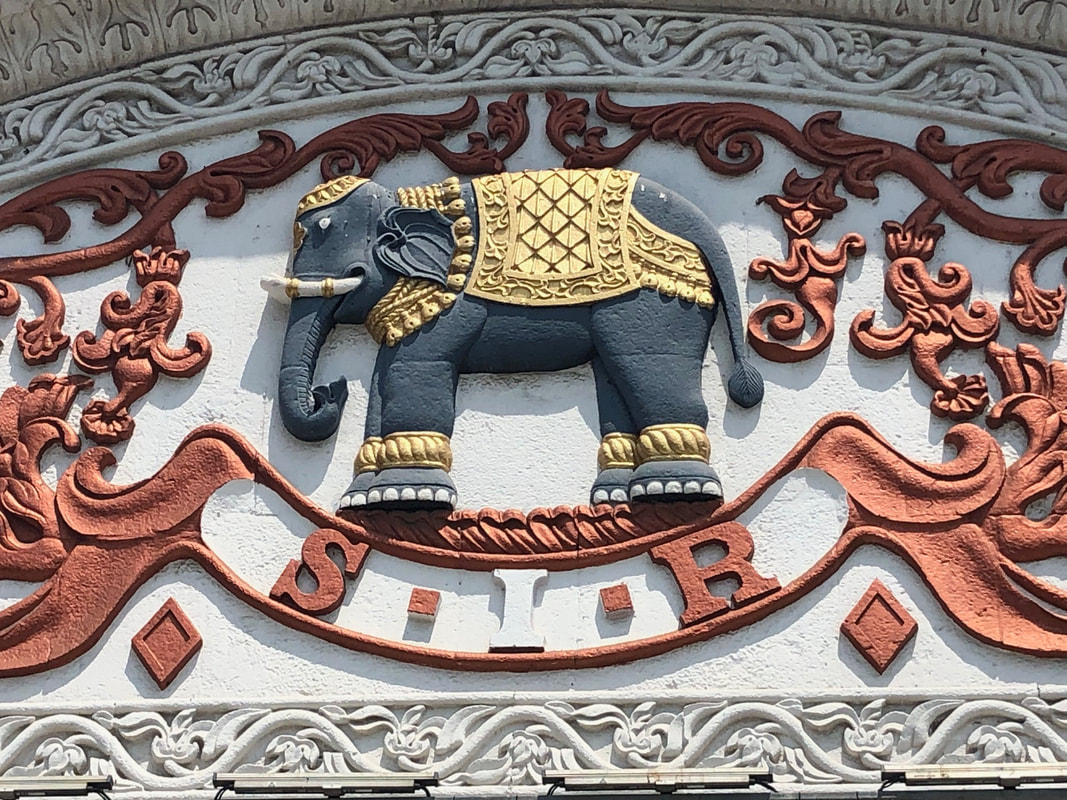 The rail station at Egmore is an Indo-Saracenic architectural masterpiece. It's huge, glorious and a throwback to another era. Some of the detail is simply stunning. Take a look above the portico - there's an ornate elephant, the symbol of the South Indian Railway Company (now Southern Railways which explains why the 'I' has been painted out). The station was inaugurated on 11 June 1908, almost forty years before India gained independence. In a city which has some spectacular buildings, this station is certainly among Chennai's highlights. 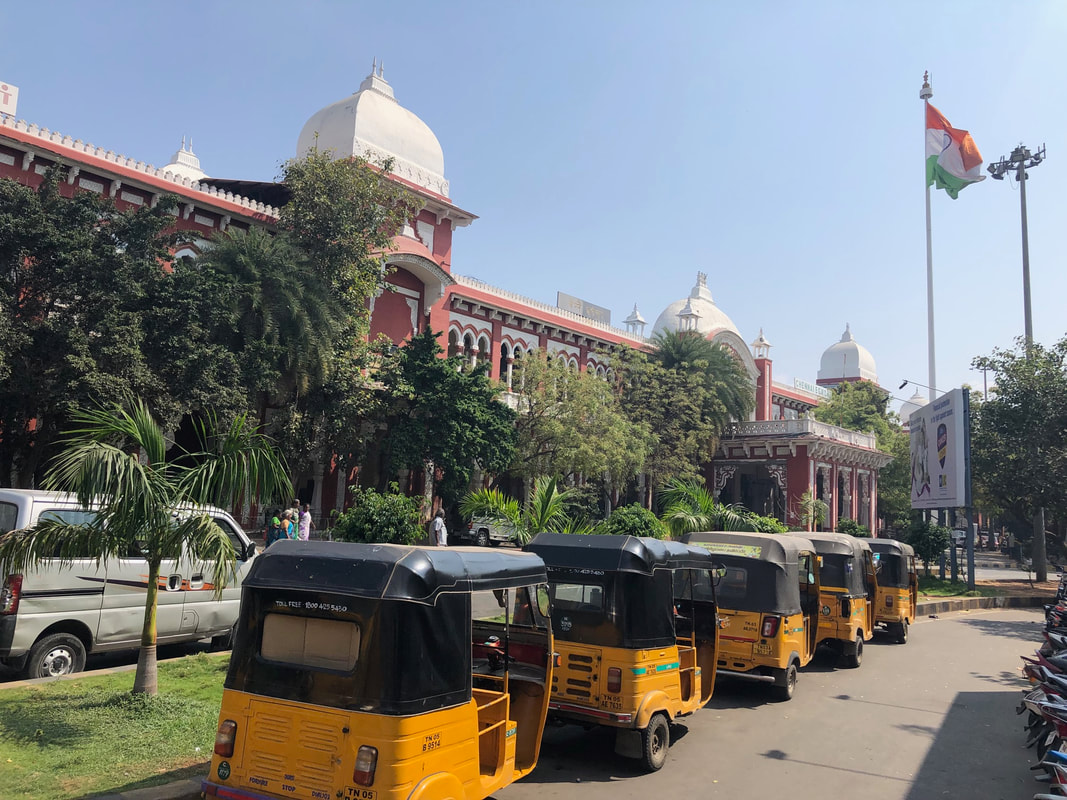
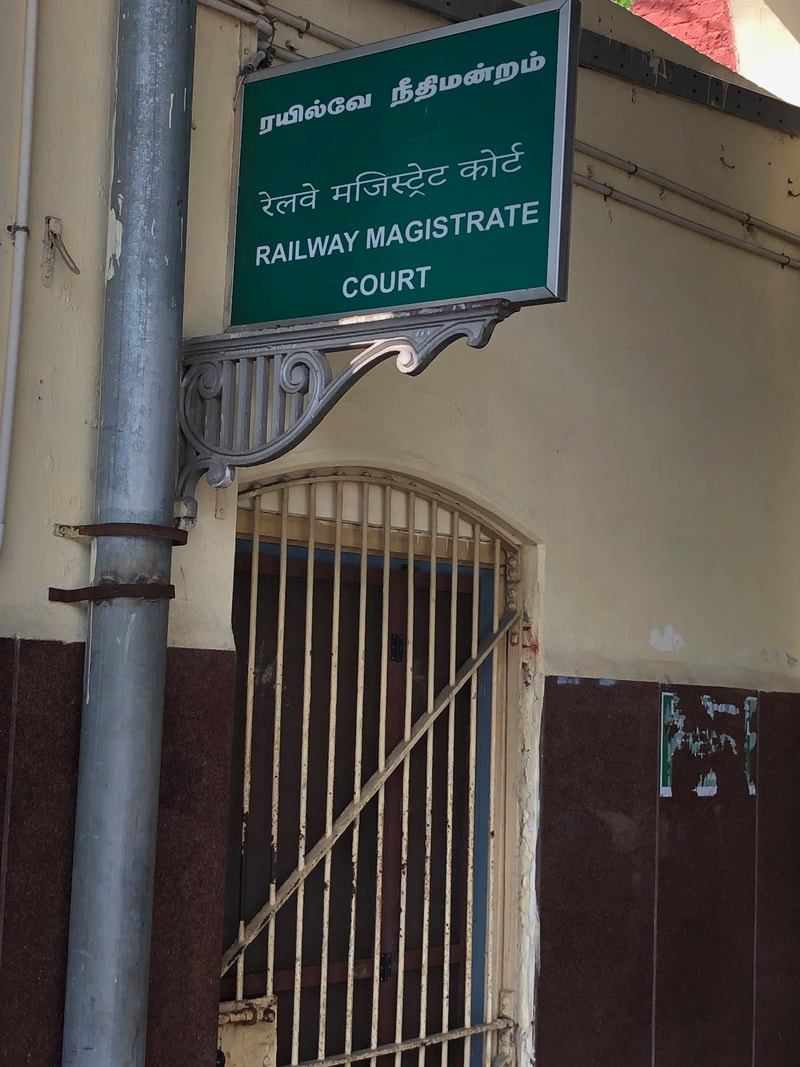
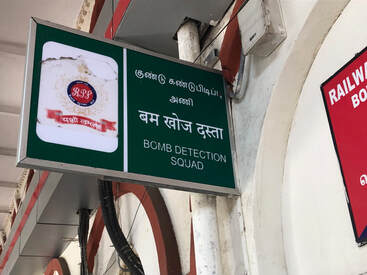
My visit this morning was prompted by a newspaper article extolling the majesty of Egmore station - and disclosing that it's about to undergo a three-year redevelopment programme. While this will respect the original structure and design, the rail station will, once spruced up, 'wear the look of an airport', according to Southern Railways. This doesn't strike me as hugely reassuring. I hope INTACH and other organisations which have a marevllous record in safeguarding's Chennai's architectural heritage can ensure that the spirit, elegance and charm of the original building is maintained. 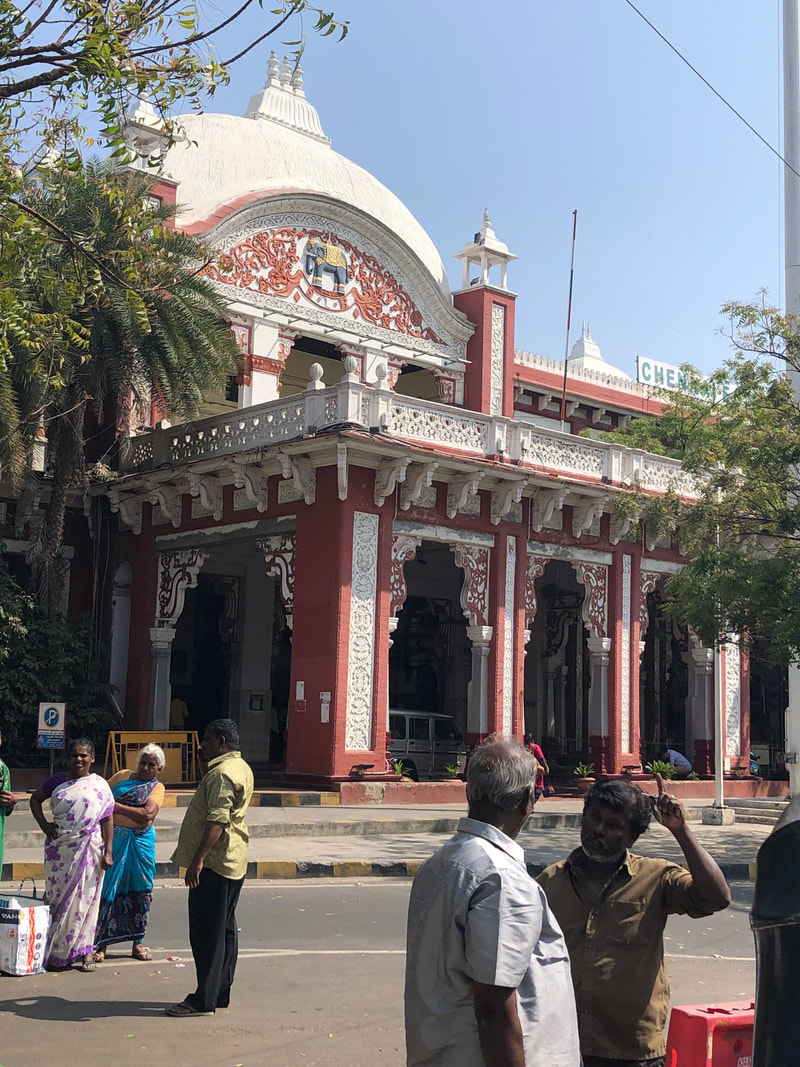 The detail in and around the entrance hall is entrancing - you don't get any of this at Euston or Waterloo, more's the pity. 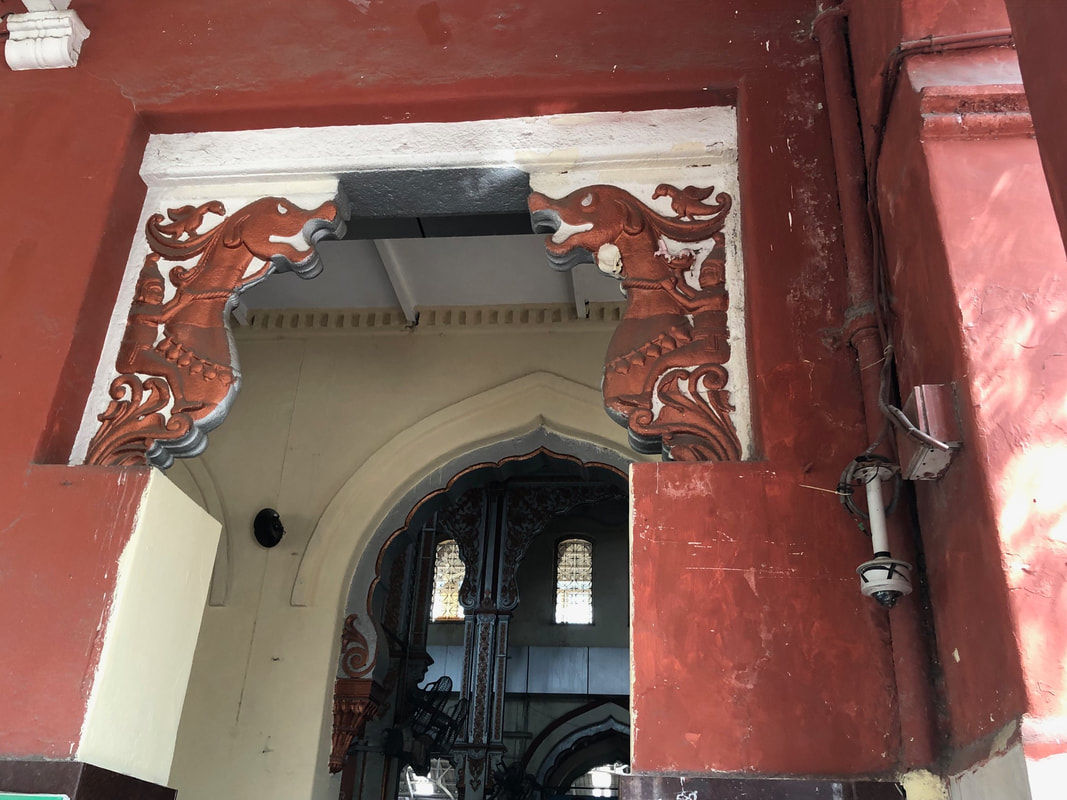 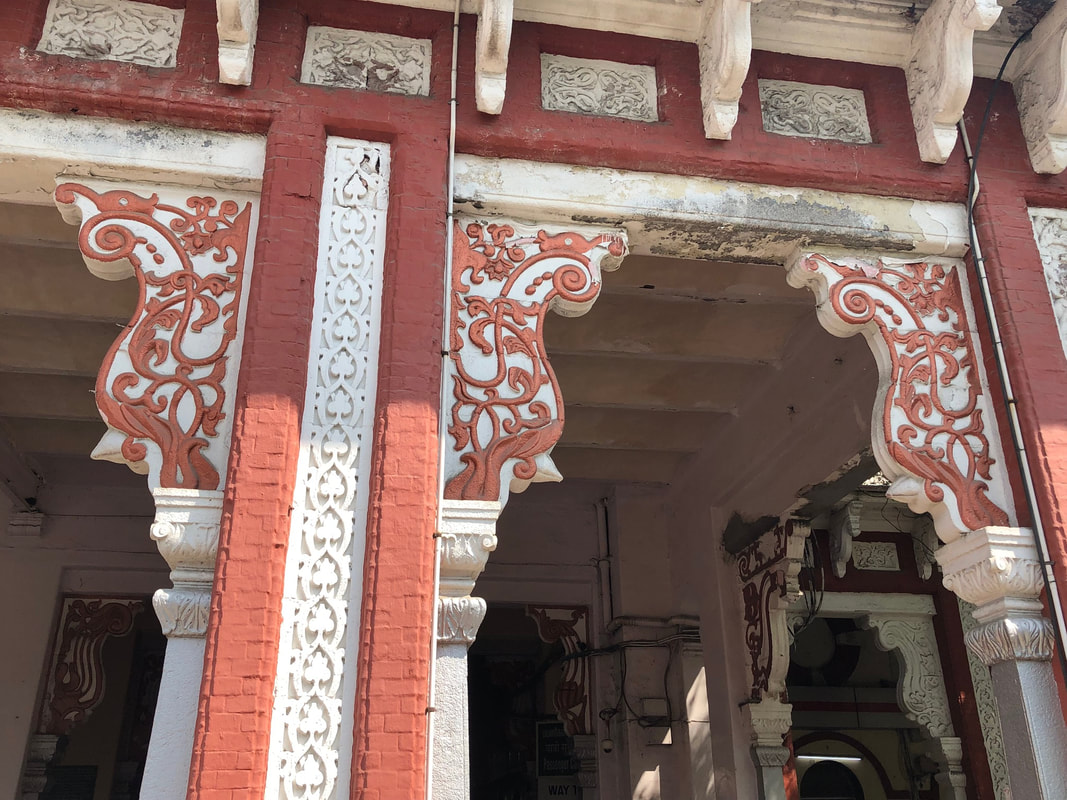 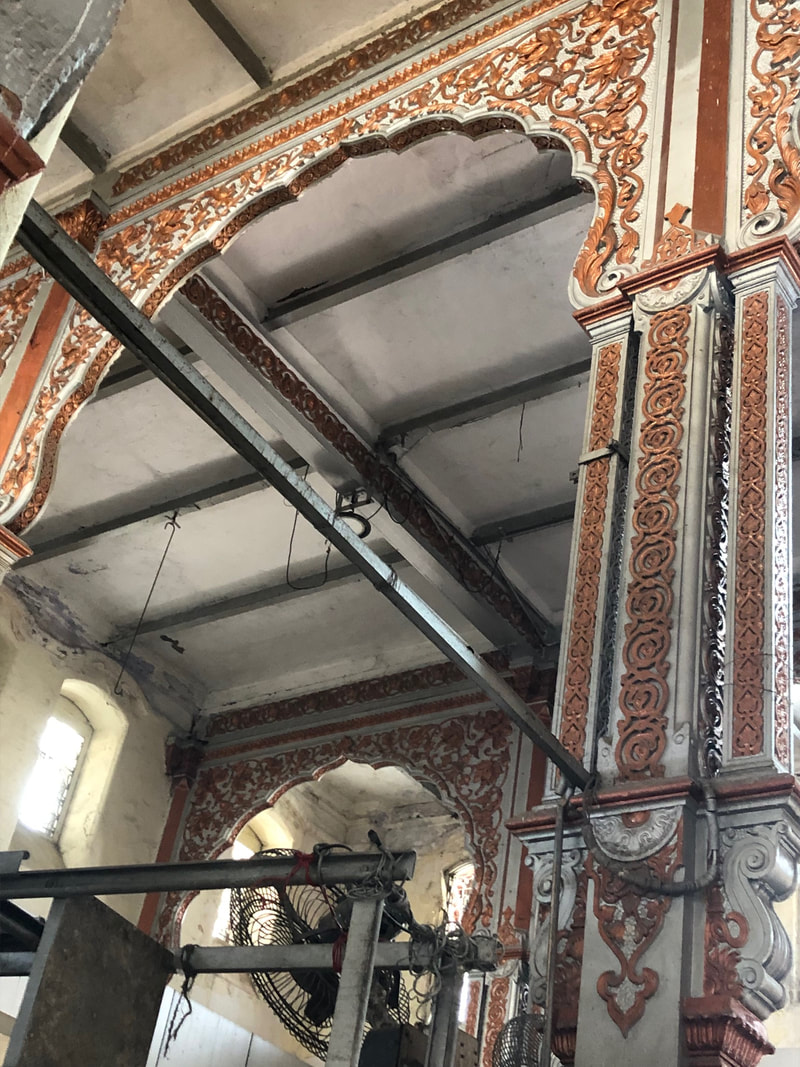 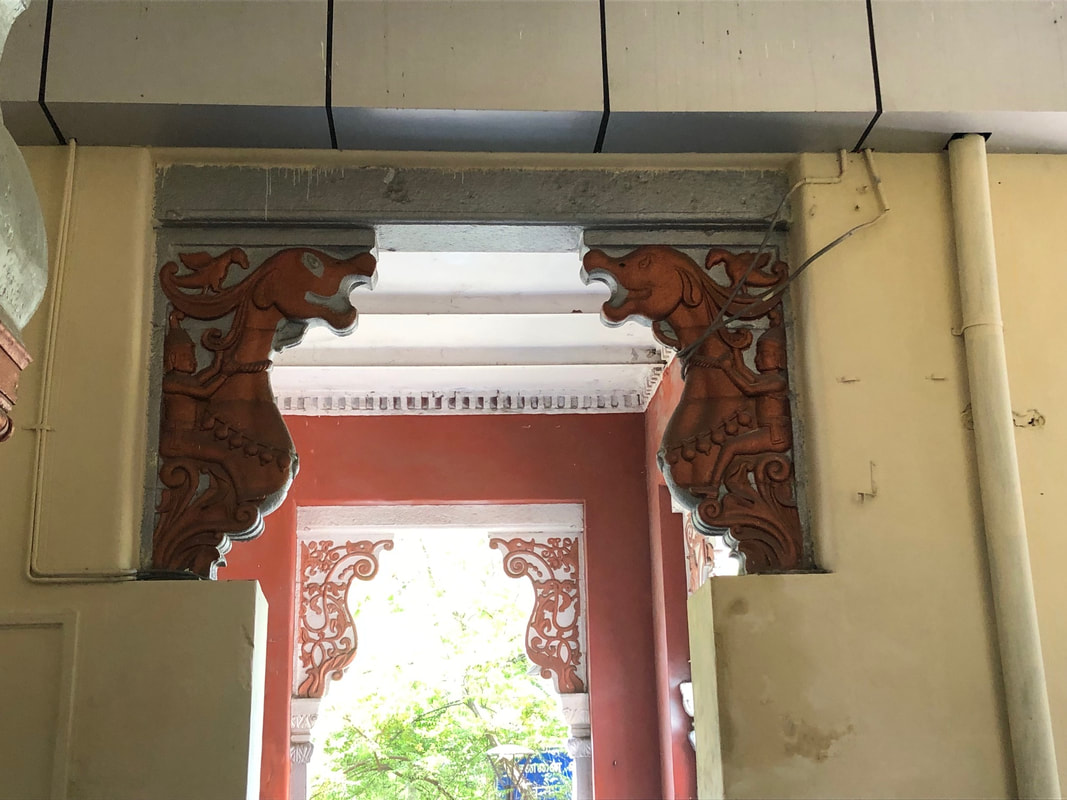 The station's upkeep isn'tperfect - but it is a much used, and loved, terminus. And generally, it's not in too bad a state. 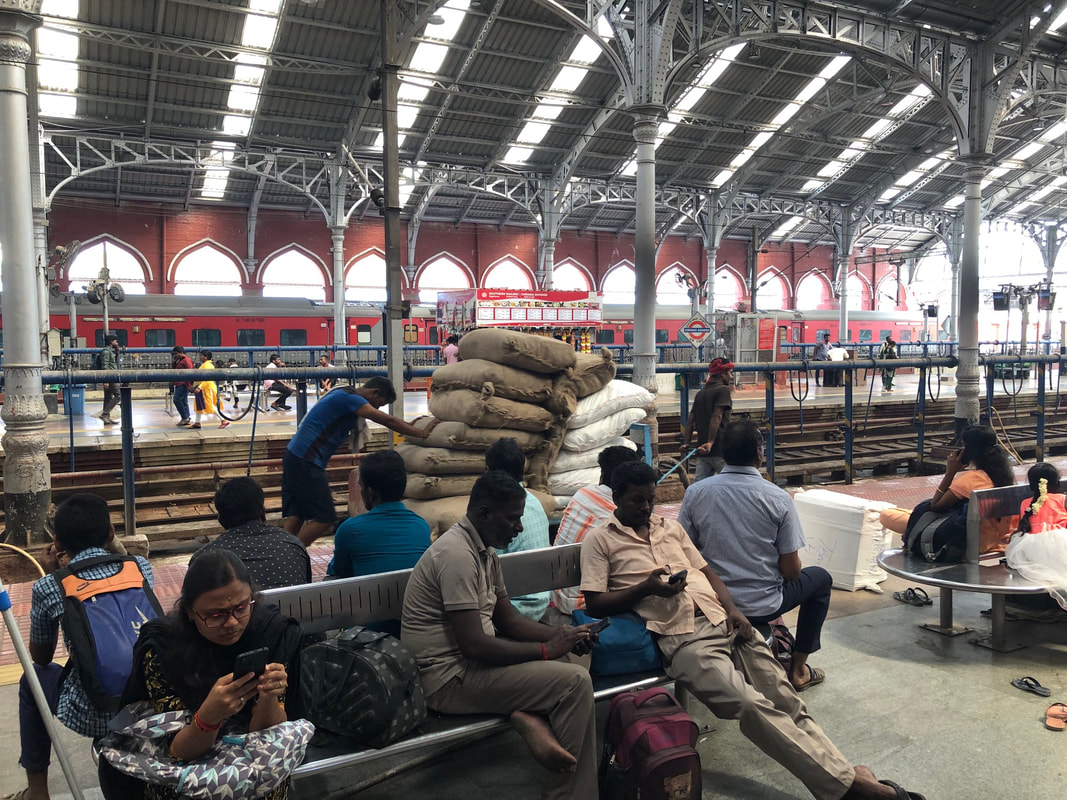 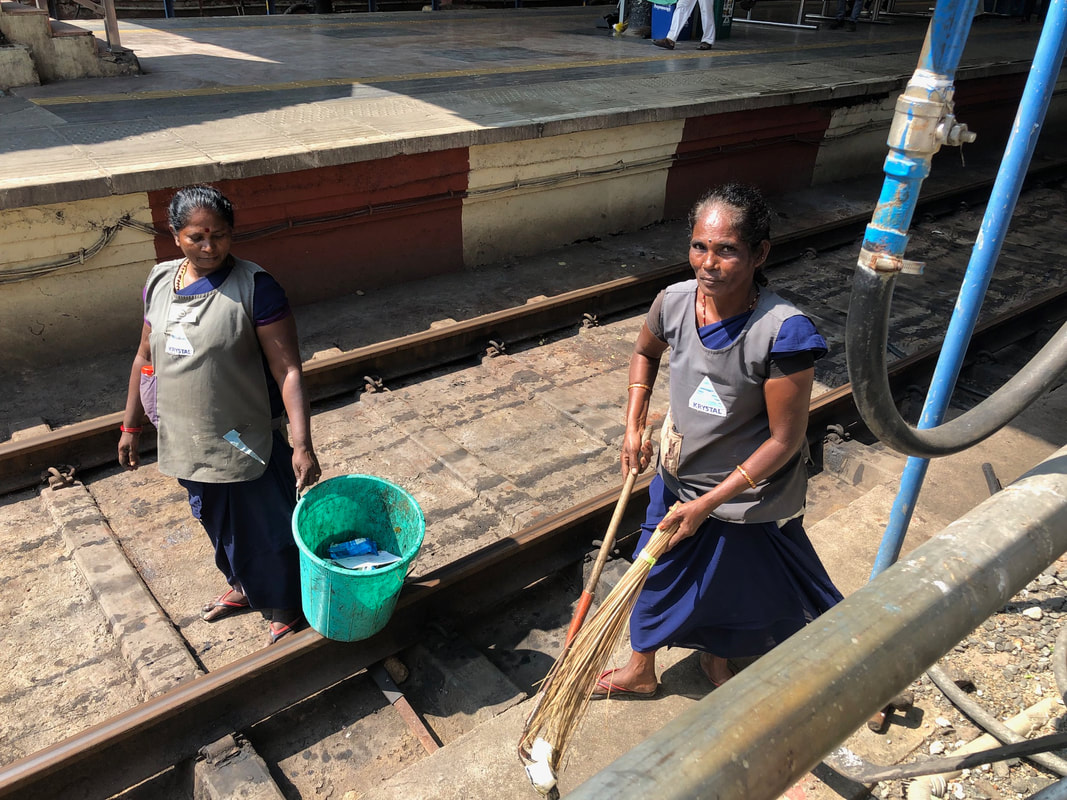 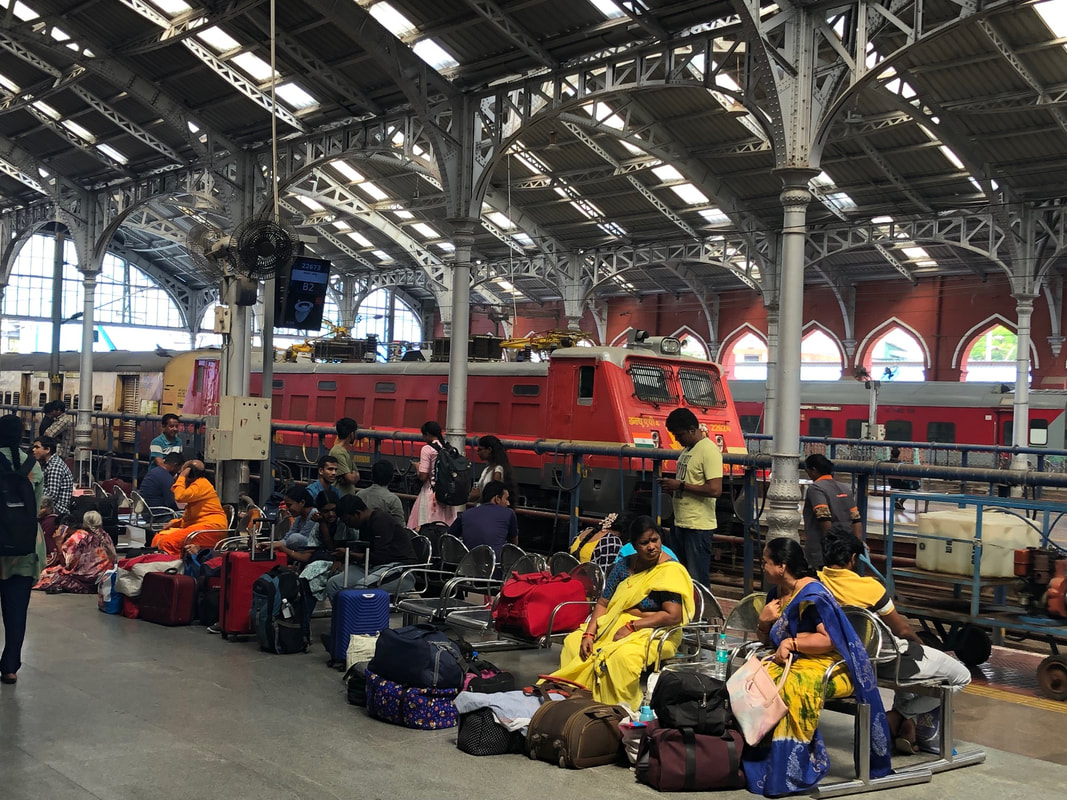 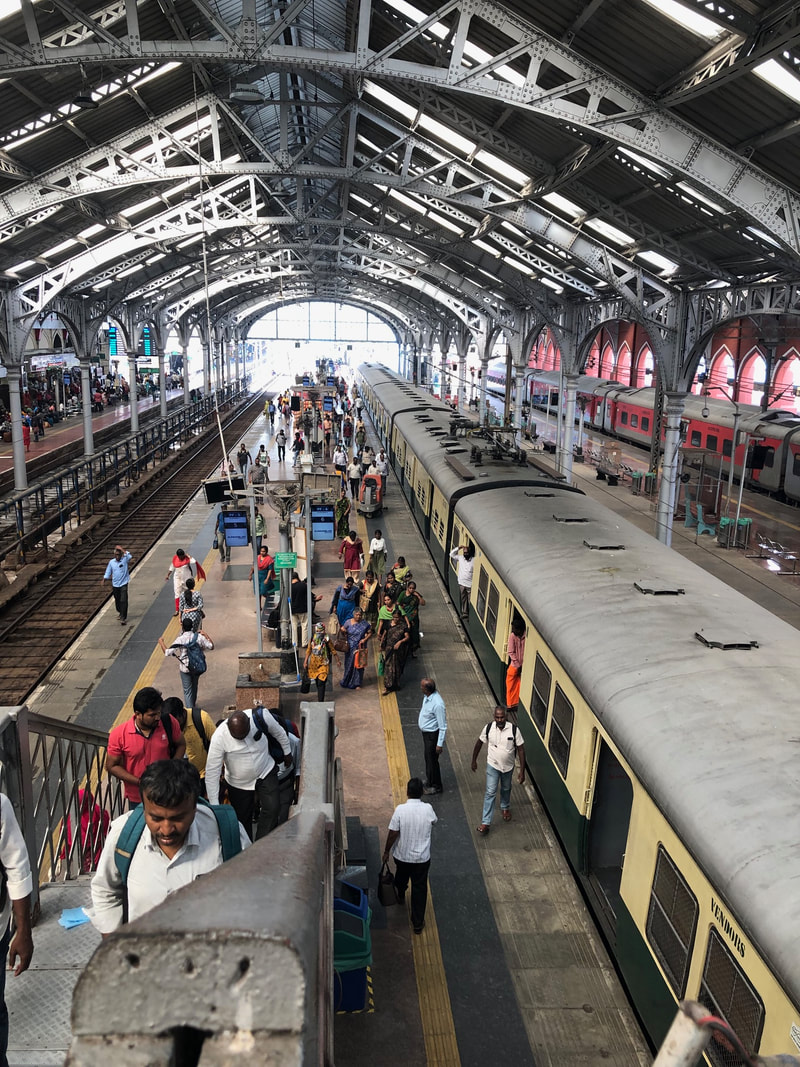 Egmore has some of those institutions which are such a hallmark of an Indian railway station, though they do sometime alarm foreign visitors ...
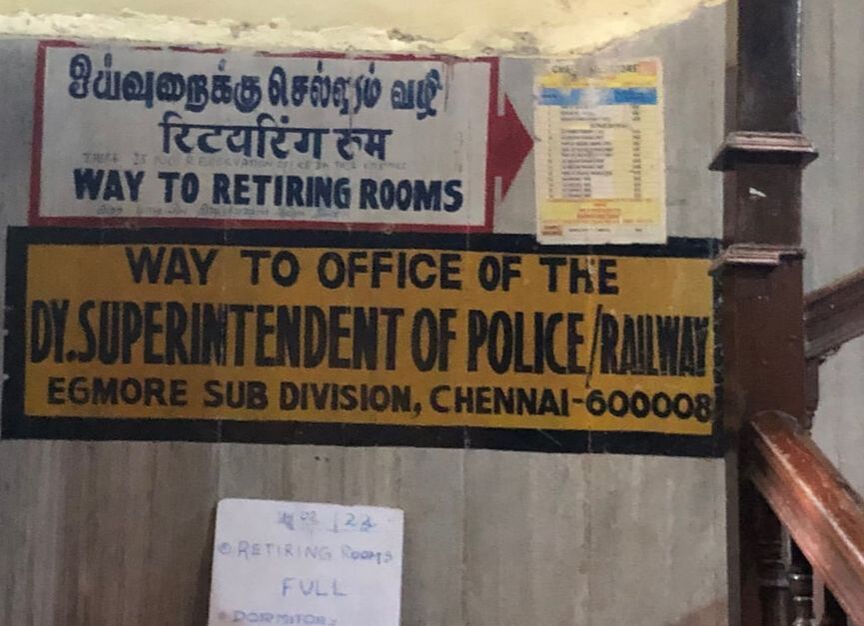
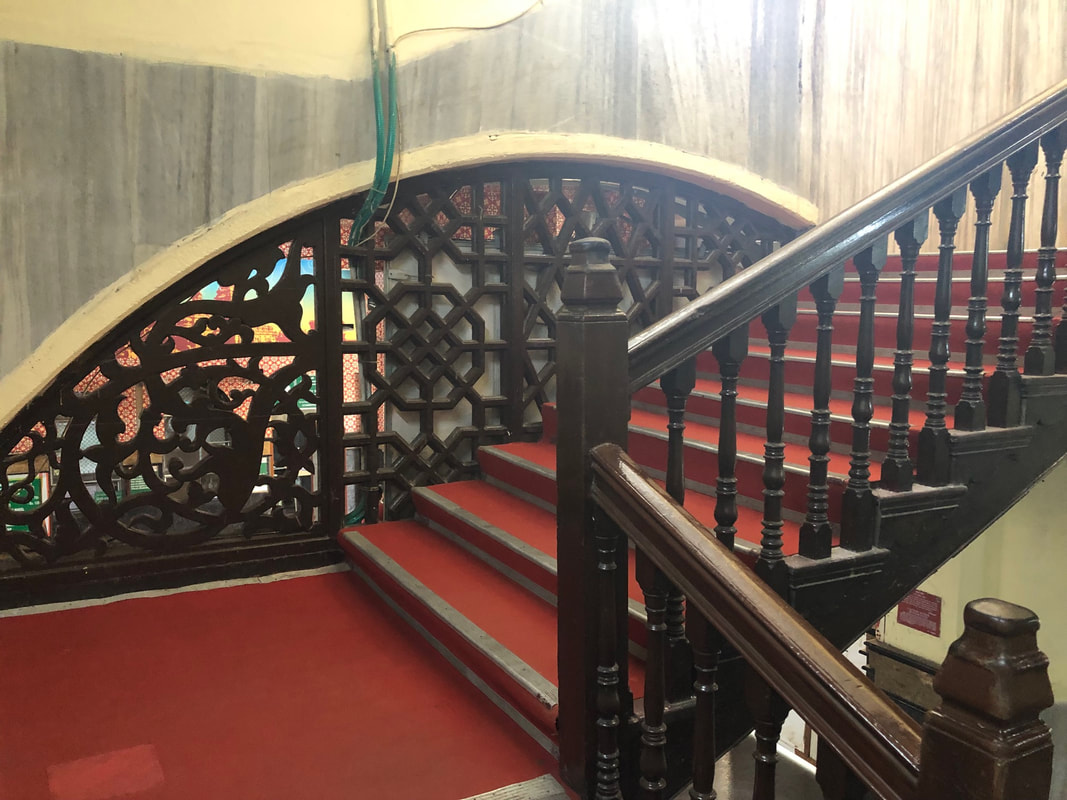
And from the walkways you can catch a glimpse of an even more elegant and historic Egmore building, St Andrew's Scots Kirk (the rear entry to the station is just alongside the Kirk) 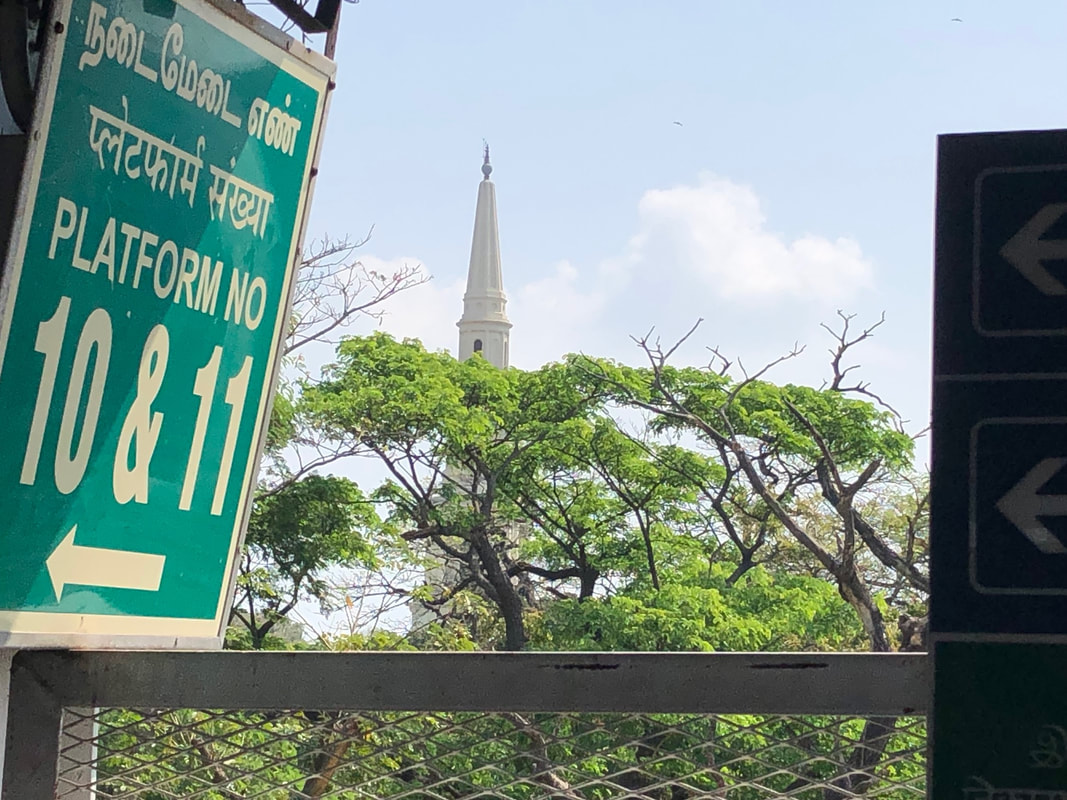 While at the station, I saw a sign pointing up a sturdy wooden staircase to the retiring rooms, so that's where I went ...
These rooms which passengers can hire for a few hours or overnight open onto a light, spacious outdoor corridor - which has the feel of one of the oldest and least changed corners of this magnificent structure 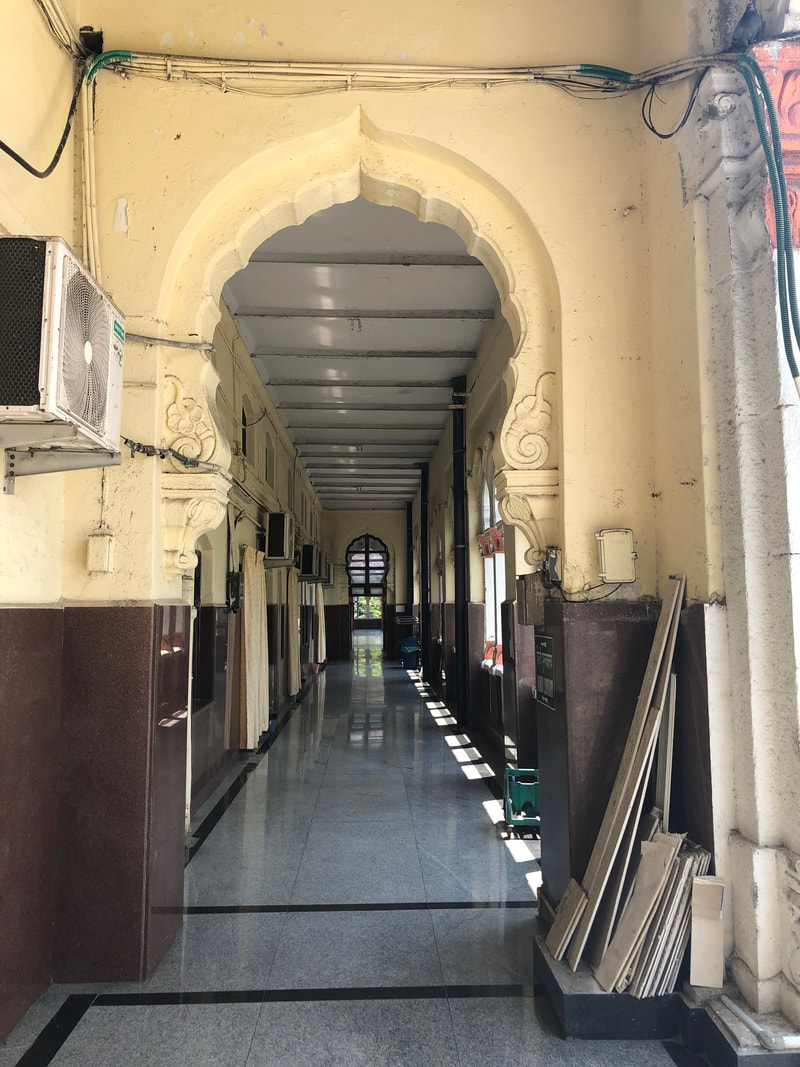 And a terrace on top of the portico offers a marvellous vantage point on the station's sumptuous frontage 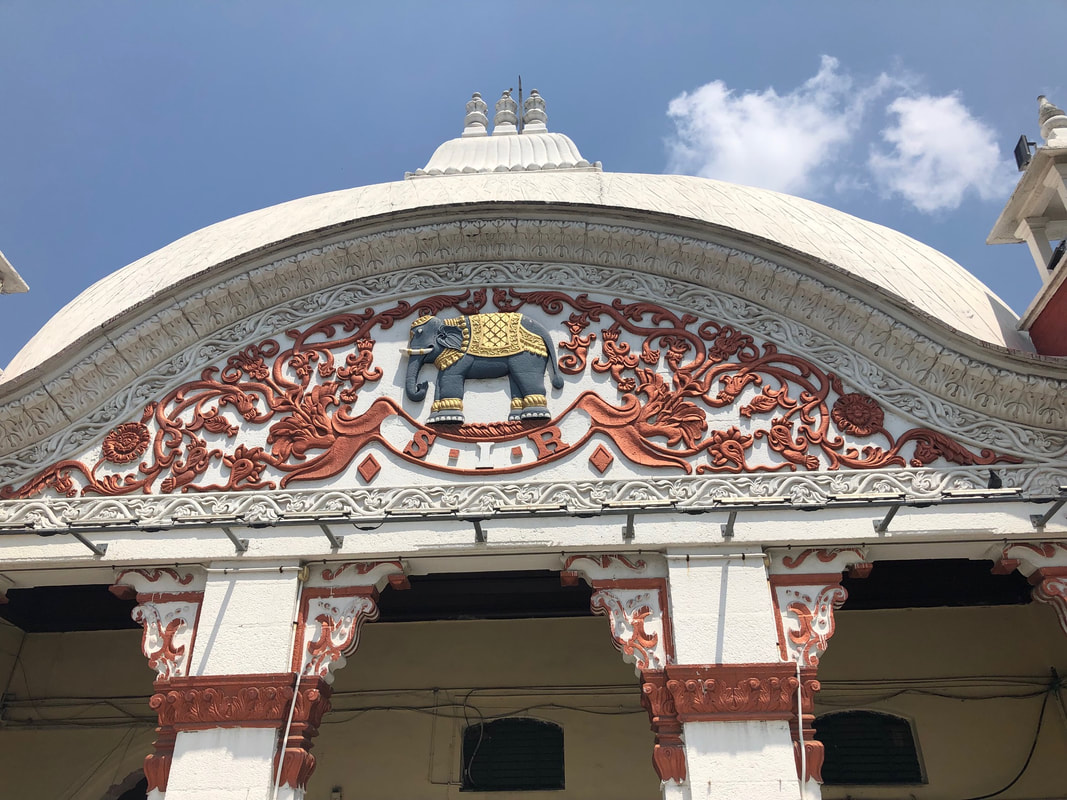 Let's hope that the splendour of Egmore station is enhanced rather than diluted as the redevelopment work gets underway. 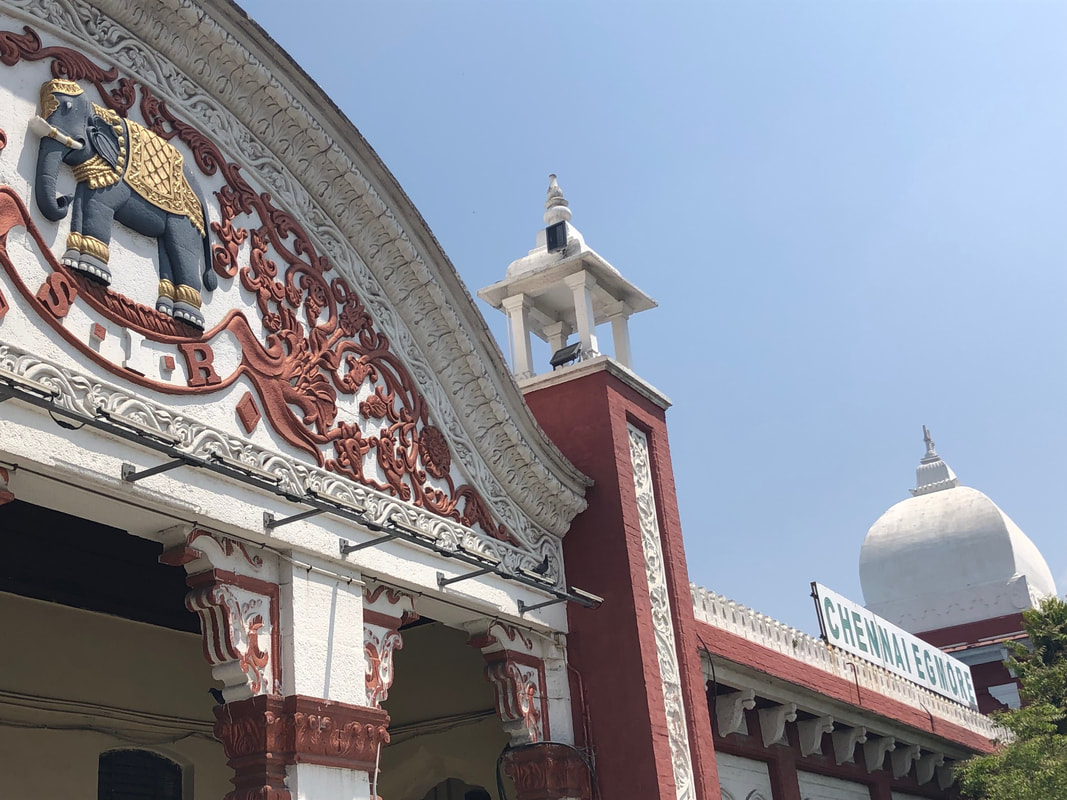 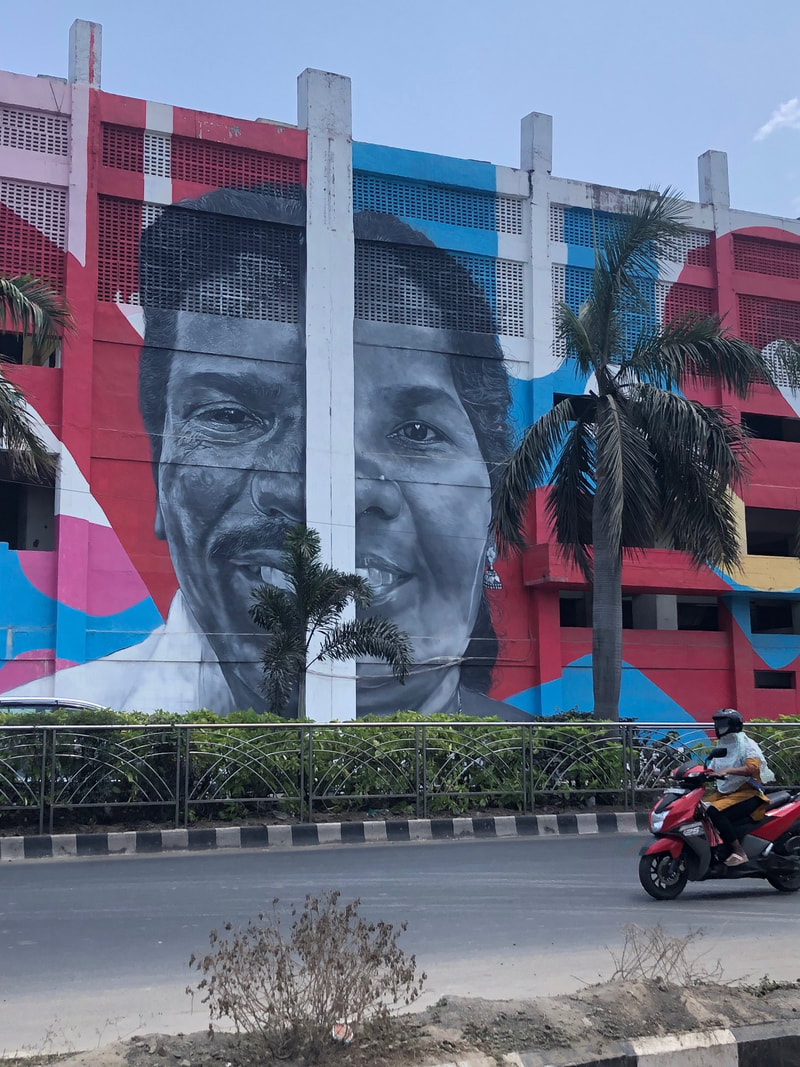 Indira Nagar station - a building so vast and ugly it gives brutalism a bad name - is now a riot of colour and hope. It features the largest panoramic mural in India, or at least it was the largest when unveiled two years ago. The wall painting stretches over 63,000 square feet and features five huge faces - or rather, split faces because each face is a composite of two similarly sized but mis-matching half faces. 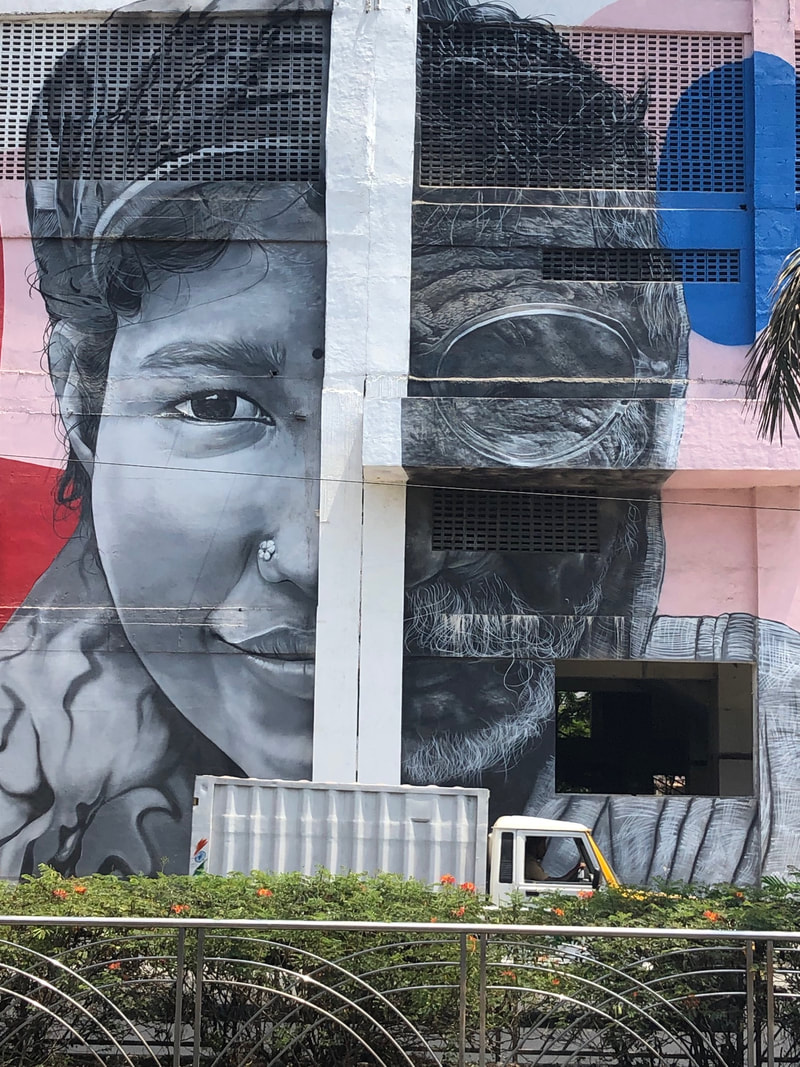 This spectacular piece of public art also has a noble purpose - to tackle the stigma so often faced by those living with HIV. It combines the portraits of those with the virus and those without. 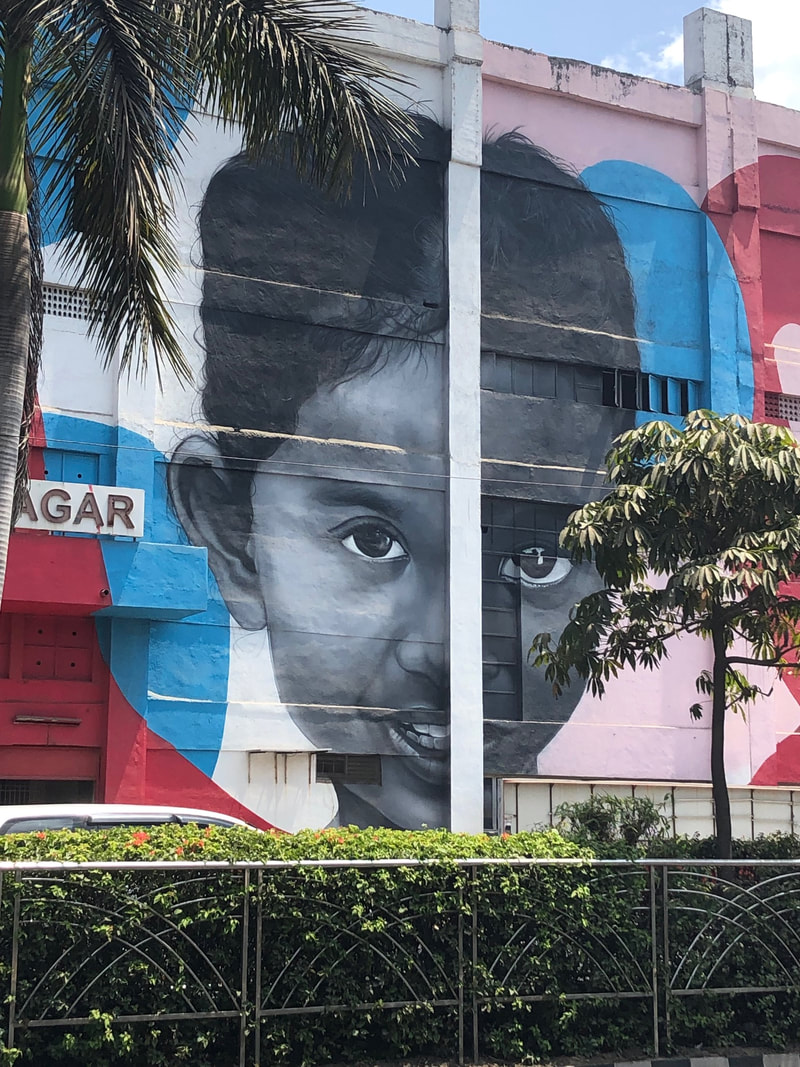 But of course you can't tell the difference. That's the point. We are all the same. 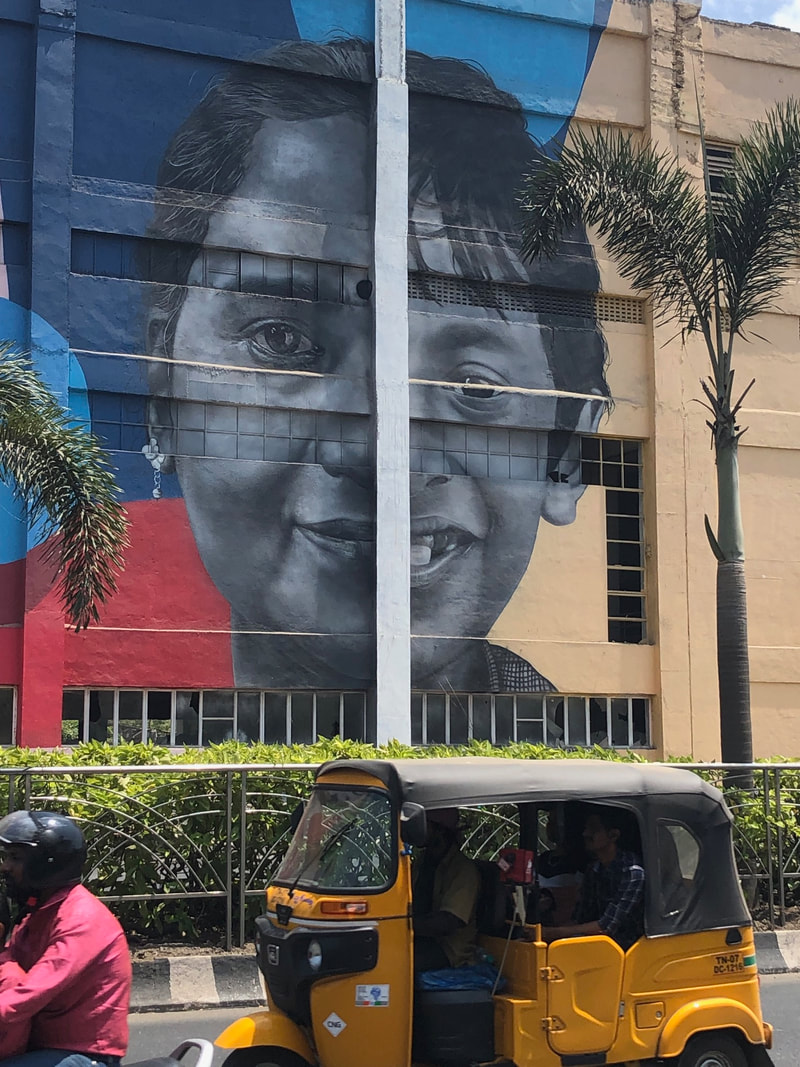 I suspect that most of those who drive by don't get the HIV message. But they do get the majesty of such kindly, everyday faces looking out on one of Chennai's busiest highways. 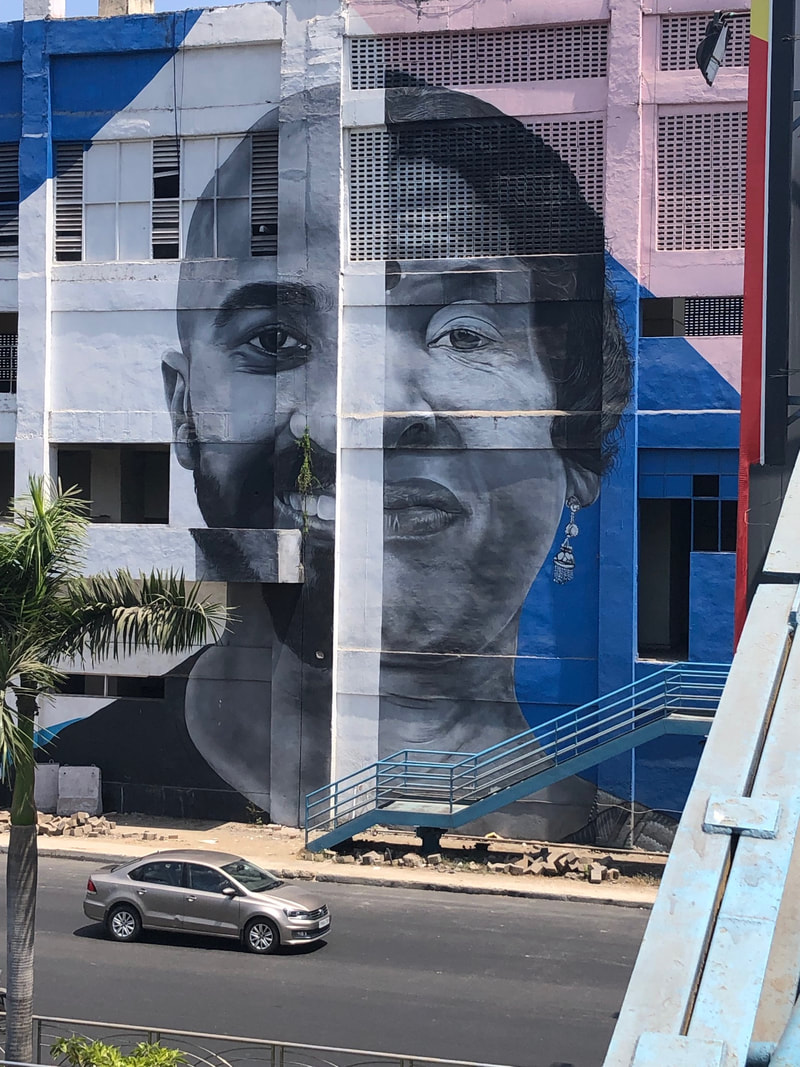 And a shout-out for the artists - the Chennai-based street artist A-Kill and Khatra from Delhi. 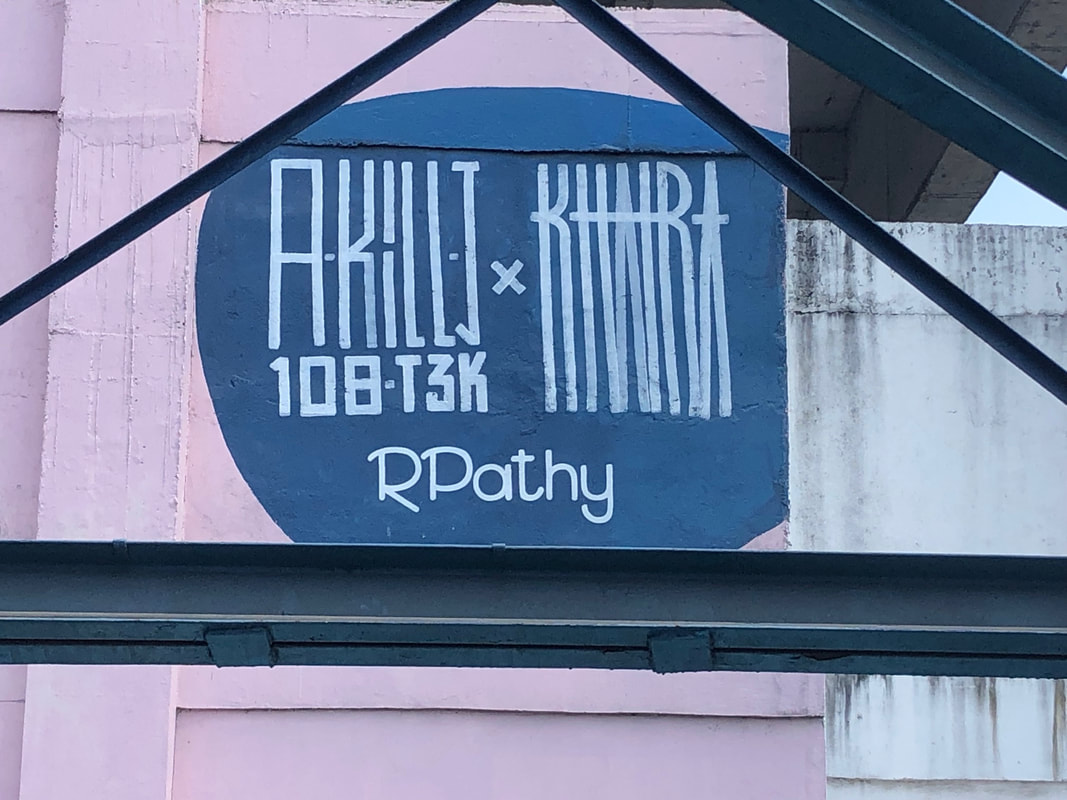 I can't think of a more ambitious and effective piece of public art. 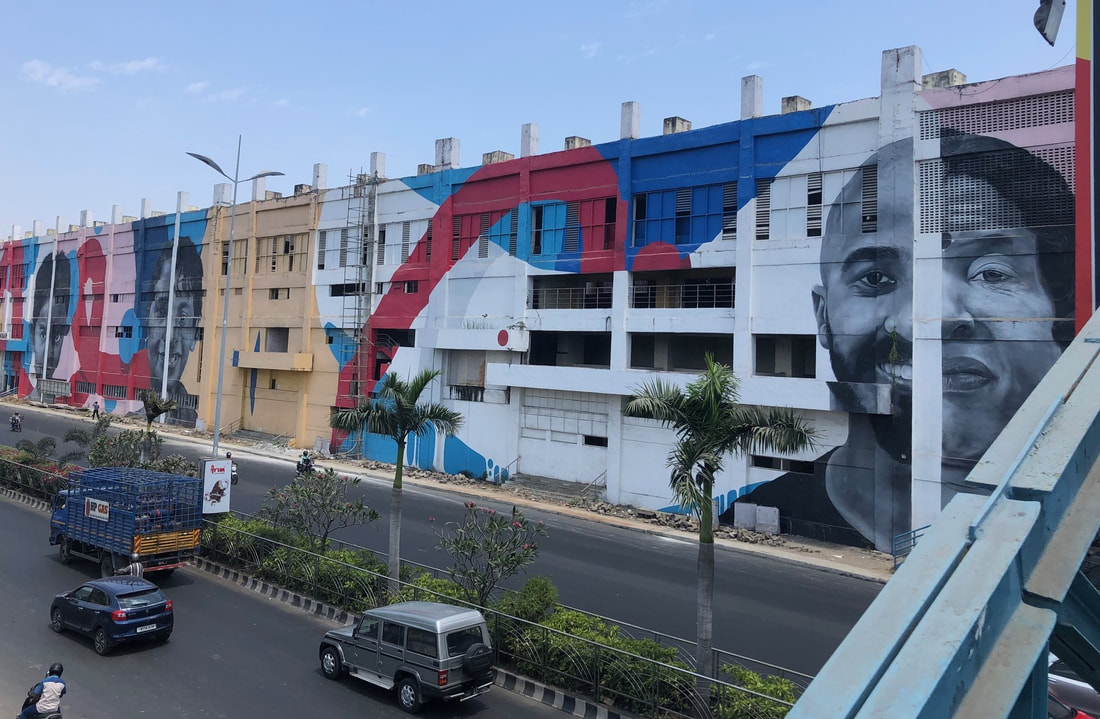 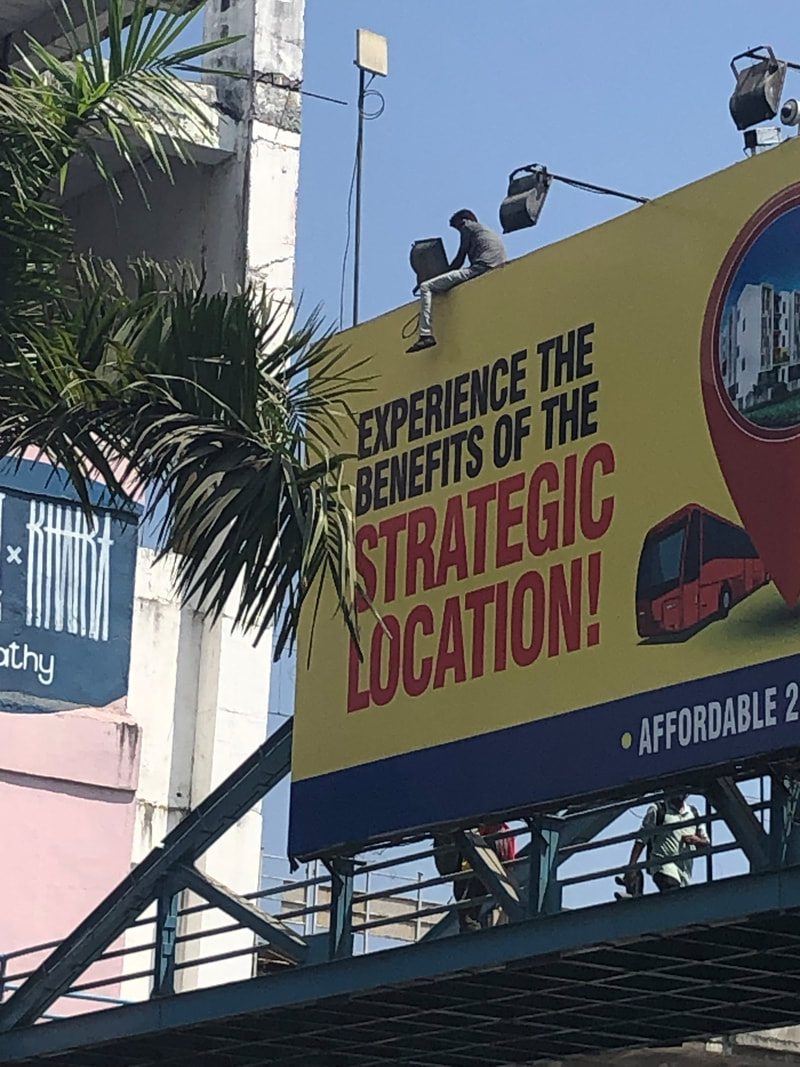 Whatever it says on the hoarding, I don't think this guy sitting above one of Chennai's busiest and fastest roads is 'experiencing the benefit' of this 'strategic location'. He's trying to adjust the lighting on the billbord while sitting astride it forty feet or so above the road. No harness, no safety gear, no partial road closure - nothing. A police patrol was positioned directly under the footbridge, pouncing on unsuspecting motorcyclists and fining them for something or other. But the police didn't bat an eyelid about the high rise recklessness on display above them. 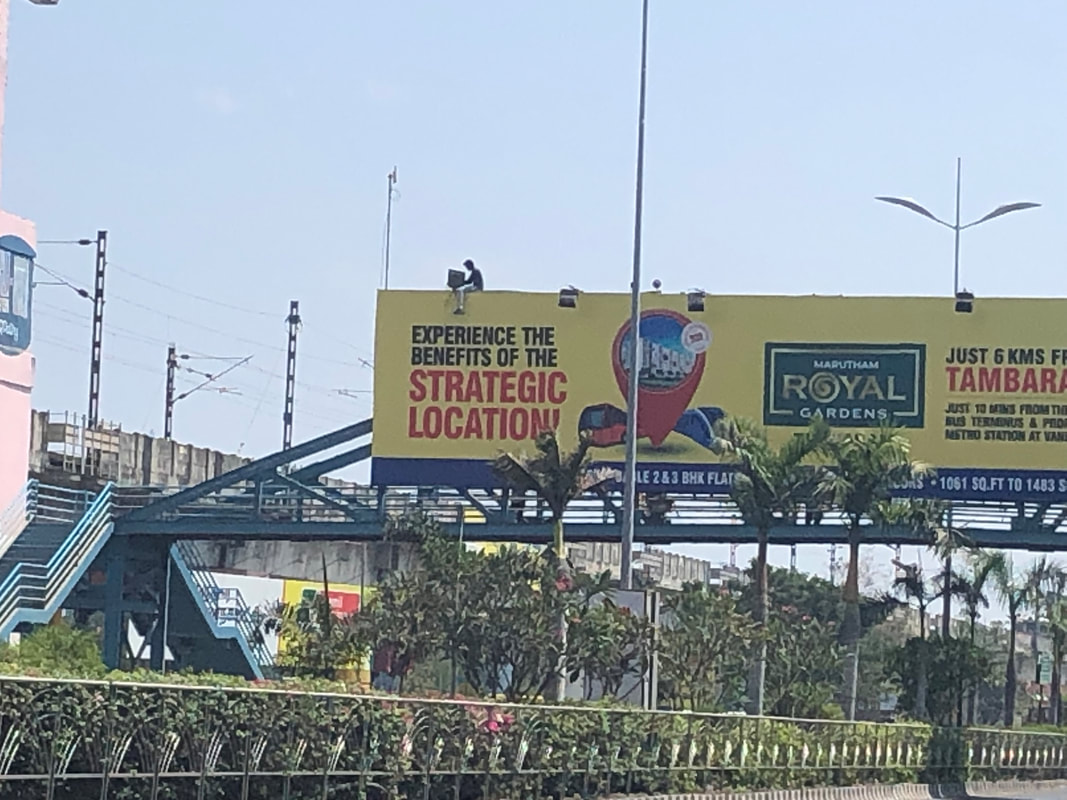 I seem to remember that "holy cow" was Boy Robin's catchphrase in the Batman TV programmes of my childhood. And of course in Hinduism, the cow is holy (though perhaps sacred might be a better word). You are reminded of that forcefully at some of the bigger Hindu temples here in Chennai. Cows, or more probably bulls to judge by their splendid horns, loiter round the perimeter of the temple. Their horns are sometimes vividly painted. Street vendors sell foilage, a wispy plant with small leaves (anyone know what it is?) which the devout buy simply to feed to these cows. And my, when there's some fresh food on offer, those cows go for it! Bystander beware!! It has something of the effect of throwing bread to the ducks in the park pond - except these beasts could flatten you in their determination to get to the grub. 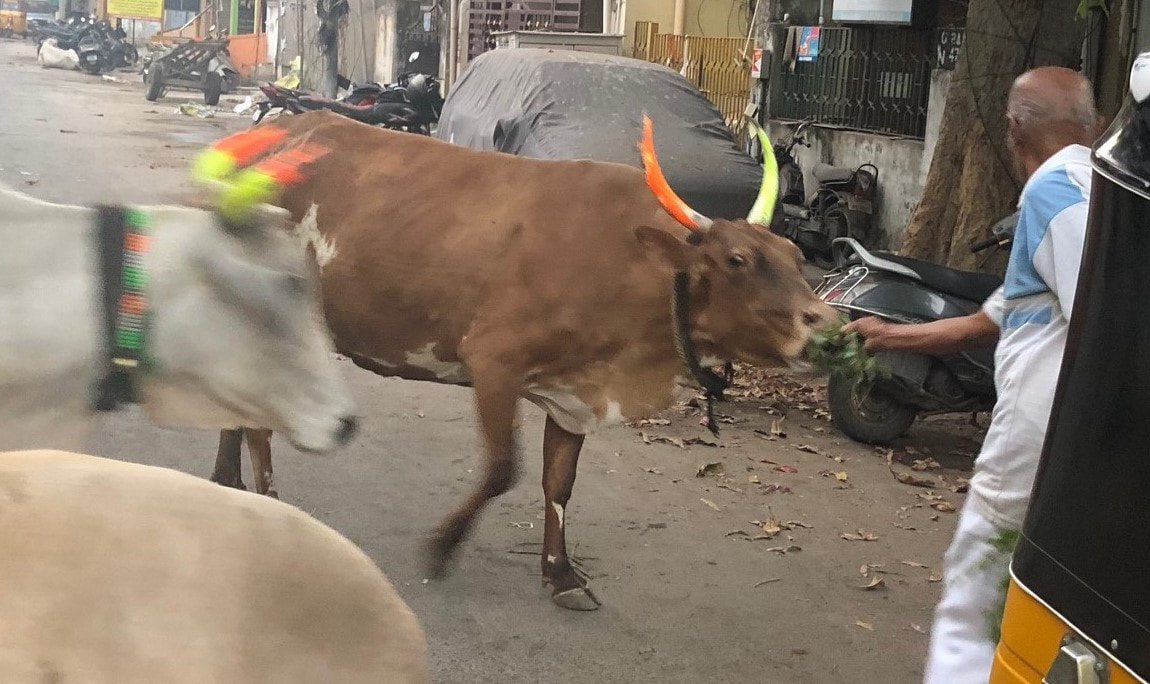 These temple cows are very different from the much more placid beasts you still sometimes come across in the city's back streets. The painted horn type own the road - it's you who have to give way. A truck or bus may oblige them to give ground, but anyone else gets out of their way if they are wise. 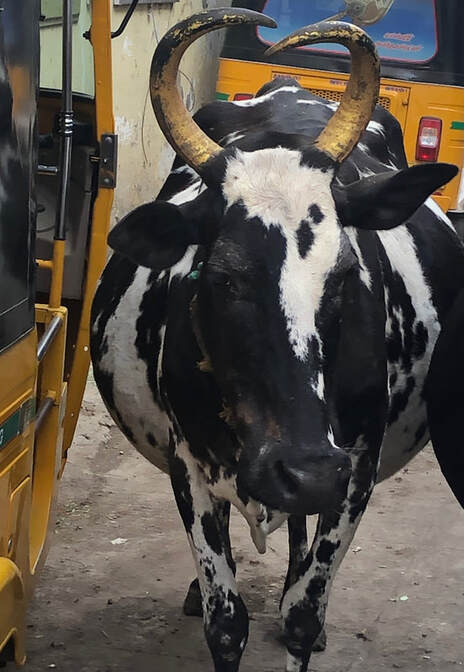 I came across these impressive beasts this weekend in Triplicane, an inner-city locality. But then strolling along a back street, I glanced through an open door and saw this ... It coudn't be a cow, could it, in someone's front parlour? Of course not! It was two cows!! I tried to peek in, but that made the cows restless - and there was a man with them, probably milking them. So I let them all get on with it.
I asked a Chennai-ite whether cows indoors were a common sight. She commented that she'd never seen such a thing before. I know what Boy Robin would have said ... 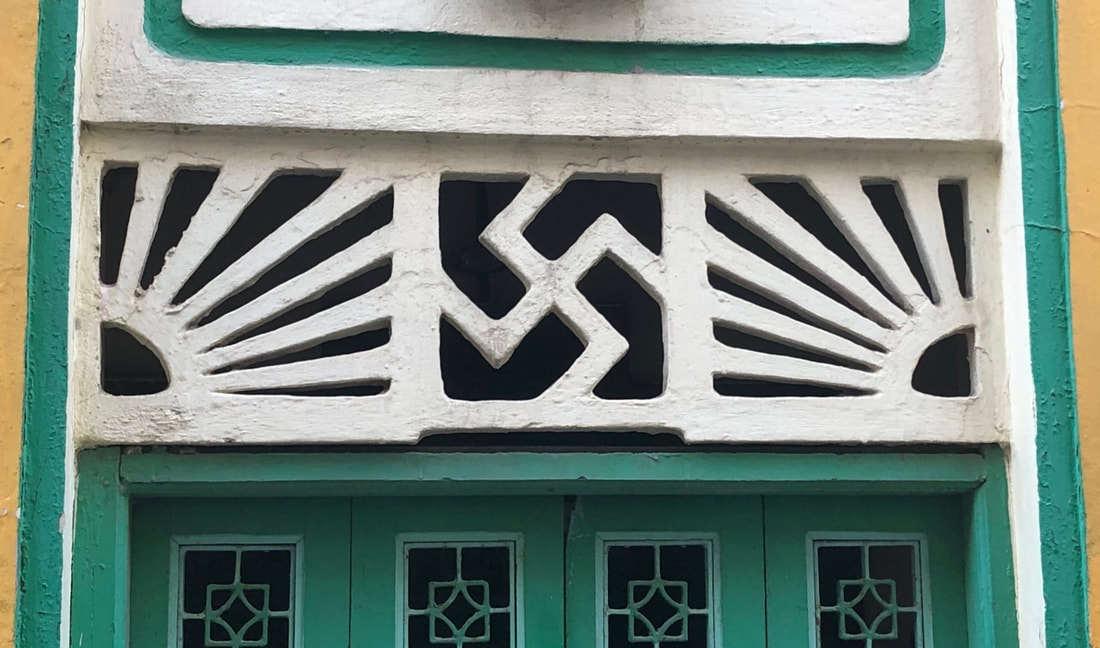 Up early this morning - really early - for a marvellous heritage walk with Madras Inherited (a big shout out to Ashmitha and Muna). We gathered at half-past-six, just as it was getting light, and ended the walk two hours later with a traditional Tamil breakfast (dosa, idli, sambar, vada, coconut chutney. fantastic filter coffee) in a local mess or cafe. We walked through Triplicane in Chennai's inner city. It has an ancient Hindu temple, a commanding mosque and the palace of the Nawab of Arcot. It also has a reputation as an area where incomers to Chennai congregate, because it's central and you can get cheap accommodation amid the congested back streets. But this walk focussed on the houses of Triplicane, and the amazing mix of architectural styles you can find if you look around you: traditional (both religious and secular), neo-classical, Ind0-Saracenic, Art Deco (quite a lot of this, delightfully) ... And Indo-Deco. Think a fusion cuisine sort of thing as applied to architecture. The sharp lines and perpendiculars of Art Deco with some archetypally Indian elements added. Take the image above - the sun bursts are a staple of Art Deco, but the swastika is 'desi'. 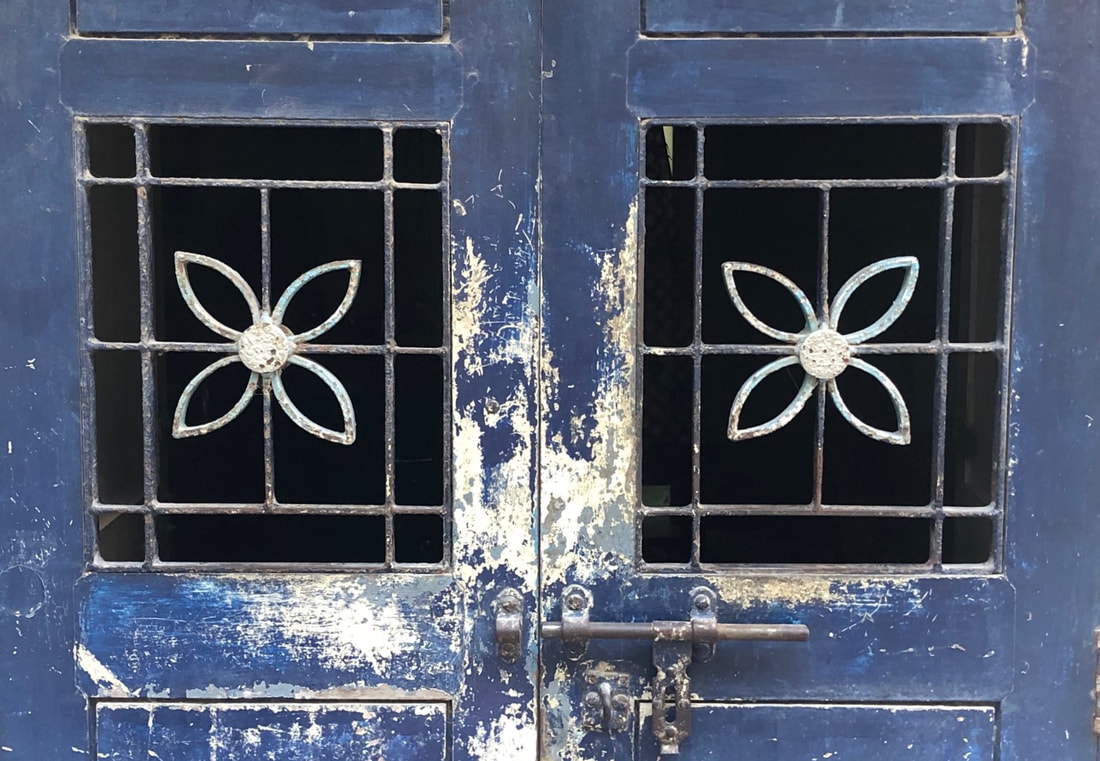 I was taken by the detail - the ironwork on doors and balconies, the lattice-style screens to shield tiny verandahs, all the care with which designers crafts people and householders have marked out their property and given it distinction. 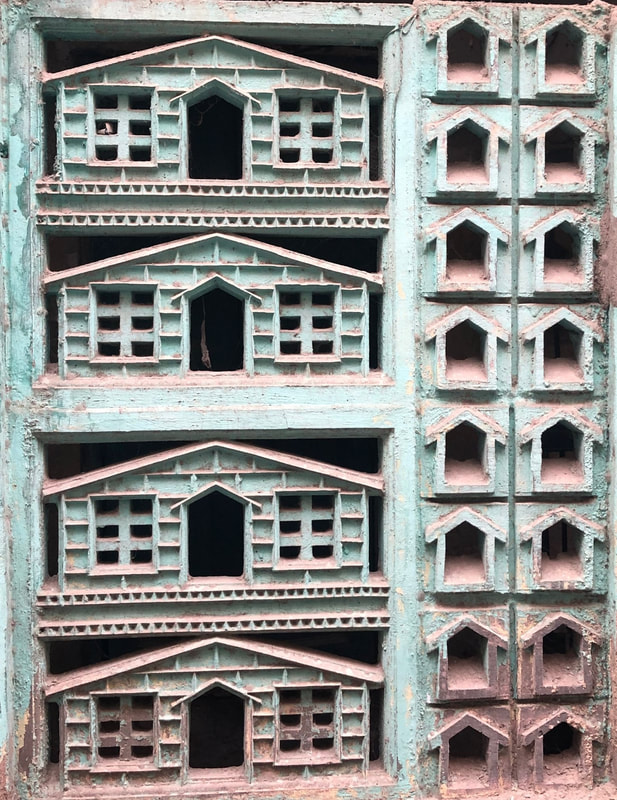 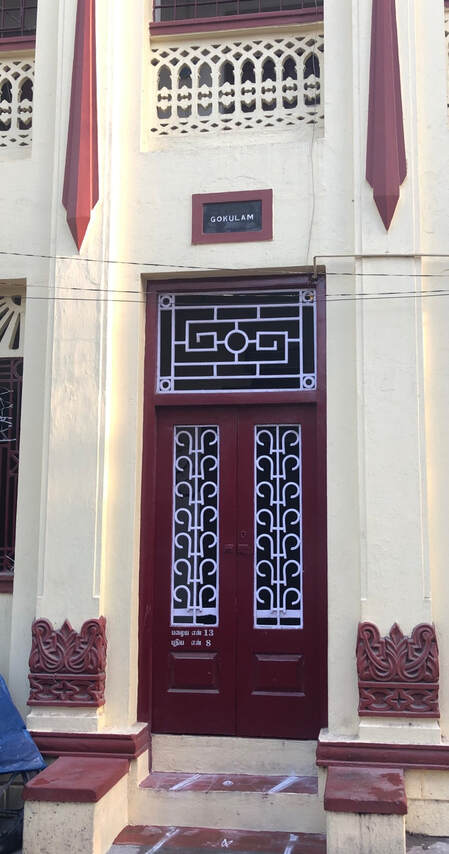 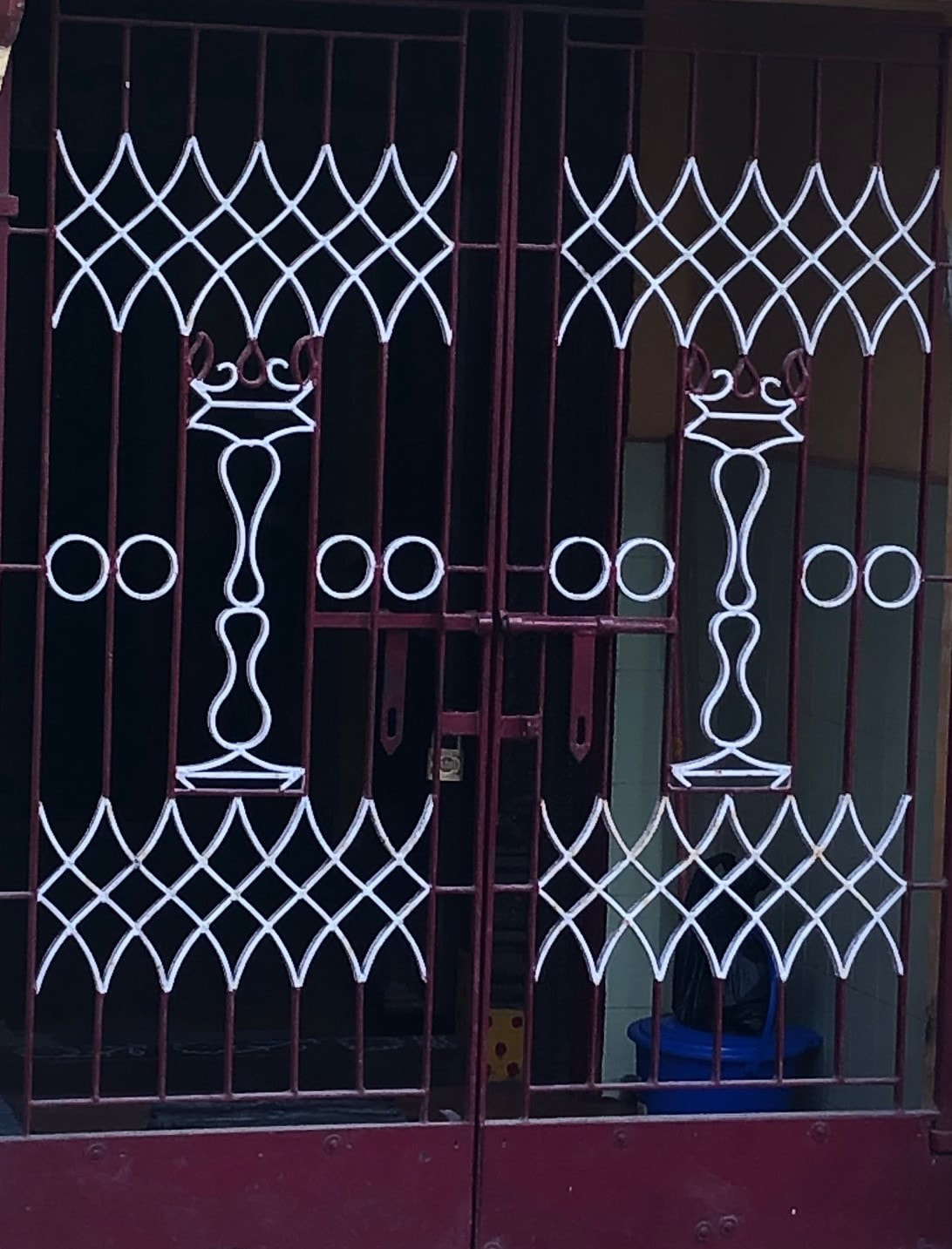 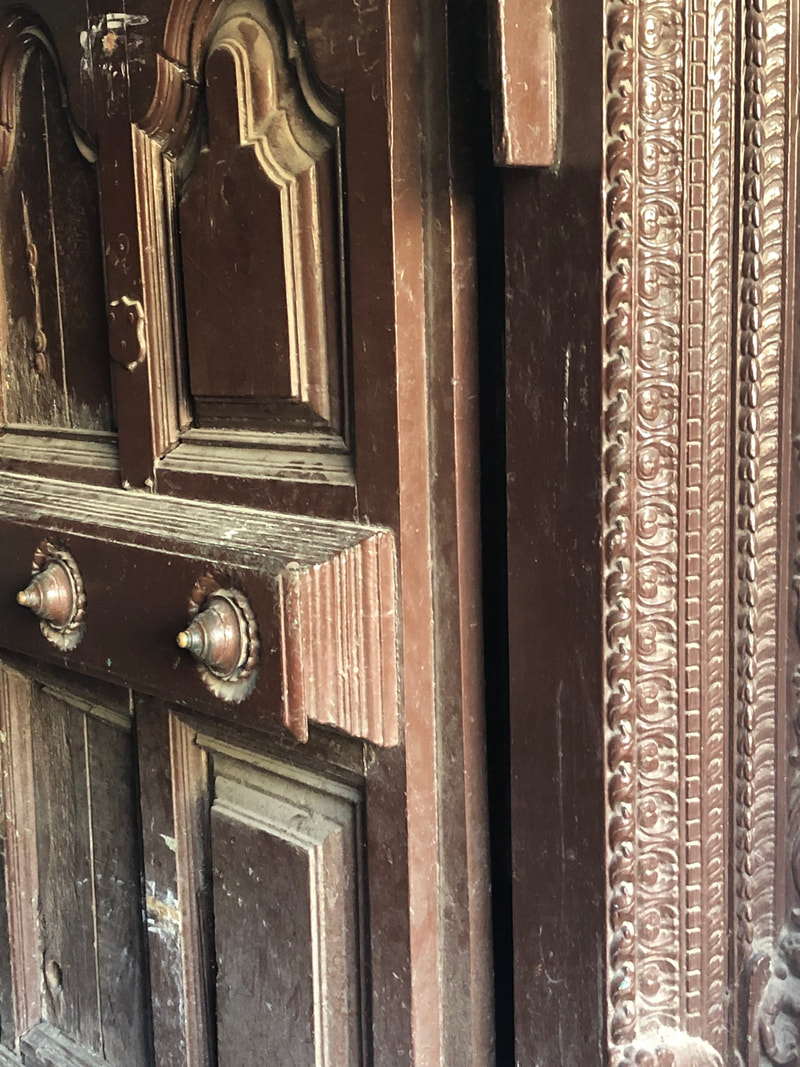 But we started with a dekko - an English slang loan word from Hindi, where 'dekko' is an imperative meaning: look! - at an old traditional single storey building, with clay tiles and much patched up roof. Several of these buildings survive, though most have been replaced by three- and four-storey houses. 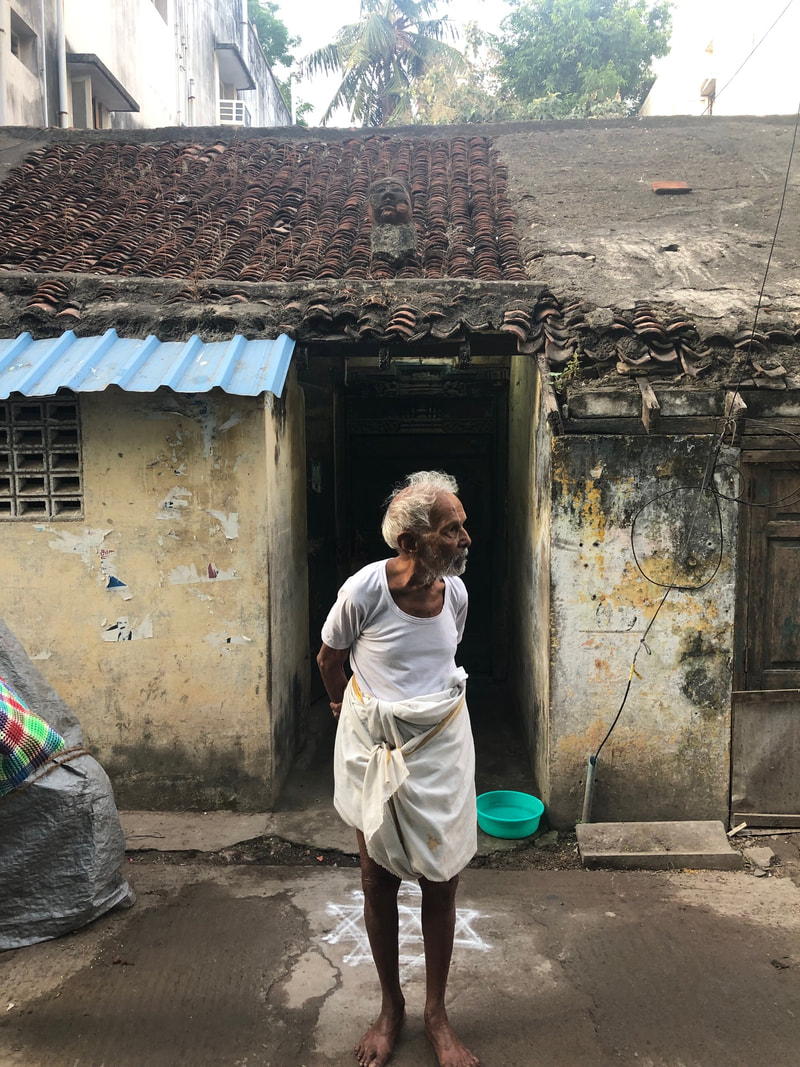 On the roof, you can see a rather battered terracotta head. This was placed to ward off evil spirits. If I was an evil spirit (I'm not!) I'm not sure this fairly genial likeness would be enough to keep me at bay - but perhaps it has helped to keep this building standing when so many others of its kind have gone. 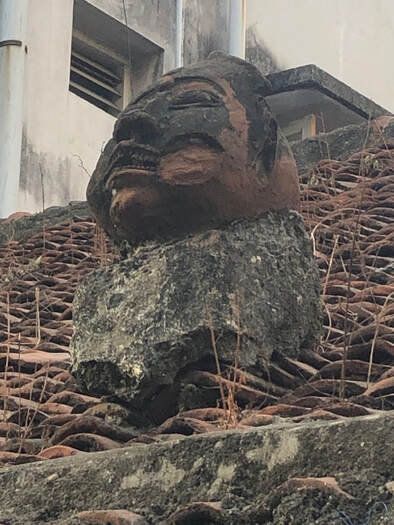 The man whose house this is clearly takes great pride in its antiquity. But it's an open question how much longer these almost anachronistic architectural remnants of an earlier era will survive. 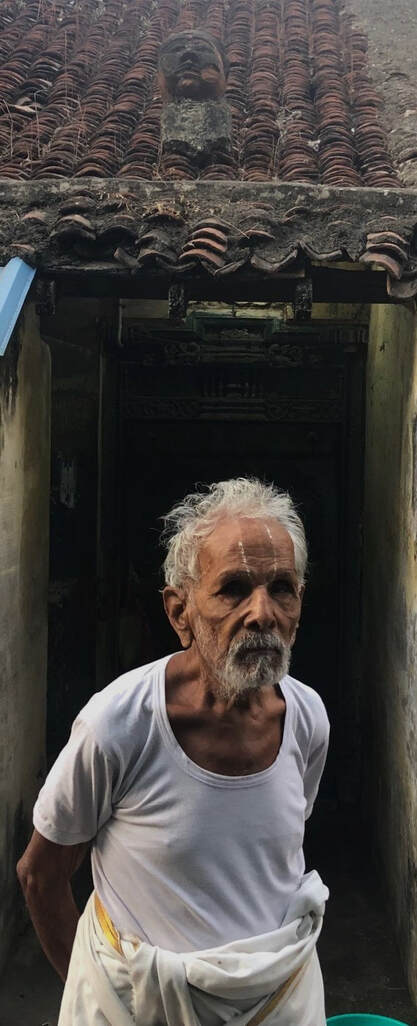 |
Andrew Whitehead's blogWelcome - read - comment - throw stones - pick up threads - and tell me how to do this better! Archives
April 2024
Categories
All
|
 RSS Feed