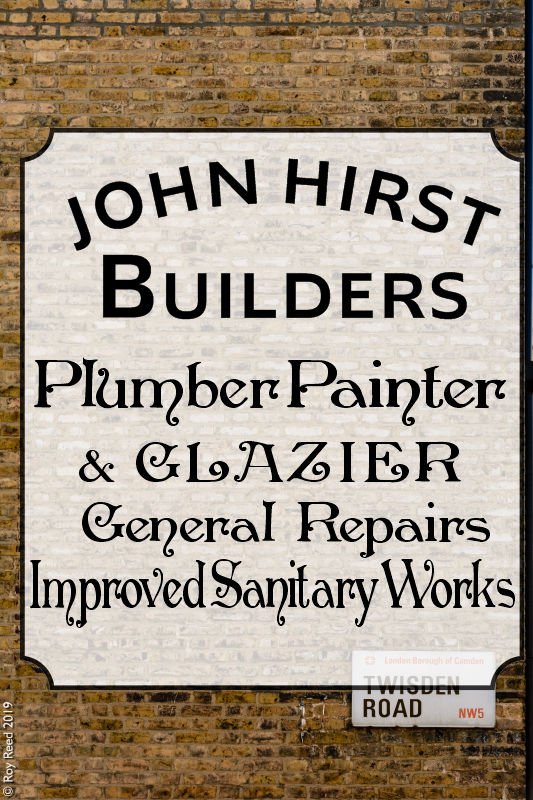
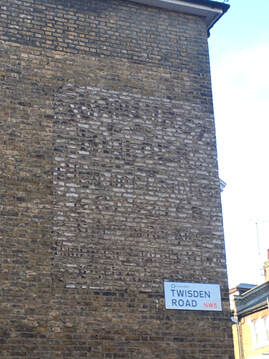
 This is just wonderful. A reconstruction of one of NW5's most splendid - and faded - ghost signs. It's a digital restoration of the sign - the original is as below (my photo from this morning). My view is that these old signs should be allowed to gently drift away rather than restored with paint and brush. But this is a marvelous evocation of what the sign must once have looked like and a retrieval of most of its wording.
Roy says on Twitter - @RoyReed13: 'I'm not sure if 'Improved' is correct and I can't make out the line below that at all. I've used Adsans and Penshurst typefaces which have a similar look to the original.' What the ghost sign doesn't reveal is where John Hirst was based. The Dartmouth Park Conservation Area appraisal of 2009 suggests that he was responsible in the 1870s for the construction of quite a bit of the housing in the area around this ghost sign. Perhaps this sign on a gable wall was placed on a house that Hirst had built as an example of the quality of his work? 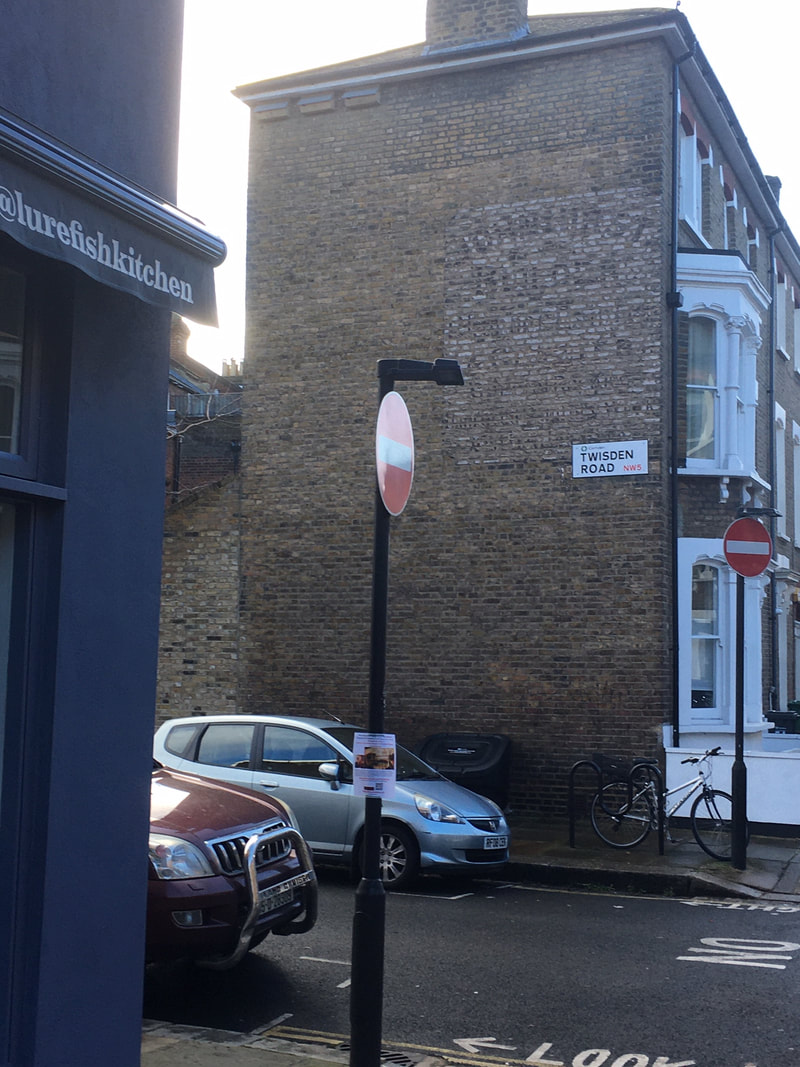
1 Comment
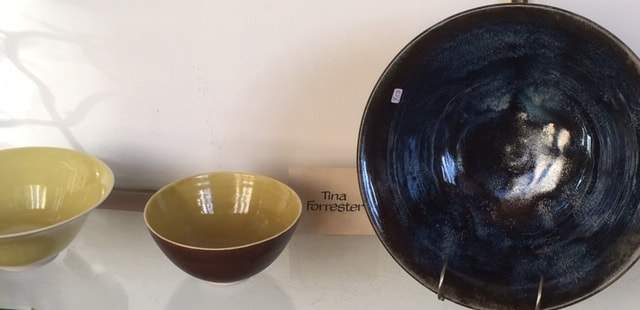
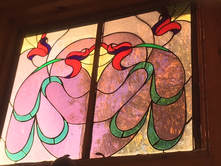
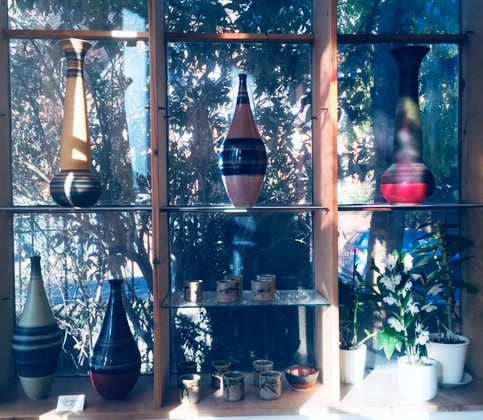
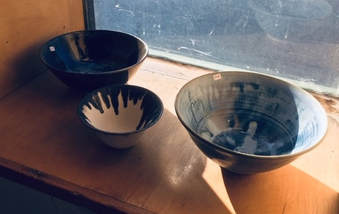
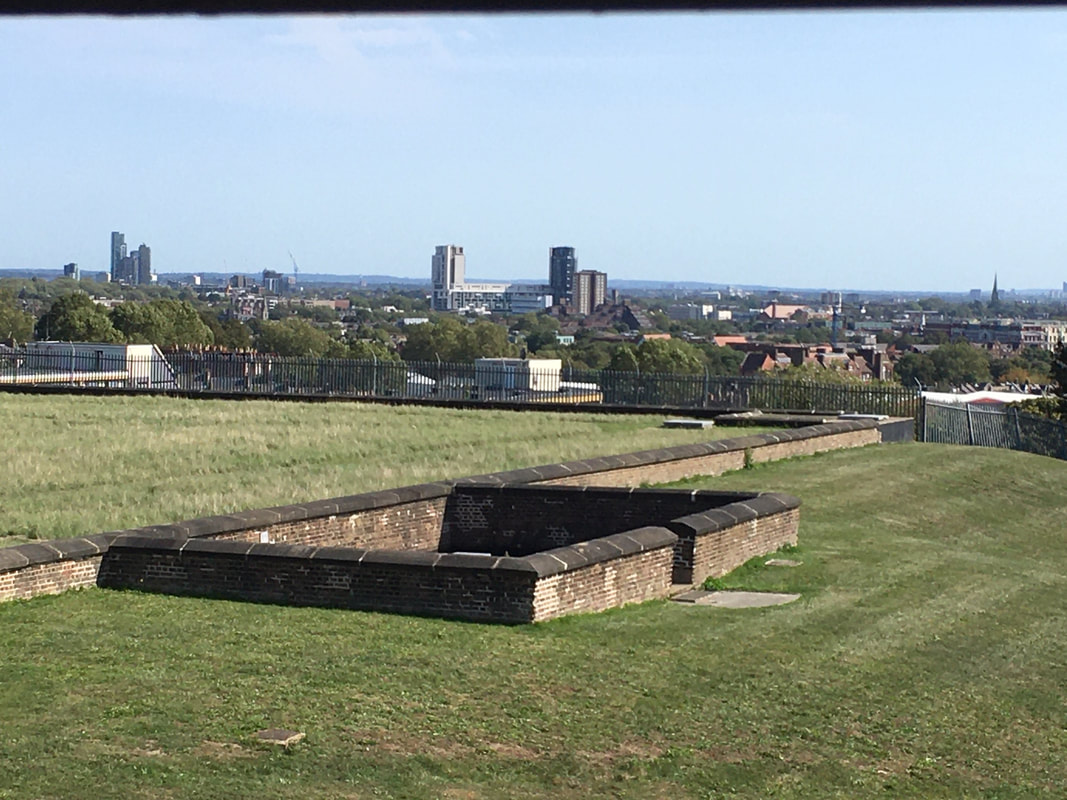 Here's a view you don't often get to see. This is the top of Maiden Lane reservoir, the covered reservoir on Dartmouth Park Hill (as this stretch of what was Maiden Lane is now called). The crown of the reservoir is strictly off-limits - I've lived here more than twenty years and never got more than a glimpse of the turf on the top. The slopes are a local park, however: Dartmouth Park. This is not how the Dartmouth Park locality got its name but rather seems to have been a case of grasping a name that was appropriate and unused. Until this space surrounding the reservoir was christened Dartmouth Park (perhaps when the area was opened to public use in the early 1970s) there was no park in Dartmouth Park. The photo is taken from the top floor of our friends' house on Dartmouth Park Hill and shows the view east over the reservoir. It also shows a feature that you can't otherwise see - what looks like an inspection pit or access point adjoining the top of the reservoir. To help you get your bearings, here's another photo from the same vantage point. 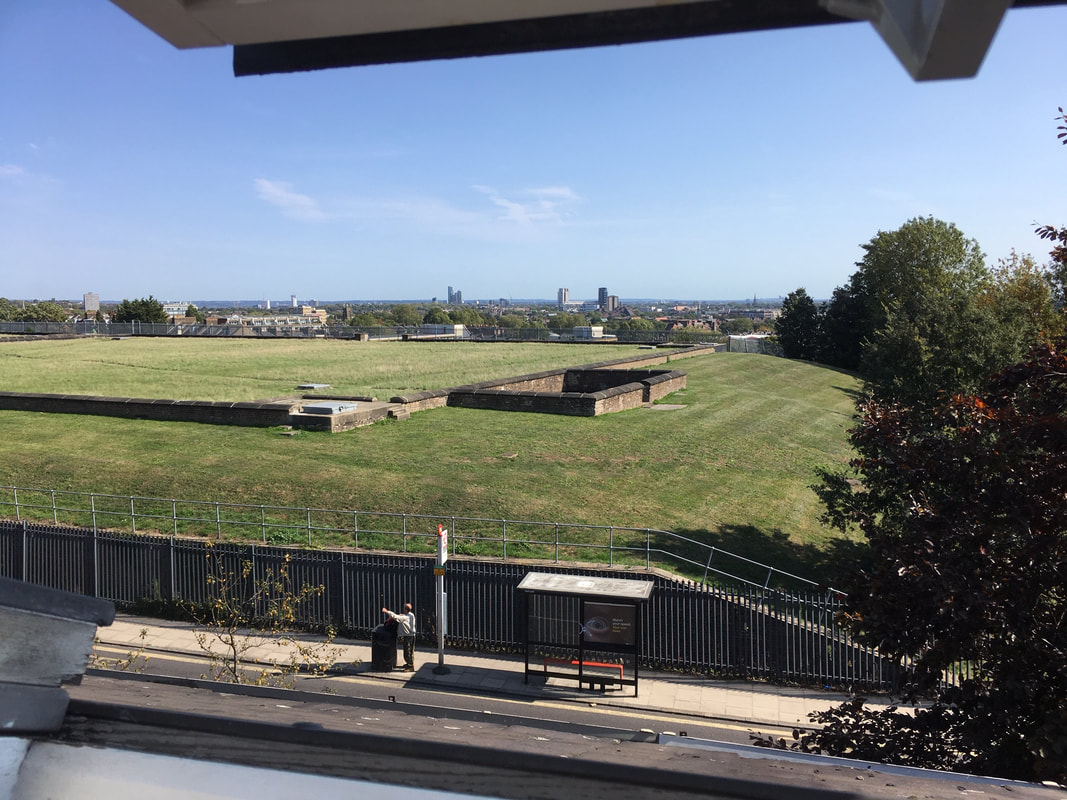 And once upon a time, I did a panorama video of the vista from the far bank of the reservoir - one of the most marvellous views of the city. And since you ask (you did ask, didn't you?) - here's that video! But back to the reservoir ... it was built in the 1850s when the surrounding area was largely green fields. The reservoir is still in use and was renovated back in 2012. The company that did that work - and if you believe their website, they completed the project five months before they started - said this: 'Maiden Lane Reservoir is situated on Dartmouth Park Hill in the London Borough of Islington in Central London. The reservoir is a brick-built covered service reservoir which was completed in 1855. It is composed of two separate structures, known as the north (Cell A) and south (Cell B) compartments, which together have a capacity of 68,200 m³. The depth when full is about 6.7m.' But let's take a look at the history of the reservoir and surrounding area through maps - some of which I have been introduced to on the warmly recommended 'Archway Revisited' Facebook page, and by people I have been in touch with through that group or as a result of earlier blogs. 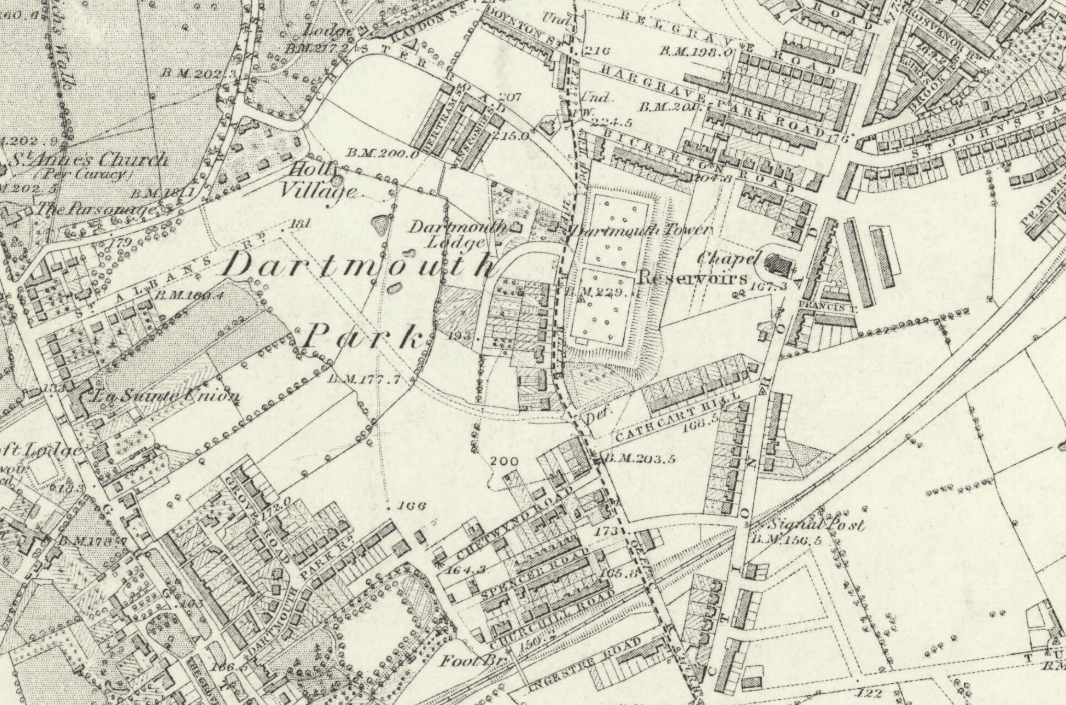 This map was surveyed in the mid-1860s. Dartmouth Park is largely undeveloped - St Mary's Brookfield had not been built (it opened in 1875) - nor had Dartmouth Park Road nor Laurier Road nor York Rise. The grounds of the reservoir extended as far as Junction Road. here's a blow-up: 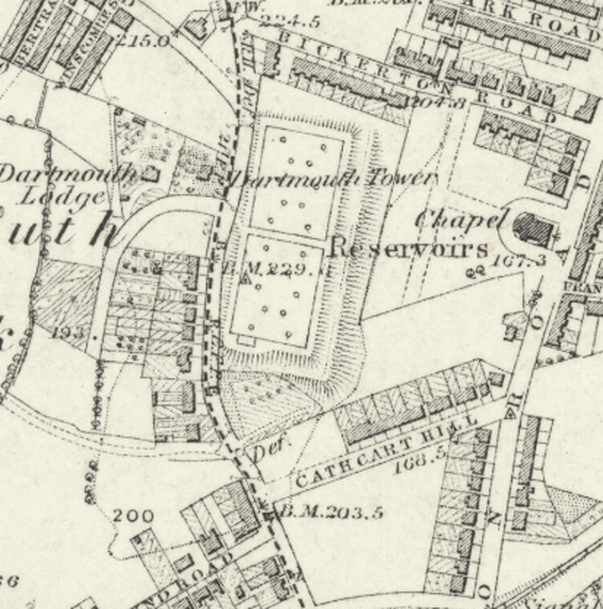 This map below is thirty years later - an Ordnance Survey map of 1895. The area has become much more extensively developed ... though much of Cathcart Hill had still to be built and there are a few gaps in the housing along Dartmouth Park Avenue. 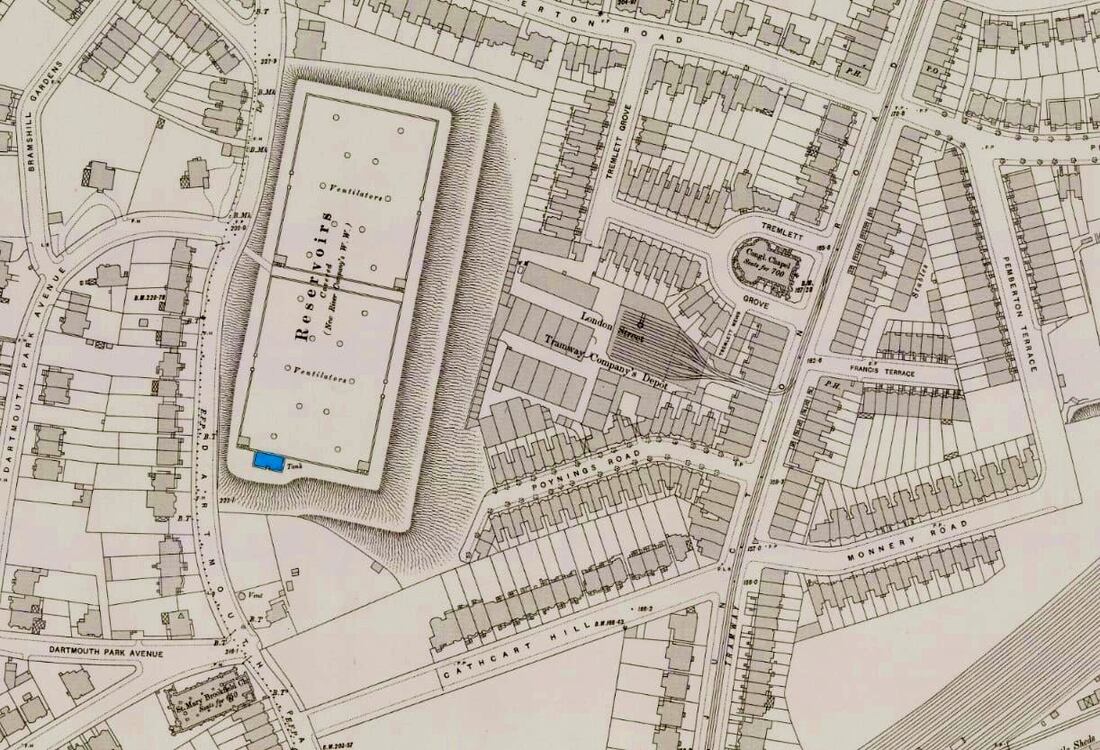 As you can see, the reservoir had relinquished a lot of surrounding land for a tram depot and I imagine stabling for the horses. And on Dartmouth Park Hill, diagonally opposite St Mary's, there's a building - Reservoir Cottage. I hope to return to that in a future blog. And then a leap of another sixty years or so to the Second World War - and a map of local war damage prepared by London County Council 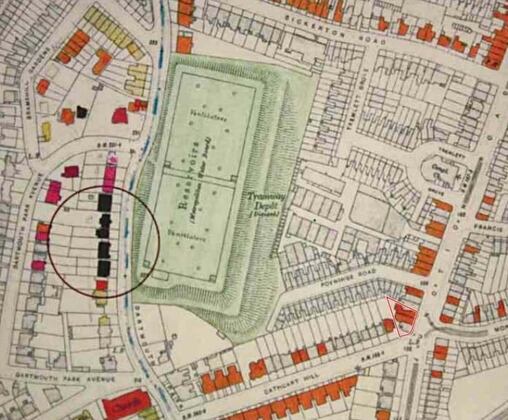  You can see from the colour code of the map that the reservoir suffered a narrow miss - the brunt of a V1 attack being borne by buildings on the other side of Dartmouth Park Hill where blocks of post-war flats now stand. The tram depot is still there - but disused. And the reservoir cottage is still shown. And this is what the area looks like today, courtesy of Google Maps 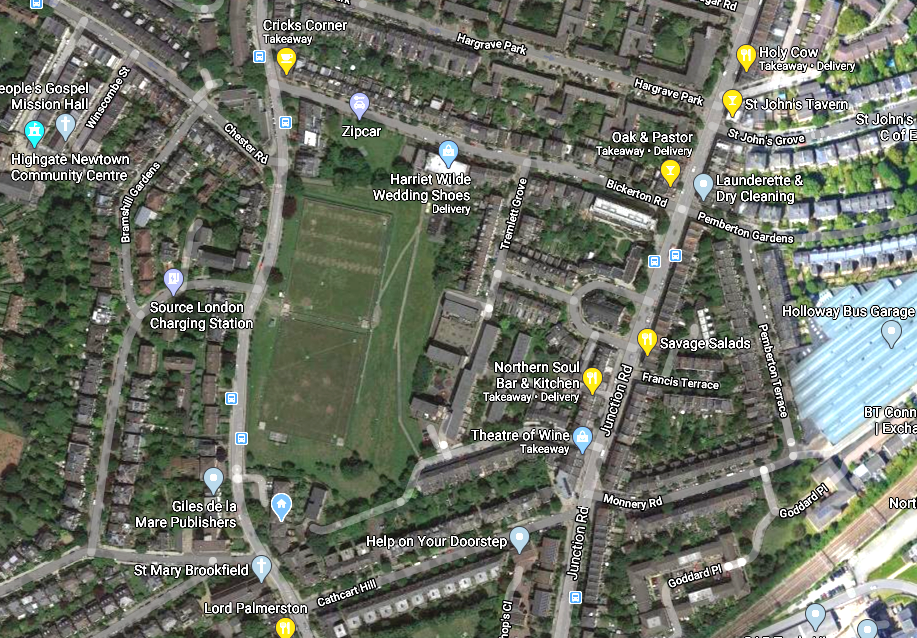  Dartmouth Park Pottery has been a fixture for as long as I've known Dartmouth Park Hill - and then a bit. It's been here for more than a third of a century. When it opened, Britain had just won the Falklands war - we were embroiled in a bitter coal miners' strike - and Margaret Thatcher was in No. 10. But in a couple of weeks, the pottery will be gone for good. "You don't know what you've got till it's gone" - Joni Mitchell once sang. Too true! What a pity that just as this once barren part of the hill is getting a makeover - with Crick's Corner coffee bar doing the best bacon baps in town and a pub once as dingy as can be bouncing back into style as The House - the pottery is closing up. 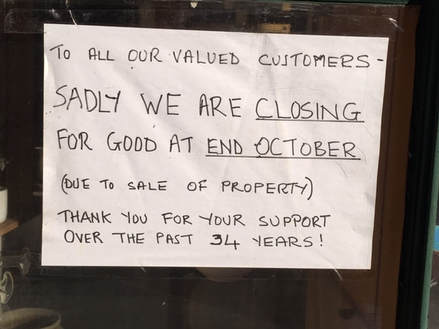 This is both shop and workshop, complete with wheel and kiln - shared now by three potters: Charina, Tina and Gregory. The close-down is not a tale of a rapacious landlord, simply that the owner - herself a potter - has decided it's time to sell. There's a chance that the pottery will relocate rather than simply shut - but it won't be anywhere near Dartmouth Park Hill. 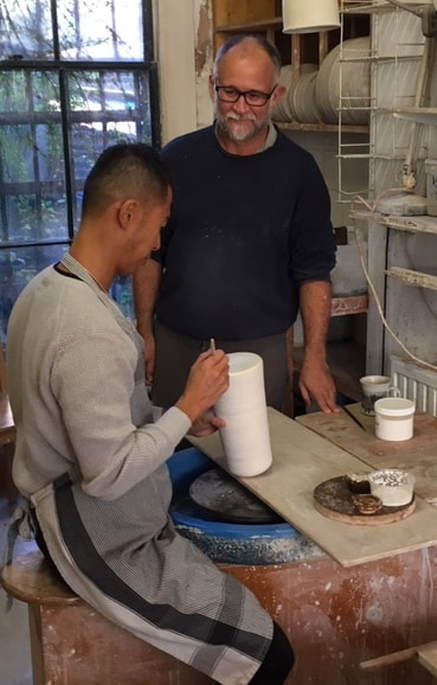 Gregory with his student, Elvy The building is on a corner and so is flooded by natural light - and there's some stained glass too, designed by one of the potters (I was told) and made at a long-gone local workshop in Archway.
The items on display range from mugs and small bowls to huge and intricate works, such as Gregory's calabashes (the name comes from an African gourd which, when dried, was often used to store and carry water) which display craft at its best - and you can spend anything from a tenner to a few hundred pounds.  Gregory with one of his spectacular calabashes Whether you are going to make a first-and-last visit to Dartmouth Park Pottery, or call in one final time, don't dilly-dally - it closes at the end of October. It's at 122 Dartmouth Park Hill, on the junction with Bredgar Road - if you want to call ahead to check that the shop will be open, it's 020 7263 3398. 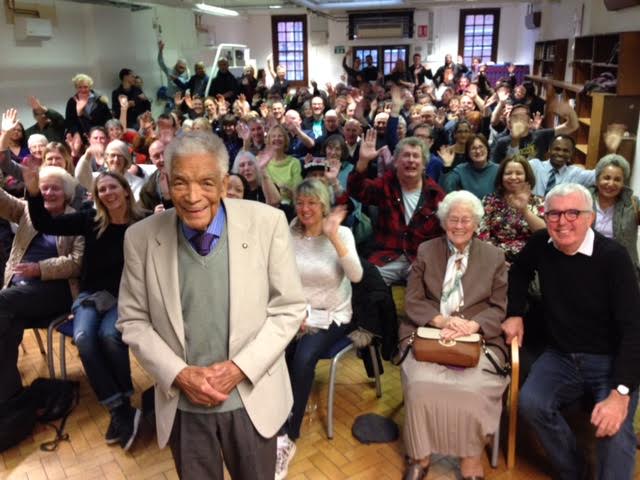 Photo: Lizzie Gillett
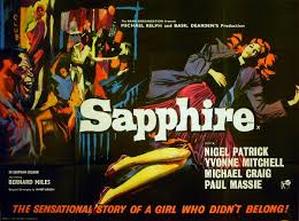
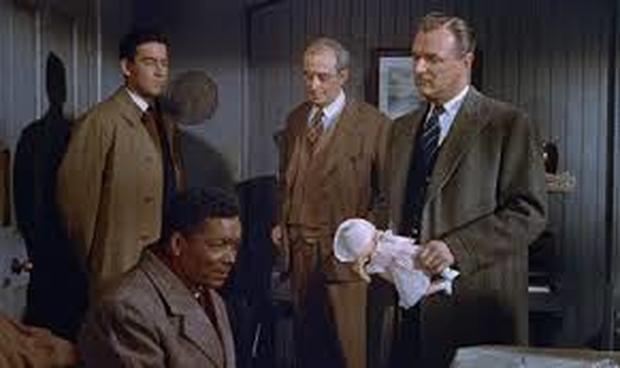
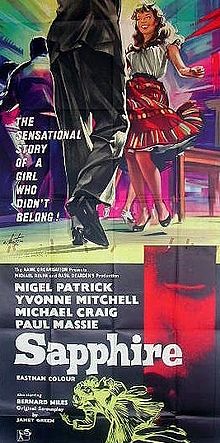
A 21-year-old girl's body is found on Hampstead Heath. It turns out she is Sapphire Robbins, a music student, pregnant and planning to marry an architectural student. And it also transpires that she is, to use the parlance of the film, 'coloured' - but she can pass as white, which is what she had done for several months after earlier being part of the black dance and music scene. Her brother (played by Earl Cameron) is a doctor in Birmingham - and black. He and Sapphire had the same parents - white father and black mother (at least, I think it was that way around) - but a very different appearance. Many of the streets shots are local - the student architect and his family live at 2 Oakford Road, and his father's sign painting workshop is now where the environmental undertakers keep their corpses. The student's sister works at a dairy - in other words an old fashioned grocer's - on York Rise. There are also street shots of Fortess Road and Dartmouth Park Hill. Really interesting to see the place as it was almost sixty years ago - and looking, if truth be told, distinctly drab. Rationing was over by 1959 but, club scenes apart, this wasn't swinging London.
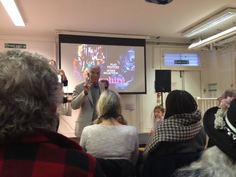
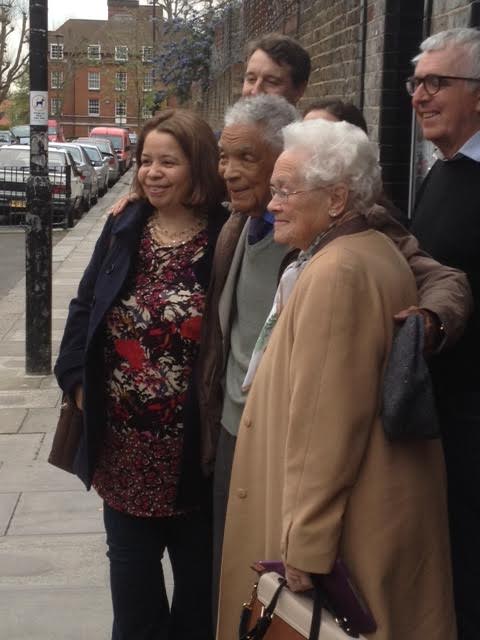
Just as intriguing are the scenes filmed in west London - if not in Colin MacInnes's Notting Dale (his novel Absolute Beginners appeared in the same year as 'Sapphire') then very much in that mould: the Tulip Club with black musicians and a largely black clientele ... the grim, paint-peeling lodging houses ... the racist Teddy Boy thuggery ... the male Caribbean camaraderie. It's a police movie, and unsettlingly candid in its depiction of both malign and casual racism. And very interesting in looking at the phenomenon of mixed-race youngsters who decide to pass for white because it helps to sidestep racism and offers them greater opportunities, social and professional. Earl Cameron spoke powerfully and effectively tonight about the poison of racism - and about his chance entry into acting. He was born in Bermuda, worked as a merchant seaman, and only arrived in the UK when he found himself in Buenos Aires as war was declared in 1939 - while the American members of the crew were repatriated, the Brits (and Earl counted as one because he came from a British colony) were told they had to sail the vessel to London. Once here, for months he couldn't find a job, simply because of the colour of his skin. Earl Cameron is a CBE, and in a little over a year will celebrate his hundredth birthday - and he still has stage presence. He's a star! And so are the people behind the Dartmouth Park Film Club - who not only organised the screening, but also brought Earl Cameron and his wife down from their home in the Midlands, organised wine, cake and popcorn ... and were rewarded with a hugely bigger turn-out than the Holloway Odeon usually manages and, I trust, a bumper collection which will help them stage more really good movies and community events.
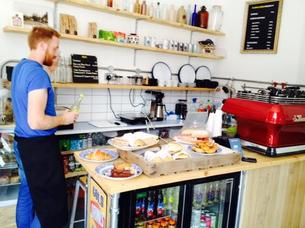
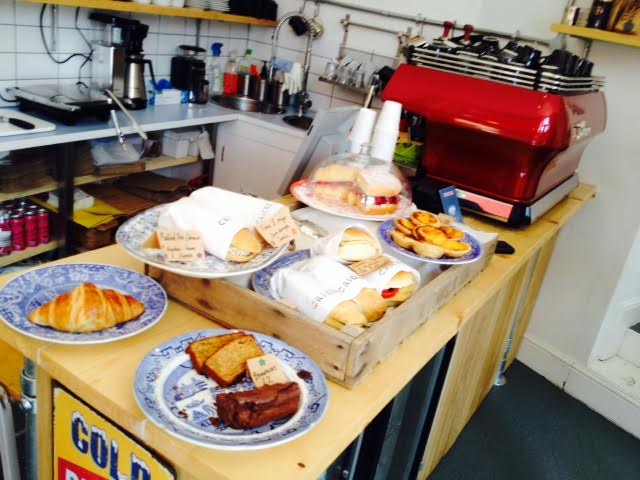
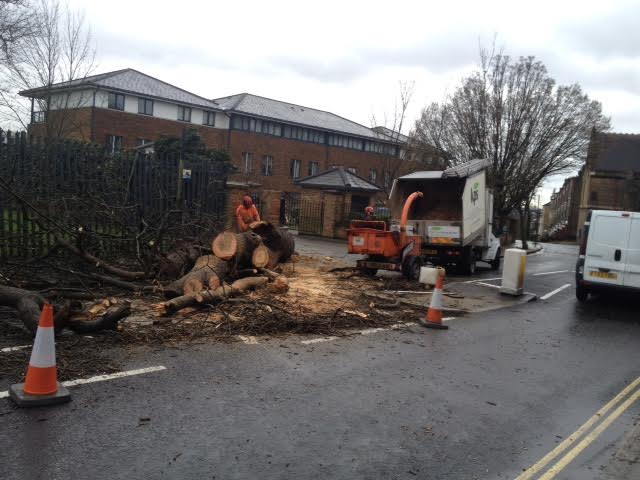 Storm Katie certainly made an impact in my corner of NW5. At about first light this morning, it brought crashing down an old and decrepit tree in the corner of the grounds of our development, It fell across Dartmouth Park Hill, complete blocking the road. Happily no one was hurt and not much damage done. And the tree surgeon and his team were there impressively promptly. As you can see, they cut up the trunk - and have placed the big pieces either on the side of the pavement or at the edges of our car park area. Because the tree was on private land, we will get a bill for the cost of clearing the fallen tree, and we will have to arrange the disposal of the sections of the trunk. But at least, as mishaps go, this could have been a lot, lot worse. 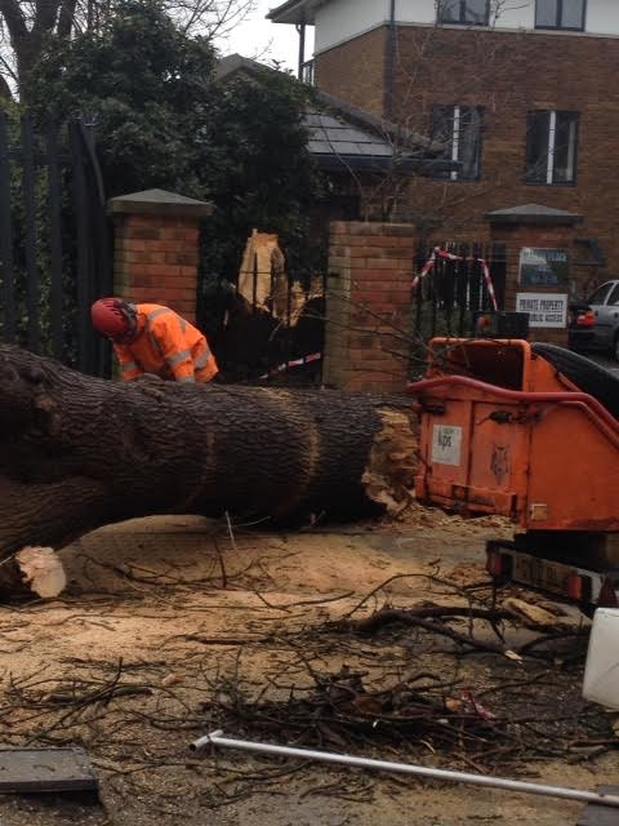 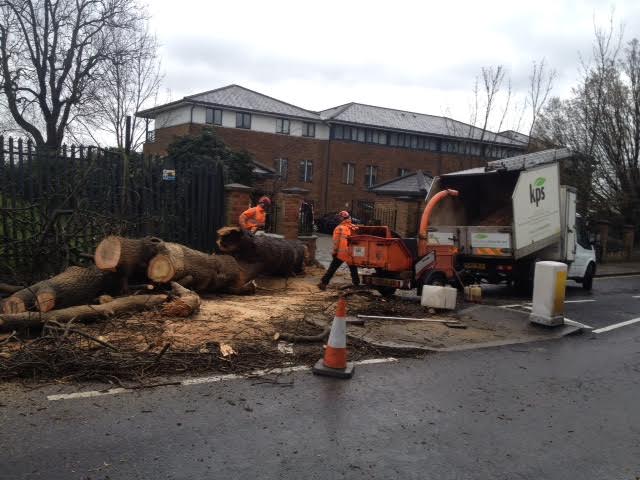 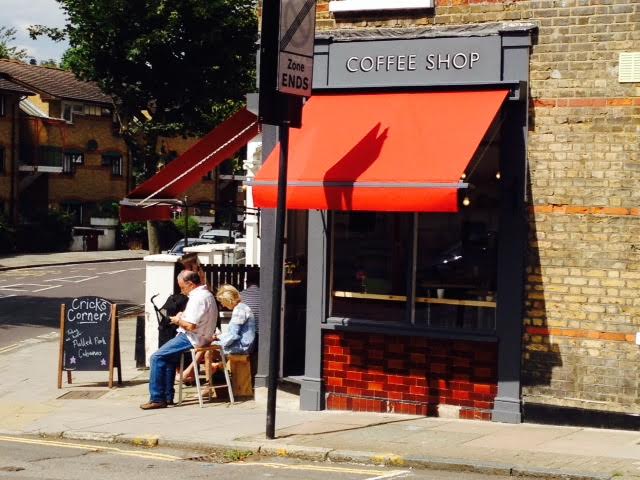 The new coffee shop at Crick's Corner - here's the back story - it still in its first week. And I reckon it's cracked it. We went along for a snack lunch today - good coffee, nice sandwich (a pulled pork cabanos, if you want to know), great cake (my son went for the strawberry sponge cake), friendly service and - helped by the streaming sunshine - a really nice place to chill. And where is Crick's Corner? It's on Dartmouth Park Hill at the corner of Bickerton Street, so just to the north of the covered reservoir (aka Dartmouth Park), about five minutes walk from the Whittington hospital.
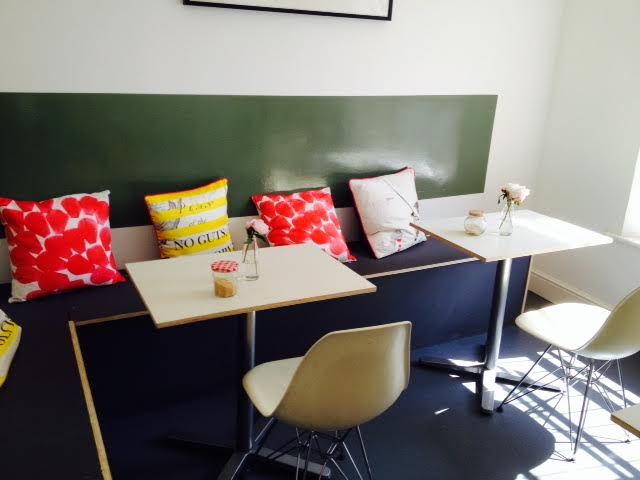
The cafe is much more spacious than I expected. The main cafe area is small but sufficient - with some nice snacks and brownies, and bread you can take home. What used to be the Patels' back room with sofa and TV set is now a light, bright additional room of seating. The decor is stylish - my my, N19 is starting to go places - and early this afternoon there was a steady stream of customers.
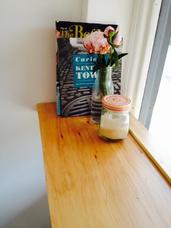
And in a very nice touch, certainly for this blogger, there was a copy of Curious Kentish Town for the curious to consult. Good on yer!
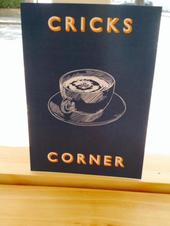
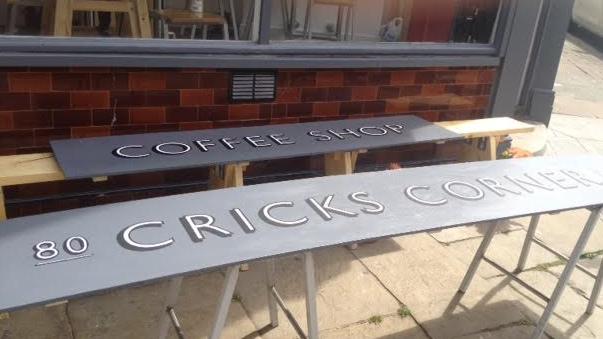 Crick's Corner is making a comeback - the shop on Dartmouth Park Hill (on the junction with Bickerton Road) is reopening on Monday as a coffee and cake place. Hallelujah! The Patels - who ran a newsagent and small corner store - moved out well over two years ago. And ever since, except for one brief spell, it's been empty. I walked past this morning, and Simon (he'll be running the cafe with Kelly) had his paintbrush out getting the signage sorted. "I've never done anything like this before", Simon said - I think he was talking about running a cafe, but perhaps painting a shop sign too. 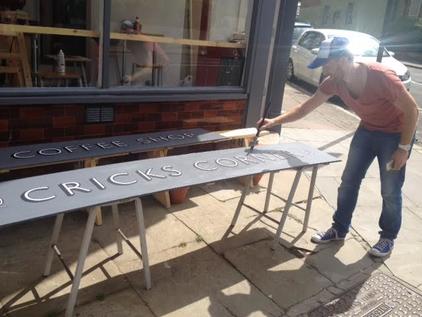 One really heartening aspect of the new business is that they have latched on to the old name. 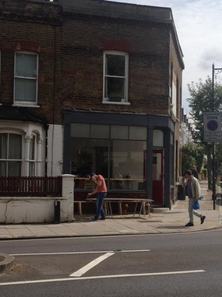 I've blogged about Crick's Corner and its history before - between the wars, it was a newsagent's and cheap subscription library. And an old ghost sign reading "Crick's Corner" is still visible on the Bickerton Road side - I played a modest role in saving it a couple of years back when some workers seemed intent on painting it over.
It's not going to be easy to make a go of the business - there are no other shops immediately adjoining, and not a lot of people walk past. But it deserves support, and I'll be there next week trying it out. I'll let you know what I make of the place. 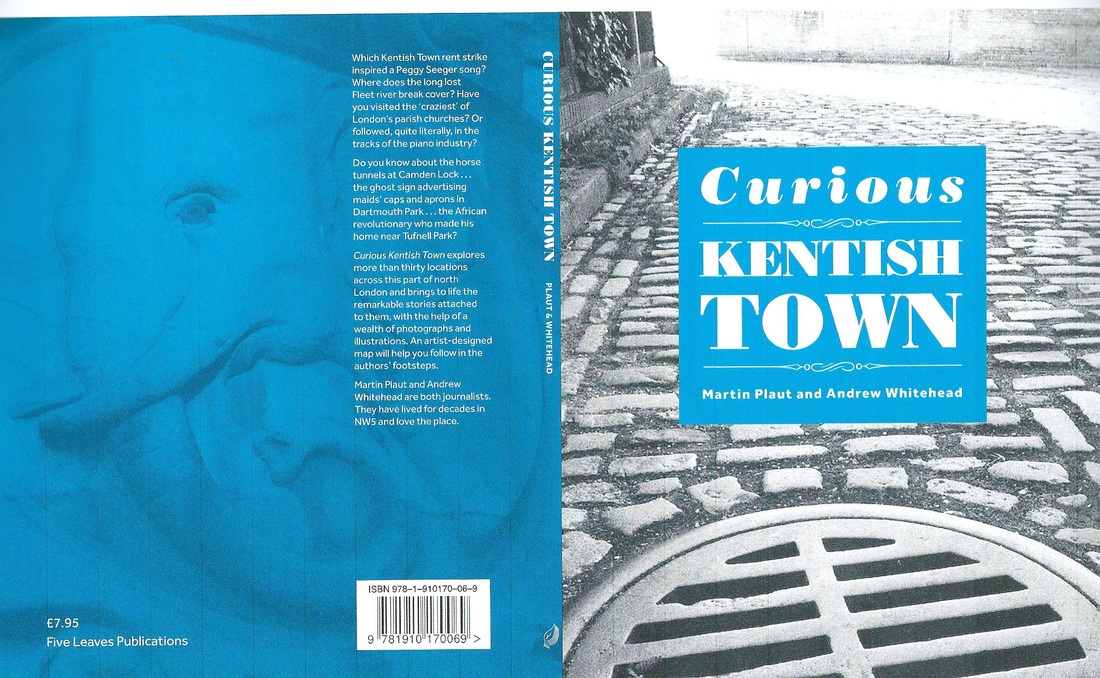
Currently at the printers, and in the shops in under a month - Curious Kentish Town, a copiously illustrated 92-page book about thirty or so places in and around NW5 and the unlikely stories attached to them. There's more details here - and the map below indicates the range of locations featured ... and you can get more of a clue from the titles of the various entries posted below the map. There will be a launch - we hope at Owl bookshop on November 10th. Watch this space! 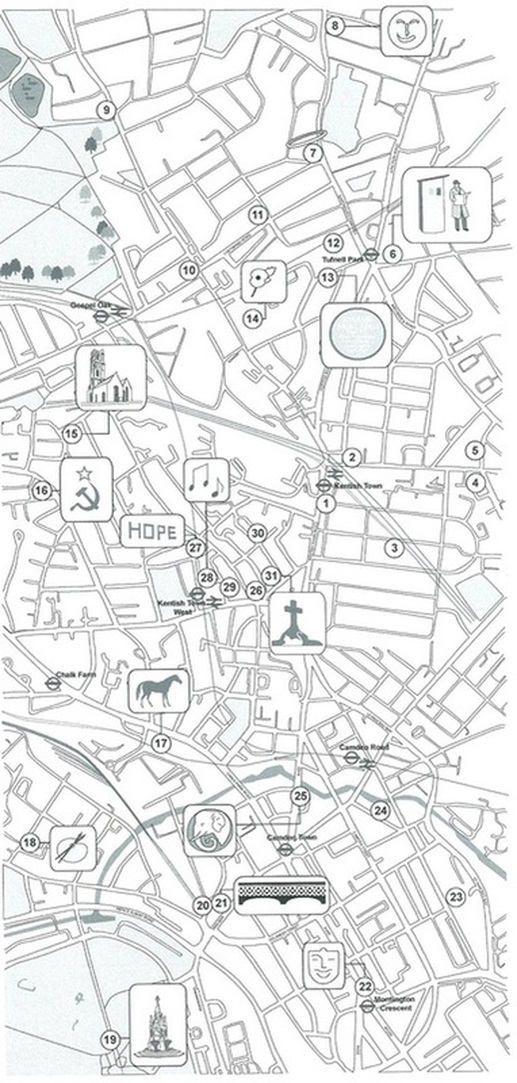
1: Dust-up in Islip Street
2: "Hey Ho, Cook and Rowe" 3: The Caversham Road Shul 4: A Country Cottage 5: The Poets' Meeting House 6: Rocker's Newspaper Kiosk 7: A Celtic Saint 8: The Smiling Sun of Hargrave Park 9: 'Catering for Beanfeasts' 10: Borough Control 11: The Drapers' Ghost 12: The River in a Rusting Pipe 13: Ghana's Revolutionary President 14: The Great War in College Lane 15: St Martin's - still crazy after all these years 16: At Home with Karl Marx 17: The Secret Horse Tunnels of Camden Lock 18: The Artist Colony in Primrose Hill 19: Ready Money Drinking Fountain 20: Matilda the Absurd 21: A Bridge over Nothing 22: The Antidote to Blue Plaques 23: The Strangest of Poets 24: Two South African Revolutionaries 25: The Elephant House 26: When Baths were Baths 27: Find HOPE 28: Pianos for all the World 29: Protect and Survive 30: The Crimea Commemorated 31: Boris the Cat The York Rise street fair - it's in Dartmouth Park, NW5 - is nothing grand. It's not on the scale of the Alma Street knees up in Kentish Town. But it is a really nice local get together - lots of stalls, food, entertainment, arts and crafts, bric-a-brac (I'm very happy with the badge I got today, see below), and local community groups from the Friends of Highgate Library to the Dartmouth Park Neighbourhood Forum.  And the badge? Here it is ... I imagine it dates from the 1975 referendum (yes, we had them even then) - the first time I voted.
The wording 'Common Market' tells its own story about the vintage - that's what the European Union was known as back in the day. 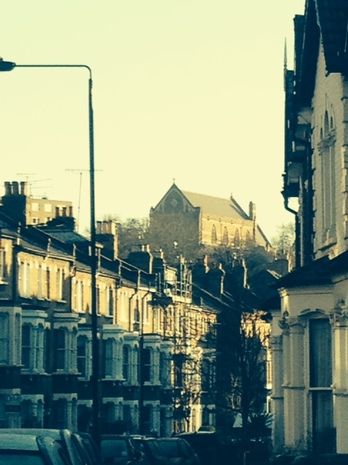
There's a spot along Chetwynd Road in NW5 where Butterfield's high church St Mary Brookfield looms imposingly as the church on the hill. Walking to work this morning through Dartmouth Park (yes, I walk all the way - it takes me an hour) I looked back on the church, which was caught enticingly by the sharp rays of the morning sun. This iphone photo doesn't fully capture the golden light striking Butterfield's multi-hued brickwork, but it has I hope a dash of magic about it.
|
Andrew Whitehead's blogWelcome - read - comment - throw stones - pick up threads - and tell me how to do this better! Archives
April 2024
Categories
All
|
 RSS Feed