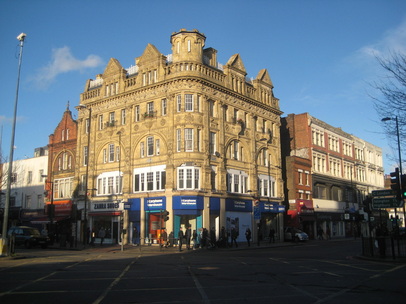
 Nag's Head, Holloway Road It wasn't intended as a New Year wander. If the No. 4 had been running a regular service, I wouldn't have walked anything like as far. But today - part flaneur, part keep fit resolution - I hiked the whole distance from Dartmouth Park in north London to Dalston Junction. Do come with me! The light was wonderful - a bright winter sun. I'd never seen the Nag's Head looking quite so bright. It hasn't been a pub for the past seven years, and hasn't been the 'Nag's Head' for a great deal longer - but it still appears on bus routes, and gives its name to the neighbourhood. 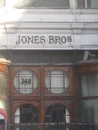 Holloway Road A little further down Holloway Road I passed a solitary, sad reminder of the wonderful Jones Brothers department store - Waitrose now stands on most of the site. Jones Brothers was much loved across north London. John Lewis stubbornly refused to listen to a lively local campaign demanding that the store be saved. It closed in 1990. Holloway Road has never been the same since it went. 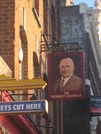 This is Arsenal territory, and in case anyone should forget, there on Holloway Road is a pub named after the club's greatest manager, at least until Arsene Wenger came along. 'The Herbert Chapman'. Earlier Chapman had managed Huddersfield Town (my boyhood team) during their golden spell in the 1920s. He is regarded as one of the greatest team managers, and a great moderniser of the game of football. 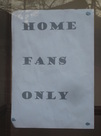 The notice in the pub window saying 'Home Fans Only' seems a touch unnecessary. But I suppose any Spurs or Chelsea fans intruding into this Gunners' pub can't say they hadn't been warned. A few yards further down, a left turn, and there it is - the Emirates stadium. The home of a club which knows, and values, its history - as you can tell from the museum, the statues, the billboards. 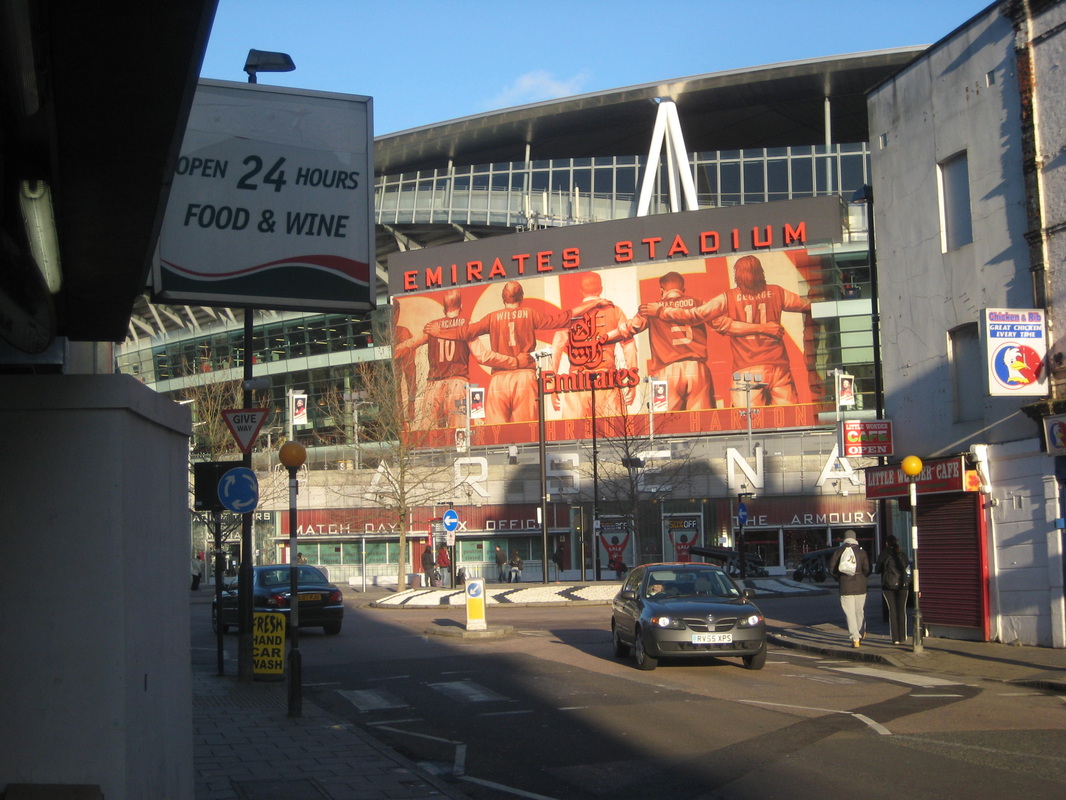 Arsenal's Emirates Stadium 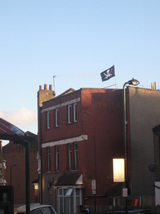 From there, cutting across Highbury, along Clissold Park, to Stoke Newington. And as perhaps befits the old stamping ground of the Angry Brigade, one of the first things I spot is the skull and crossbones flying high. Can anyone explain why? On the far side of the park, the crenellated old pumping station, now a climbing centre, stands out. I seem to remember that the IRA once hid a cache of weapons in the filter beds which fed the water pumps. The site was long ago cleared and is now a housing estate. 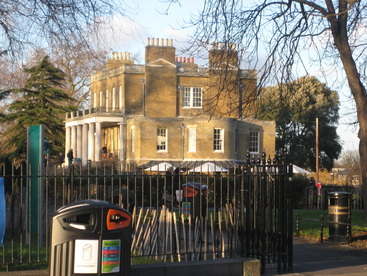 Clissold House, in Clissold Park The park has many delights, the greatest being the colonnaded Clissold House - built in the 1790s for a Quaker merchant and anti-slavery campaigner (this is Hackney after all). A little further along Stoke Newington Church Street is the old church, in part mid-16th century and hugely more elegant than the other St Mary's across the road. 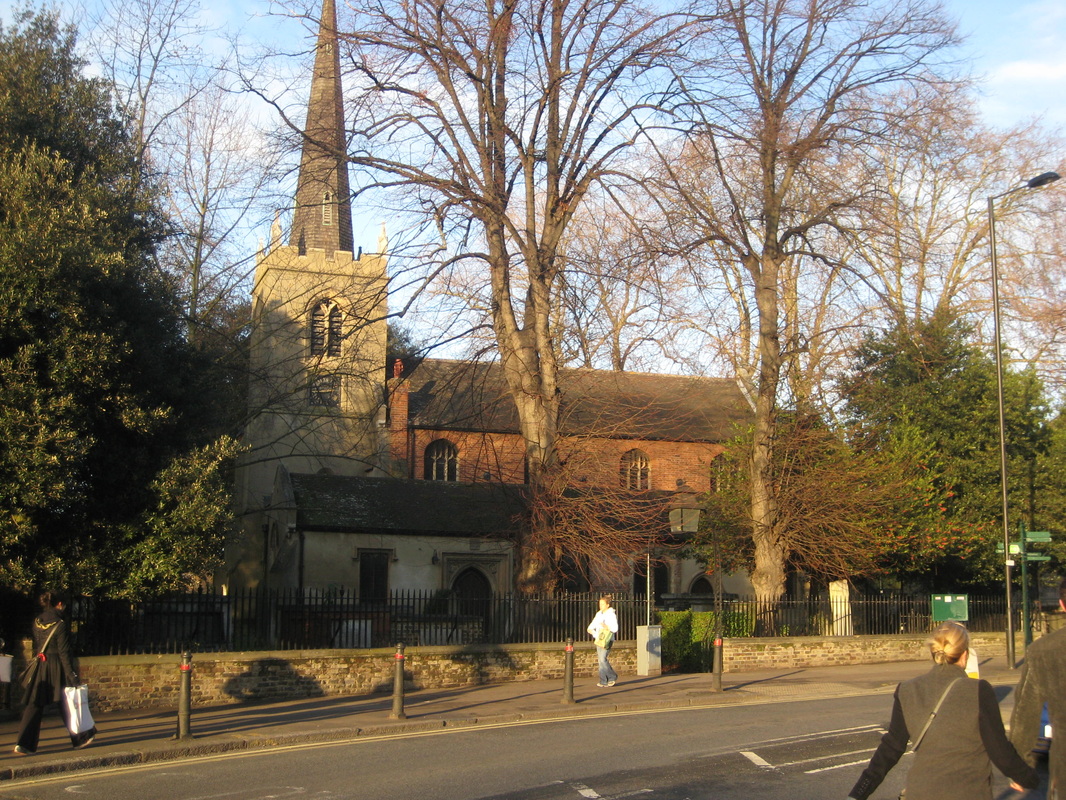 St Mary's old church, Stoke Newington Church Street 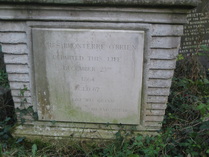 I had planned to treat myself to lunch at one of the trendy Church Street cafes, but hundreds of others had the same idea. So I ploughed on to the Victorian valhalla at the eastern end of the street - Abney Park cemetery. It's best known for the grave of William Booth, founder of the Salvation Army. But another tomb demands at least as much attention. 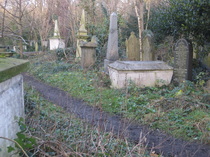 The two photos on the left show the last resting place of the Chartist leader and thinker, James Bronterre O'Brien. His remarkable followers, the O'Brienites, were key figures in London radicalism for a full quarter century after their leader's death in 1864. The inscription, spruced up in the 1980s but faithful to the original, reads rather sombrely: 'His life was grand, his death was sad and drear'. On to Stoke Newington High Street - heading south, past the excellent bookshop, and now amid an array of Turkish kebab shops. Above one is the most enticing shadow sign I've seen in a long while. Enough to prompt me to pop into the cafe, and have a chicken with honey and mustard ('no kebabs', I was told, 'haven't had a chance to marinate the meat because of the holidays'!) 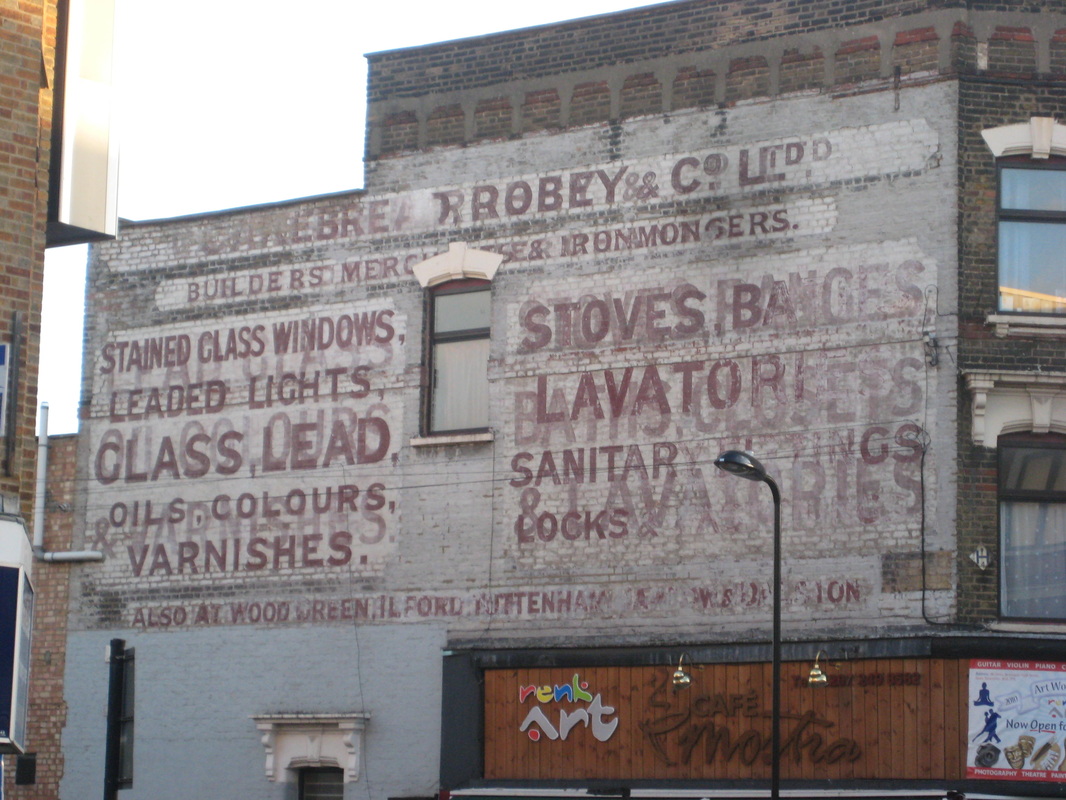 Stoke Newington High Street 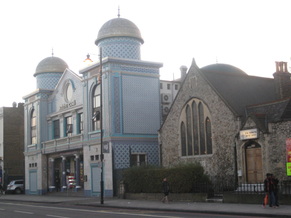 Stoke Newington Road By the time I had eaten, the light was beginning to fade. I hurried on south, past Alexander Baron's Foulden Road, stopping to admire the strange juxtaposition of places of worship just across the road. A small, homely old Baptist church, probably with a largely Caribbean congregation - overshadowed by the mosque and halal grocery next door, a converted cinema decked out with eye catching blue tiles. 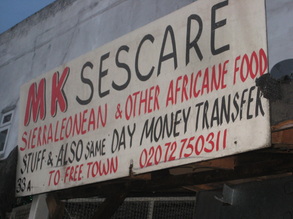 Ridley Road As Stoke Newington shades into Dalston, and Stoke Newington Road becomes Kingsland High Street, African shops, stalls and bookstores become more evident. Ridley Road market, once one of Oswald Mosley's rallying points, is part African, part Caribbean, part Pakistani. I had never seen Punjabi run fish stalls before (traditional Punjabi cuisine is not in the least piscatorial) - but Ridley Road has quite a few. 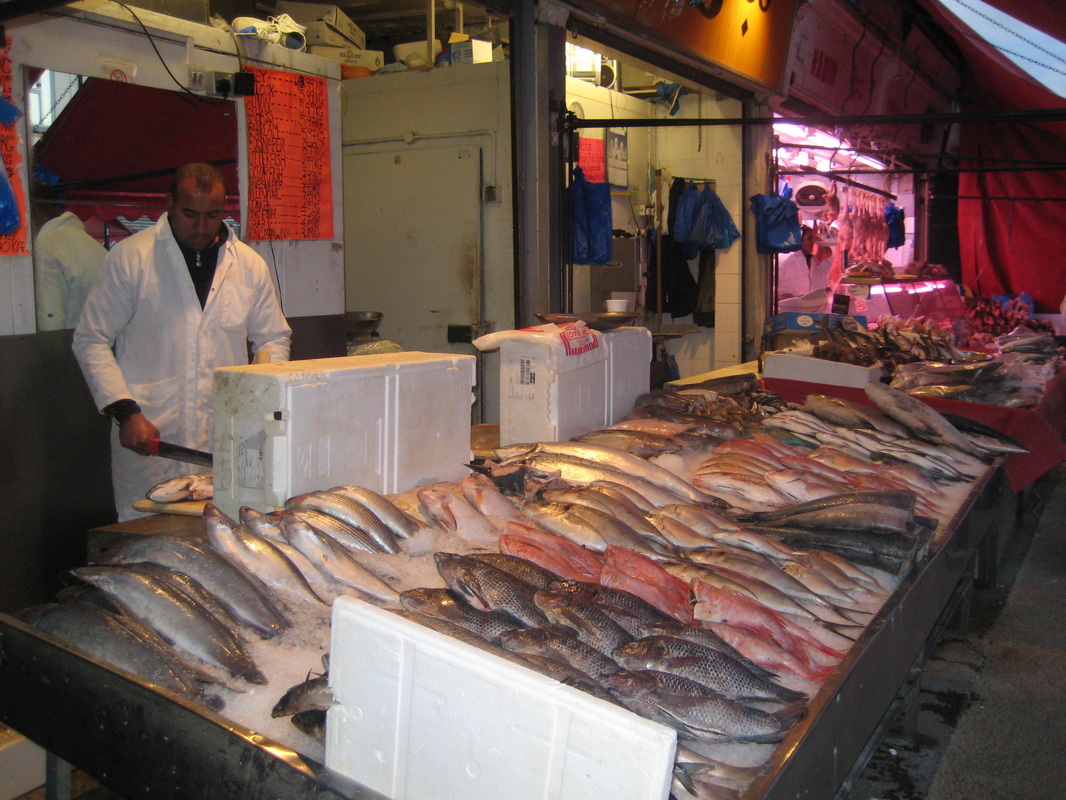 A fish stall on Dalston's Ridley Road Just a little further south to Dalston Junction, on to Balls Pond Road - and my walk's over. I hop on to a 38 to the Angel, and then take the Northern line back home. Close to three hours of wandering, I reckon. Thanks for your company.
2 Comments
Foulden Road stands where Stoke Newington edges into Dalston. A little anonymous - especially on a wet winter Sunday afternoon. I wanted to walk along it because this was where the novelist Alexander Baron (known to his friends as Alec Bernstein) grew up. It was the place he had in mind when he wrote his most famous work, The Lowlife, an affectionate account of a none-too-successful Jewish gambler living in a boarding house, and caught between the disappearing Jewish East End and the suburban aspirational culture his sister has married into.
The road has not changed much since The Lowlife appeared half-a-century ago. The late Victorian houses are neat and well kept, with occasionally a three- or four-storey house giving a little variety to the skyline. As you approach Amhurst Road, some of the houses are double fronted. They must have bene rather grand when first constructed. At its western end, Foulden Road runs into Stoke Newington Road. From the garage, you can seen some remnants of light industrial buildings - a chimney and a two storey factory. Across the main road, the unassuming Stoke Newington Baptist Church is entirely eclipsed by the Turkish mosque next door, with its eye-catching blue tiles. (There's a wonderful Flickr photo of the building here). As I approach, the mosque appears to be something more modest - the Aziziye halal butchers and restaurant. Surely the most ornate such meat shop in the city. I pop in and buy some garlic sausage. What a marvellous building, I say. Yes, the manager replies - it used to be a cinema, now its a mosque. I look puzzled. There's an entrance at the back, he explains, you can go and have a look if you like. I do. It's a cavernous, serene first floor prayer hall in a building probably built to show the early talkies. Walking past the Baptist Church I notice the door is ajar and so I peek in. The preacher - if that's what he is - is black, and the mike in his hand can hardly be necessary for his congregation, or audience, barely numbers a dozen. Alexander Baron's The Lowlife captures, very humanely, the early waves of Caribbean settlement in this corner of London. The Turkish migrants, now much more numerous here, are more recent. But there is at least a spiritual continuity. The Turkish cafes, clubs and snooker halls are - I'm sure - a setting for much the sort of gambling that The Lowlife's hero, Harryboy Boas practised so unsuccessfully. |
Andrew Whitehead's blogWelcome - read - comment - throw stones - pick up threads - and tell me how to do this better! Archives
April 2024
Categories
All
|
 RSS Feed