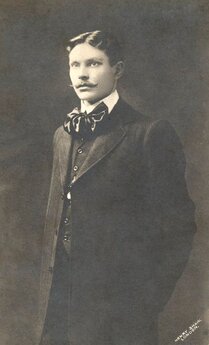
 Fritz Svaars Fritz Svaars It’s taken more than a century for Fritz Svaars’ last letter to reach his family in Latvia. He wrote it a day or two before his death while hiding in a lodging house in London’s East End. Svaars was a Latvian political exile, an anarchist, wanted for his role in the murder of three London police officers during a botched robbery attempt. His letter home was both an extenuation of his conduct and a farewell. ‘[T]hey are looking for us everywhere’, he wrote – the ‘whole of London is buried in police’. He knew the chances of escape were slim. ‘Two weeks I’ve been on the run. How much longer I can manage, I don’t know’, Svaars scribbled. ‘If I’m lucky then I’ll still live and I’ll share joy and sadness with you, and if not, you also know that at some time that same hour will come to you and you’ll be ashes the same as everyone.’ 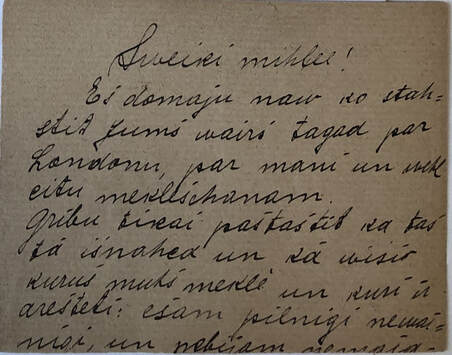 Part of Fritz Svaars' final letter - London Metropolitan Archive As a precaution, Svaars placed the letter in an envelope addressed in Latvian, contained in another envelope with an address written in Russia, the language of Latvia’s then rulers. He entrusted this letter to a comrade to send back to the Baltic. That comrade was an informer. He handed over the letter to the police and also passed on word of where the two wanted men were hiding - in a second floor room at 100 Sidney Street in Stepney. That led – on 3rd January 1911 - to the most sensational shoot-out in London’s history. Two gunmen with semi-automatic pistols and a seemingly inexhaustible supply of ammunition kept police and troops at bay for six hours in what became known as the Siege of Sidney Street. Bullets ricocheted off the walls; East Enders thronged in their thousands to catch a glimpse of the drama; reporters secured a vantage point on the roof of a local pub; as many as five newsreel operators filmed silent footage of the encounter. Winston Churchill, then the Home Secretary, rushed top-hatted to the scene. When the besieged house caught fire, Churchill personally forbade the fire brigade from dousing the flames. The charred remains of Svaars and his fellow gunman were found amid the embers. He had died of smoke suffocation. 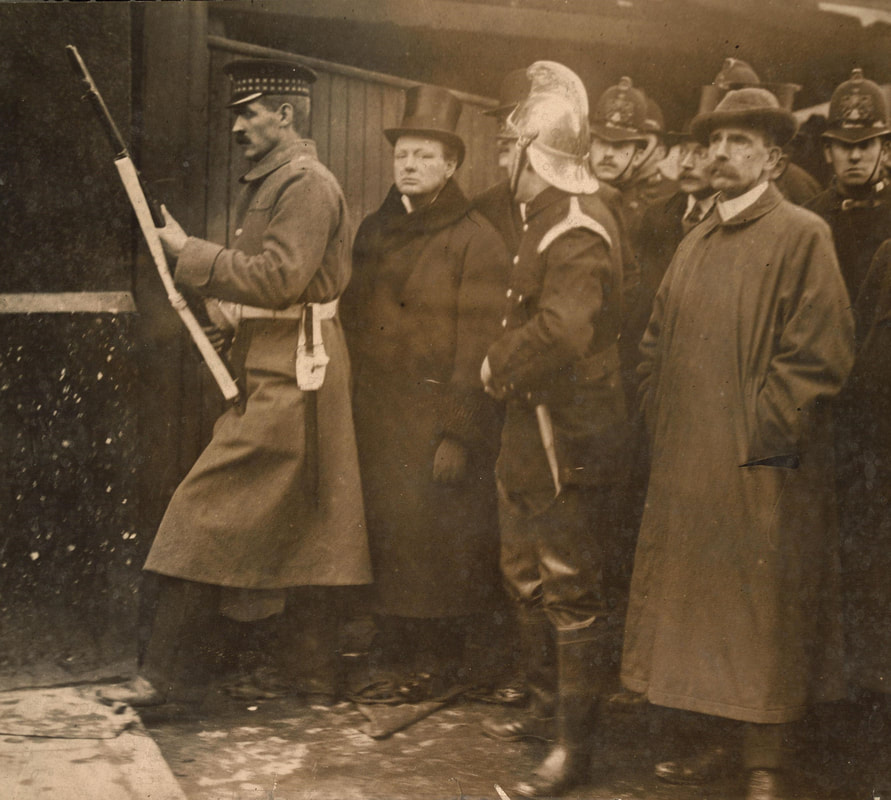 Winston Churchill with top hat at Sidney Street - Illustrated London News Svaars’ six-page handwritten letter is now lodged in the London Metropolitan Archive, amid the voluminous archives of the City of London Police. These police records are the main source for my book, A Devilish Kind of Courage: Anarchists, Aliens and the Siege of Sidney Street. Two weeks before the shoot-out, City police had interrupted an attempt by an armed gang to burrow into a jeweller’s shop in Houndsditch. The robbers shot their way out, killing three police officers and seriously injuring two others – the worst single incident in the history of London’s police. The gunmen also inadvertently shot and injured one of their gang, George Gardstein, who died the following morning in lodgings shared by Fritz Svaars and another of the anarchist group known only by his assumed name of Peter the Painter. 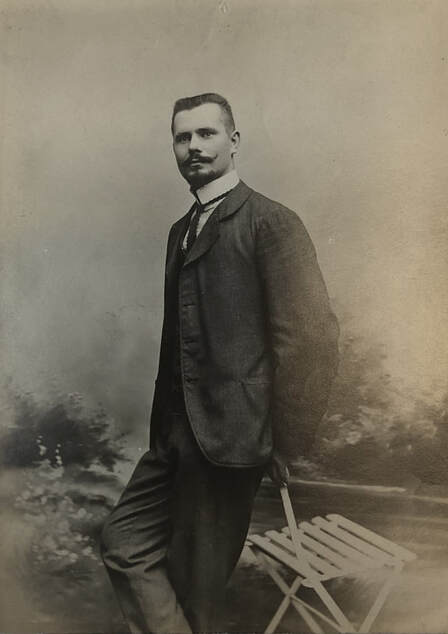 Peter the Painter - London Metropolitan Archive Many of the photographs and other documents seized by the police as they searched suspects’ rooms are among the police records. The images are bewitching. Among them are studio photographs of young men and women taken in what is now Poland, Ukraine, Belarus or Latvia – frustratingly, almost all are unlabelled, though a few have brief jottings in Latvian, Russian or Yiddish. 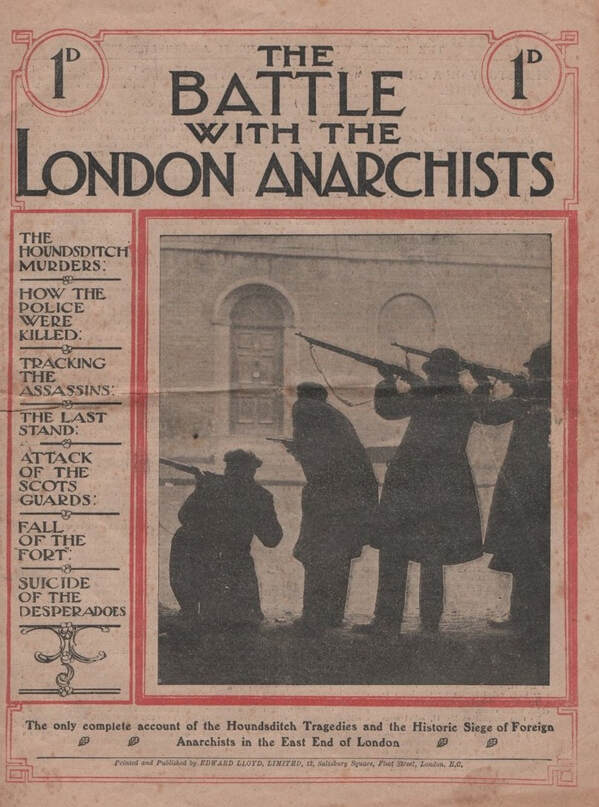 I had the good fortune to have a friend, Tania, who spoke Latvian. She helped me to translate the Latvian inscriptions on some of the photos. Then, as the book was going to press, she got in touch with exciting news. She’d just been in the Latvian capital, Riga, and by chance she had met a woman who was related to Fritz Svaars (known in the Latvian style as Fricis Svare). 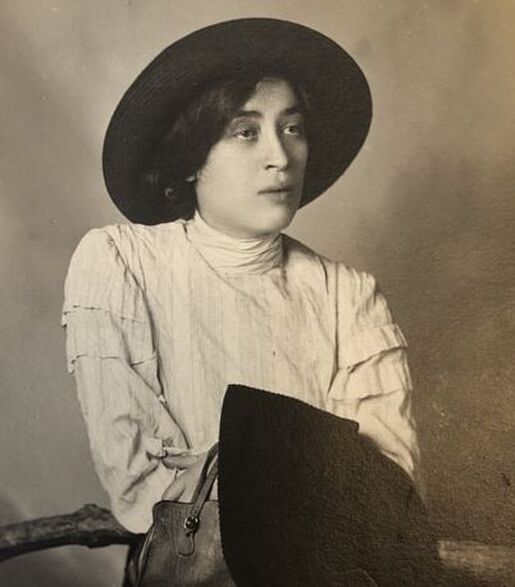 Luba Milstein, who lived with Fritz Svaars in London - London Metropolitan Archive Over Zoom, Liene, an estate agent in Riga, and her mother, Margarita, a maths professor, told me of their connection to the Svaars family. Margarita is the great-granddaughter of Fritz’s sister, Olga – the older woman had helped care for Margarita when she was a young child. The family still has a bible inscribed by Fritz’s father, a policeman, and a rich cache of sepia-tinged photos. As Margarita was growing up, no one spoke much about Fritz. Family elders said he had been ‘lost in the war’ – though they never said which war or where and how he died. During the decades that Latvia was under Soviet rule, loose talk about an armed anarchist forbear could bring unwelcome attention. Once Latvia gained independence in the early 1990s, there was more scope to talk about the past. Margarita became aware that one of her relatives had been a Latvian nationalist and leftist, a rebel, who met a violent death abroad. 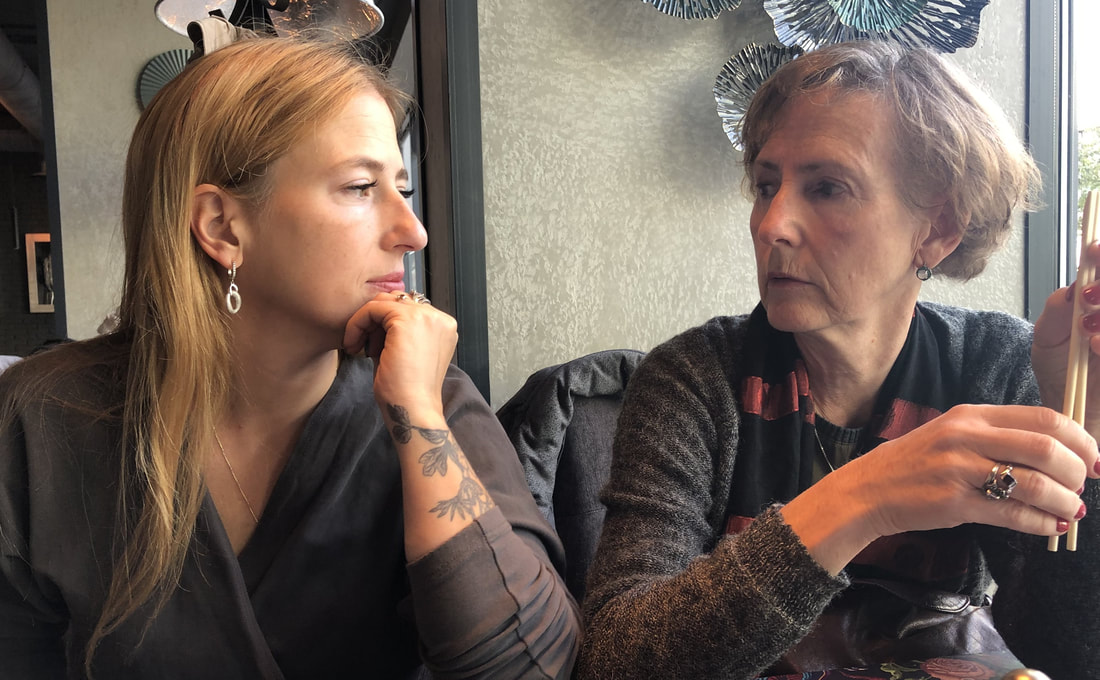 Liene (left) and Margarita - photo: Andrew Whitehead Although my book was written and ready to publish, with no prospect of including more than the briefest mention of the family in Riga, I wanted to see Liene and Margarita – and to give them a copy of Fritz’s plaintive and painful letter. It was about time that missive was delivered to its intended recipients. We met in a smart Chinese restaurant in Riga, a city of great architectural distinction in spite of the wars repeatedly waged over it. Margarita and her daughter shared what they knew of Fritz – that he had been active in Latvia’s unsuccessful revolution in 1905, which demanded both social justice and an end to the rule of the Russian Tsar, and that like so many young Latvians of that era he was forced to flee. Margarita struggled at first with the archaic form of Latvian that Fritz wrote in. ‘The letter has a feeling of doom’, she said having managed to make sense of it. ‘There’s a feeling of likely death – a sense of fear. It’s quite depressing.’ 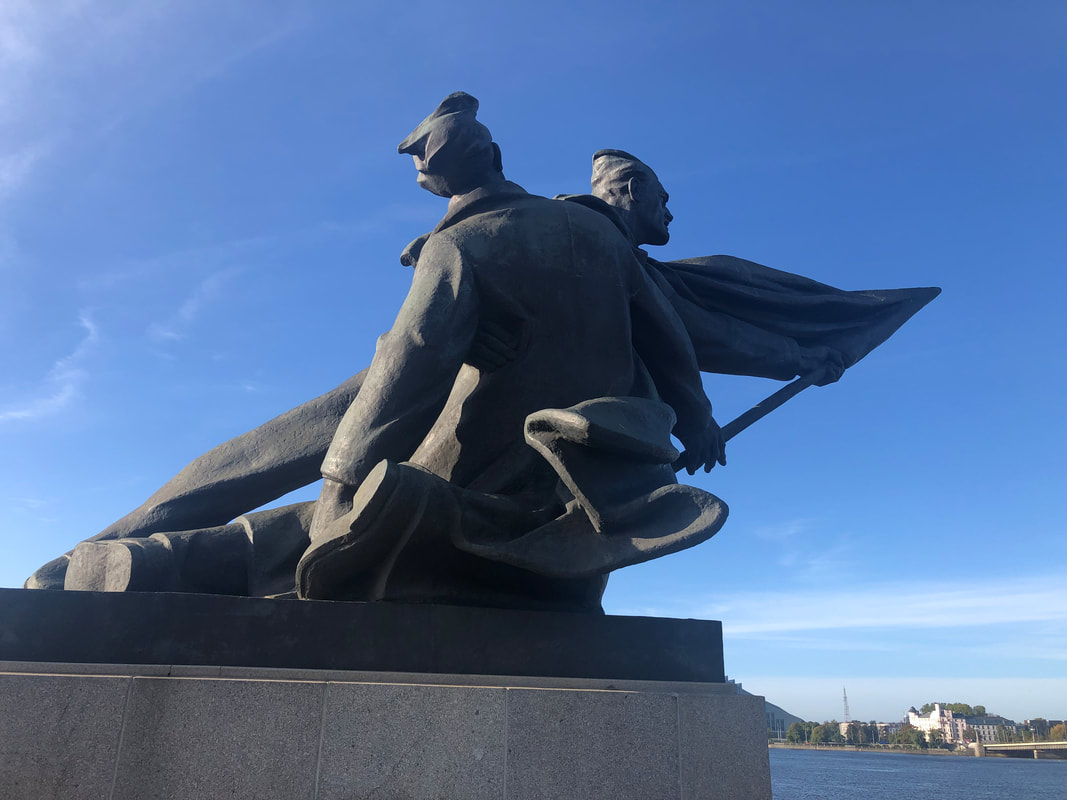 Monument in Riga to the dead of the 1905 Revolution - photo: Andrew Whitehead Liene and Margarita are neither proud nor ashamed of their gun-toting forbear. It’s part of Latvia’s tormented twentieth century history – a nation repeatedly occupied and fought over. They were anxious to understand more about Fritz and his comrades, what propelled them to become gunmen, why they were in London and how he died. I promised them they would be the first to get a copy of my book. It’s on its way. 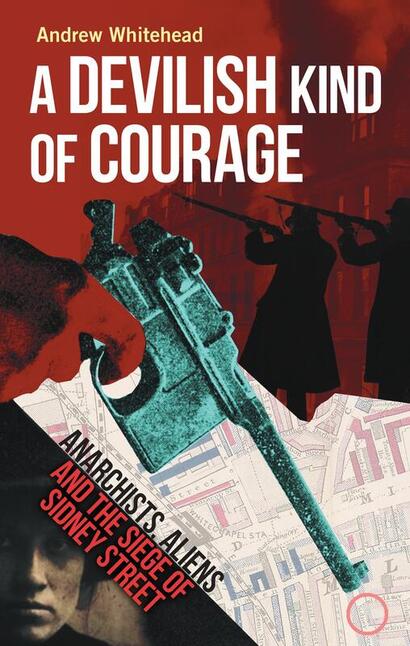
1 Comment
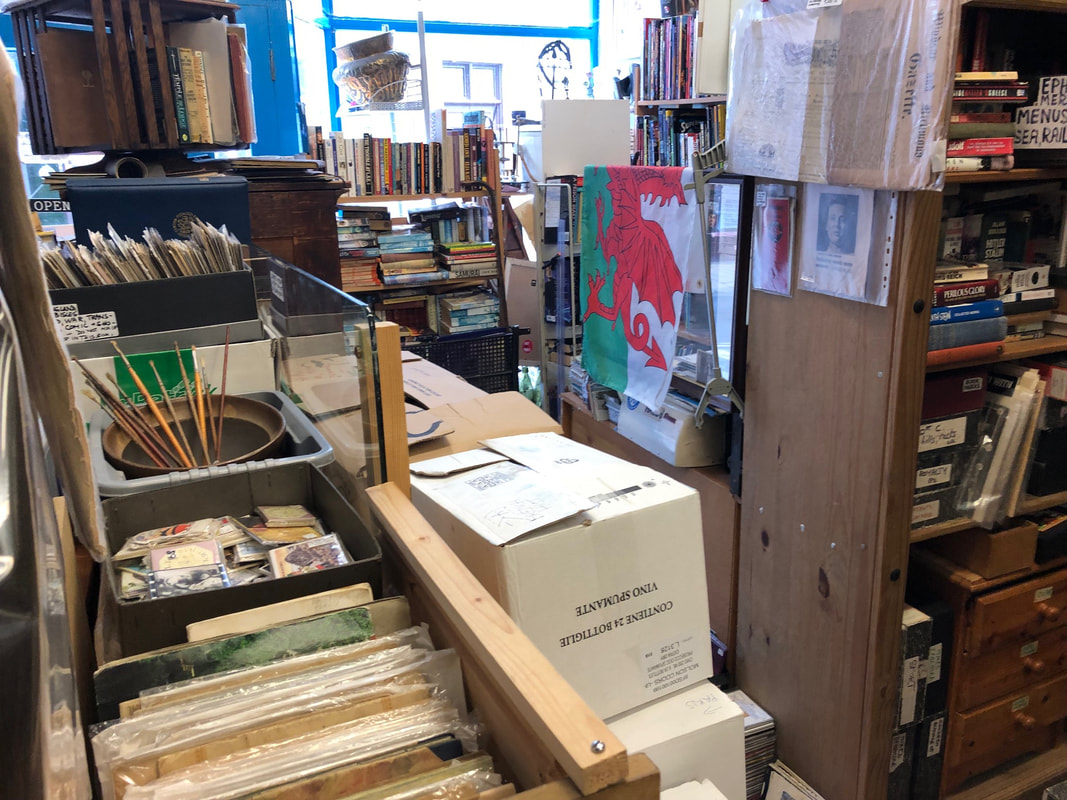
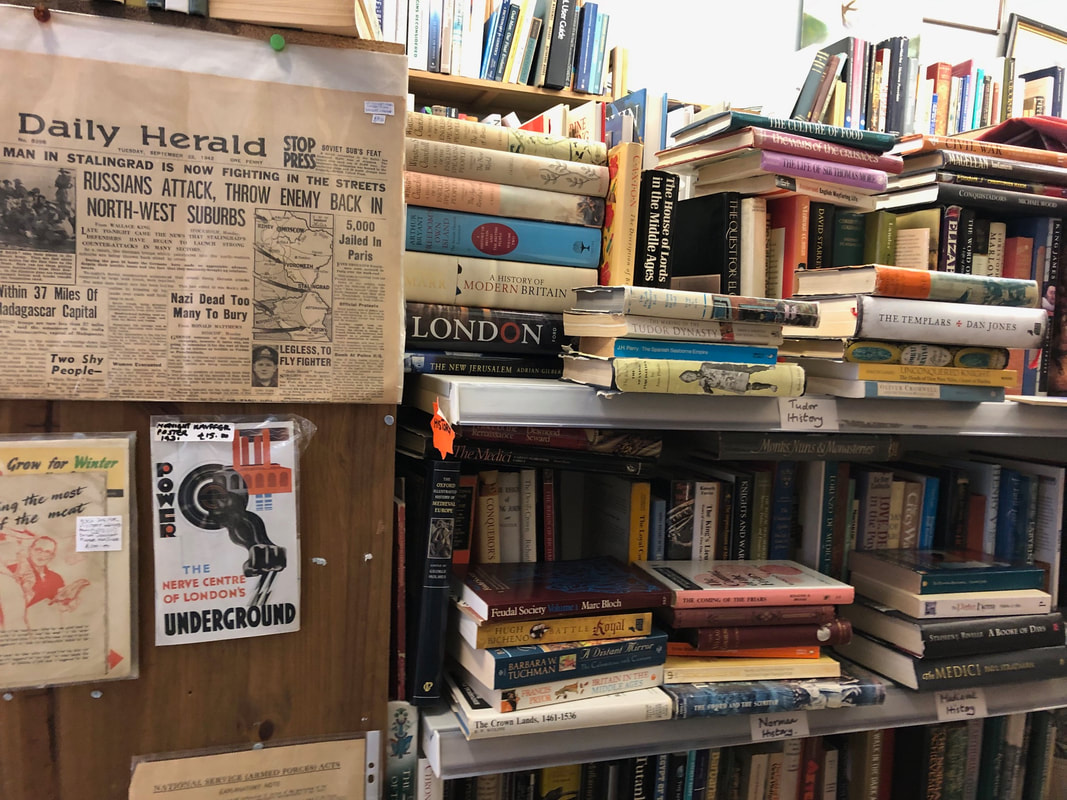
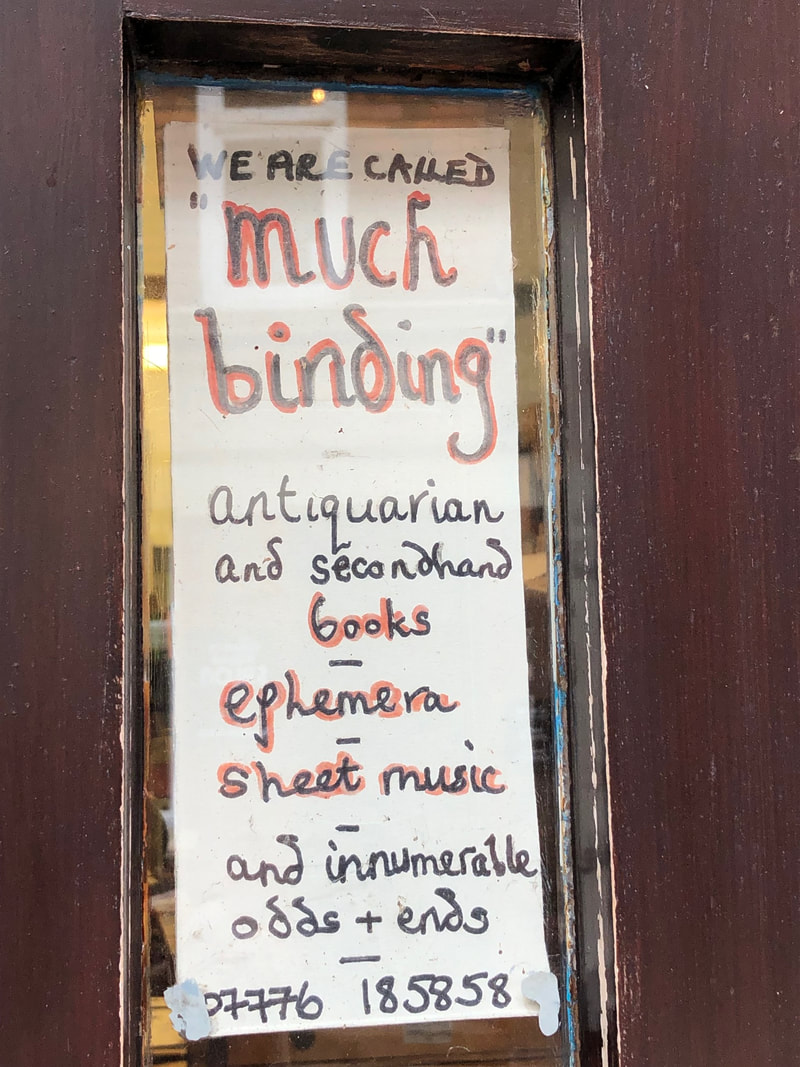
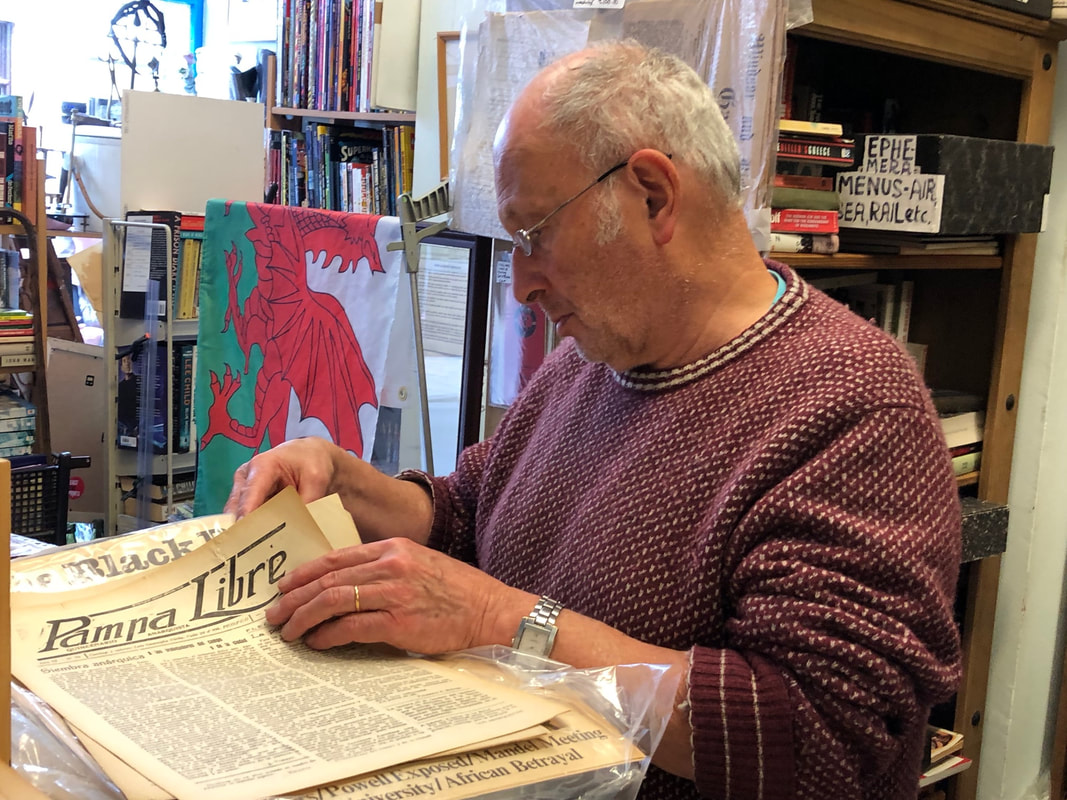 This is Andy Slovak in his Aladdin's cave of a bookshop - praise (from me) doesn't come much higher than that - in the Norfolk seaside town of Cromer. Much Binding (that's what the bookshop was called - a riff on the venerated radio comedy 'Much Binding in the Marsh') has, sadly, closed for good. But Andy very kindly allowed me in yesterday to have a last, lingering browse of his shelves and boxes. It was my third and final visit to Much Binding - I blogged about my last visit four years ago. Much joy was had. And a fair bit of dosh spent.
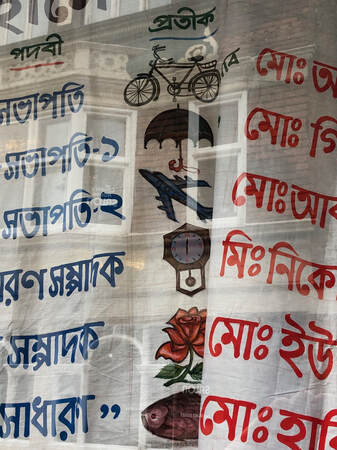
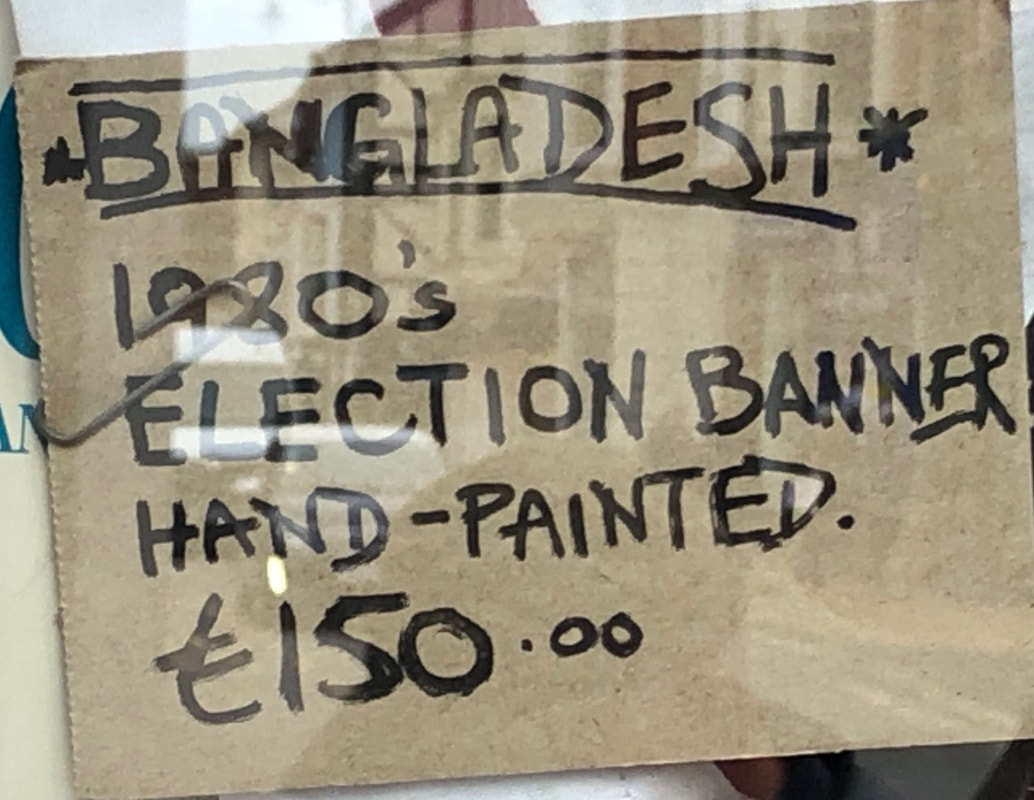
Andy's shop was unusual in stocking quite a lot of odd copies of left and radical papers and journals. Just up my street! I was delighted to find a few copies of the Black Power paper The Hustler, published in Notting Hill from 1968. 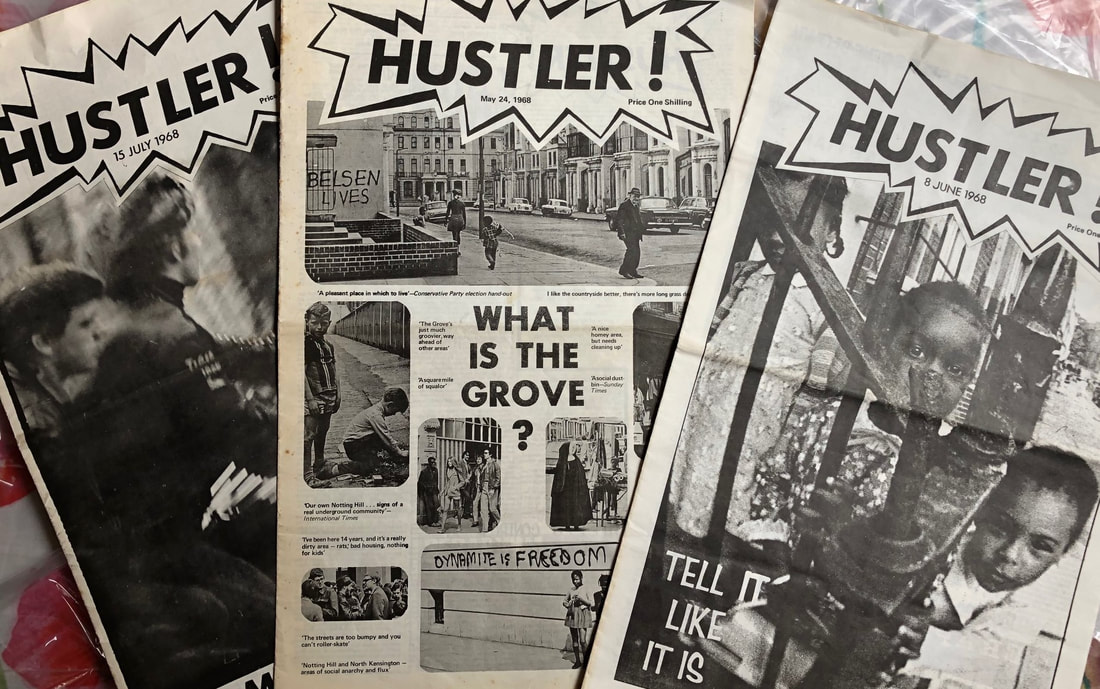 Black Dwarf was perhaps the best political paper of that era, and some of the covers featured striking drawings by the rapier-like Ralph Steadman - recognise Harold Wilson here? 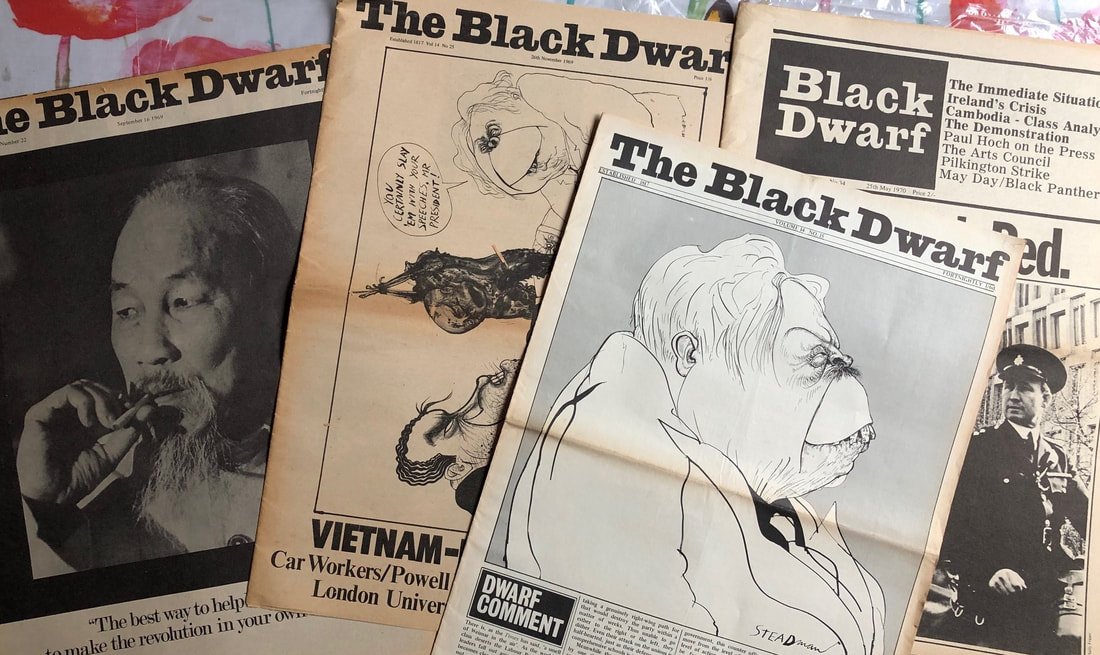 Tariq Ali and other IMGers on Black Dwarf broke away to set up Red Mole, not as good a paper but again the iconography is interesting: 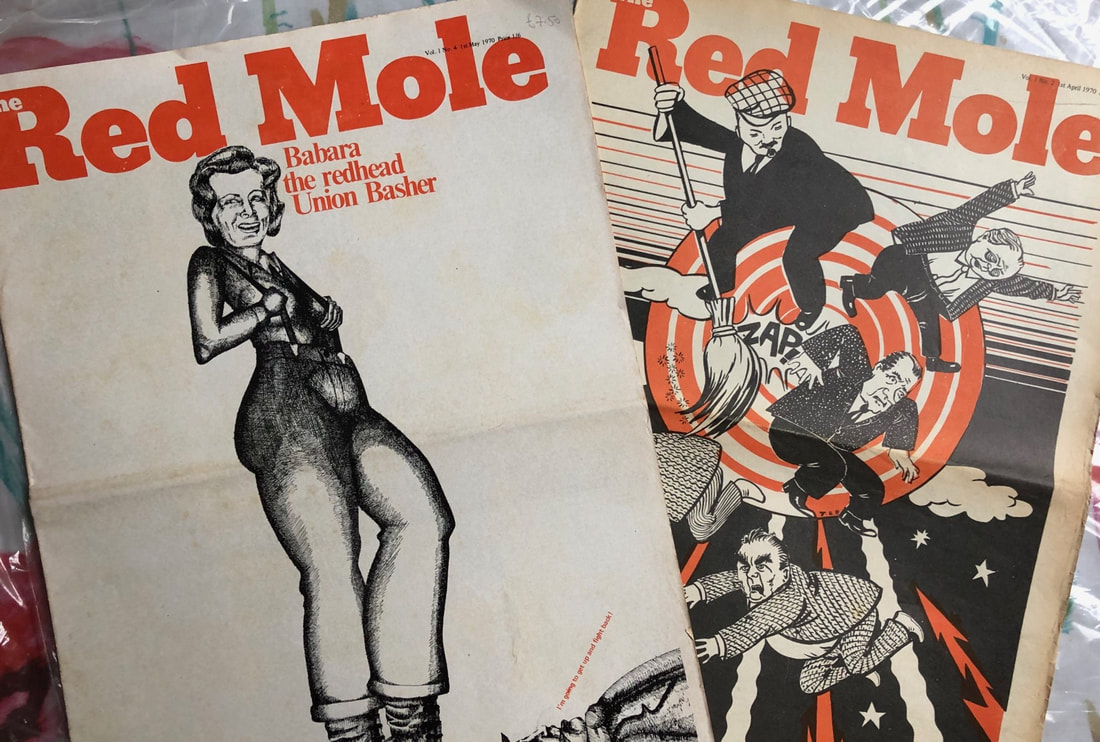 And who wouldn't love a copy of the International Times with the Furry Freak Brothers on the cover (this is from 1970): 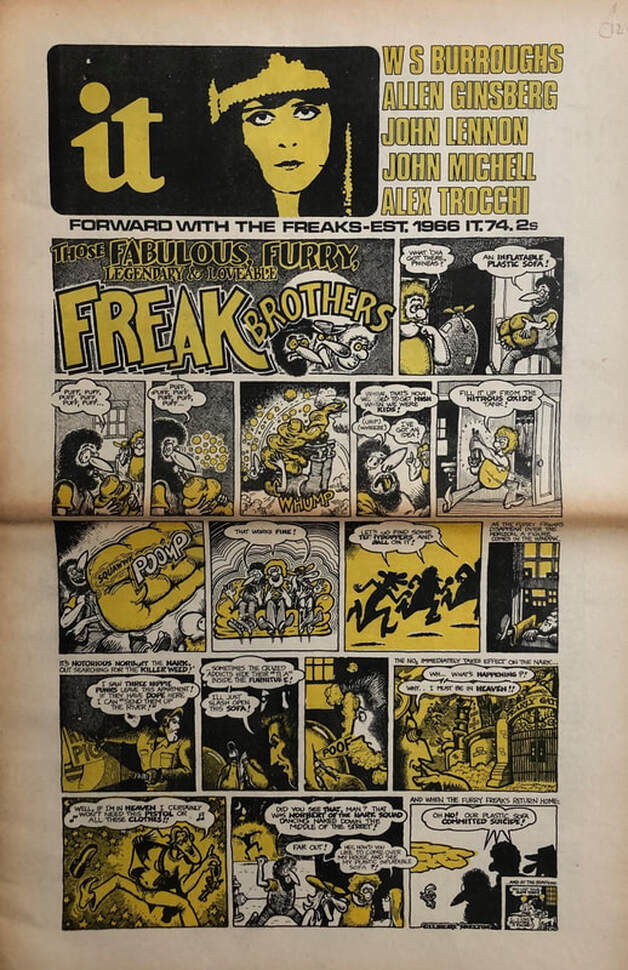 Andy also had some runs of old anarchist papers in French and Spanish - I picked up a couple of copies of an Argentine anarchist publication from the 1920s: 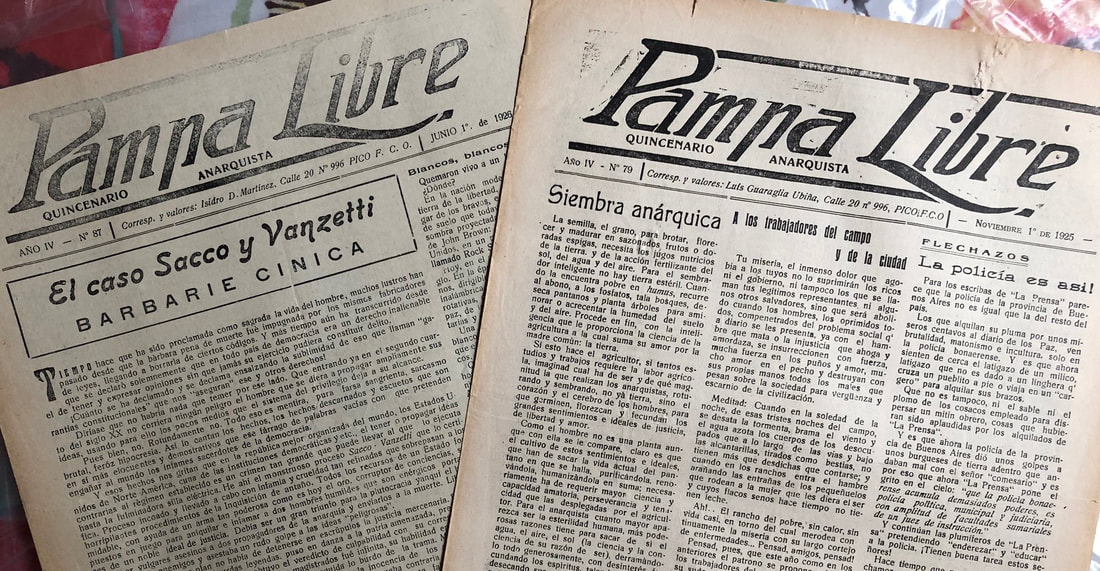 And yes, I did buy a fair few pamphlets and handbills too. That's for another blog. 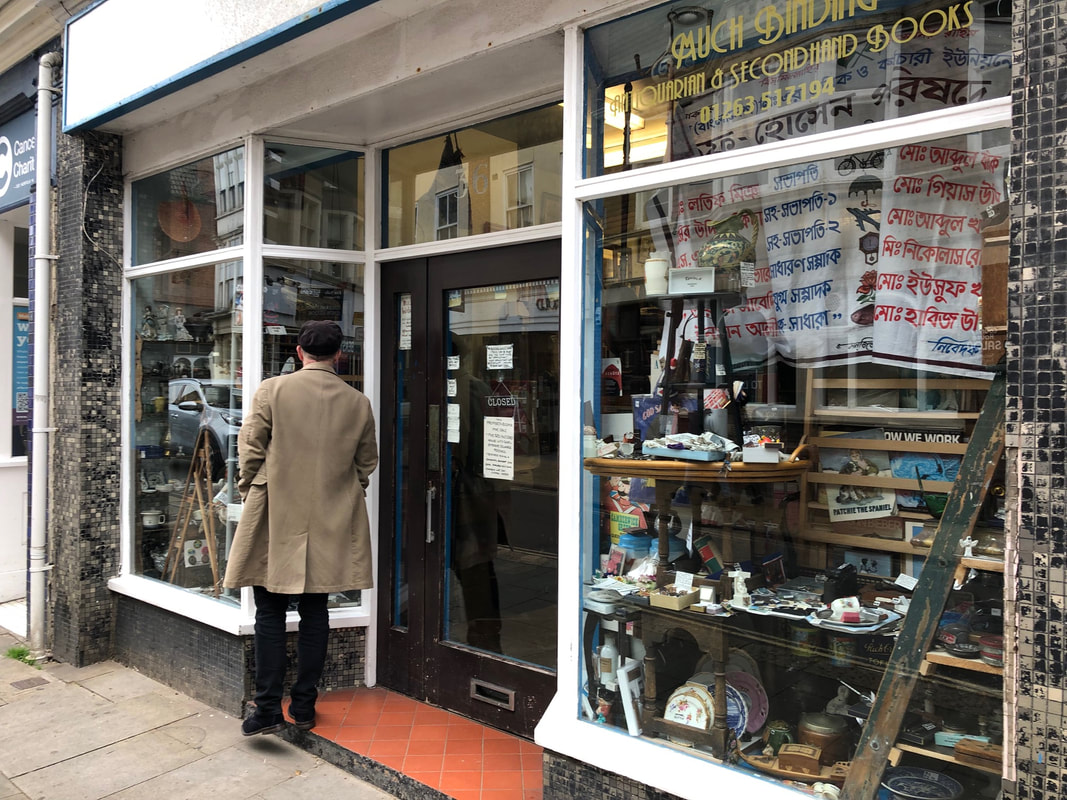 In the shop window, something quite remarkable ... and beautiful,. A hand-painted Bengali election banner. (No I didn't buy it!) Amazing what you could come across at Much Binding by the Sea!
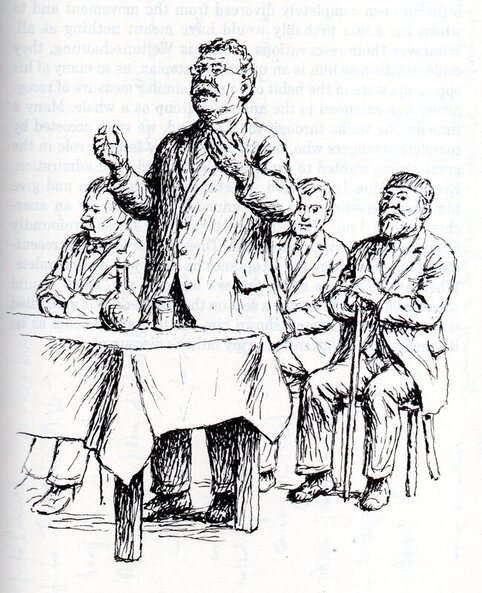 This charming drawing of the anarchist Rudolf Rocker addressing a meeting is by his son, Fermin Rocker. Rudolf Rocker was the key figure in the flourishing anarchist movement in the East End of London in the years immediately before the outbreak of the First World War in 1914. He was German and a gentile, but mastered Yiddish and was the editor of a remarkable Yiddish weekly newspaper, the Arbeter Fraint (or Workers' Friend). 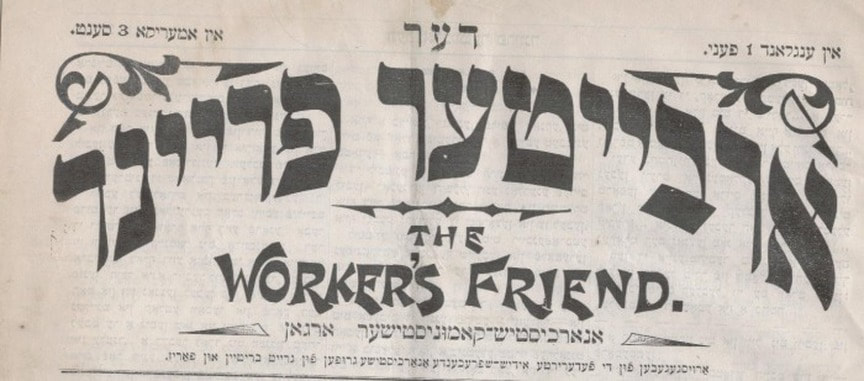 In the aftermath of two notorious shoot-outs - at Houndsditch in the City and at Sidney Street in Stepney - press attention focussed on the mainly Jewish anarchist movement in the East End. Those incidents involved Latvian political refugees, probably with anarchist synmpathies. In December 1910, a group were interrupted at Houndsditch while trying to break through a wall and rob a jeweller's shop - three police men were shot dead and two more police suffered bullet wounds. The following month, two alleged members of the gang were tracked down to a first floor room in Sidney Street. The house was surrounded by police, troops were brought in, and shots were exchanged over several hours. The two gunmen died. Rocker and most of his comrades deeply disapproved of this violence, and the 'expropriations' - armed robberies to fund the movement - which occasioned them. The Worker's Friend was published from an address in Jubilee Street, a stone's throw from Sidney Street. Next door was the anarchist Jubilee Street Club. Many of the Latvians involved in the Houndsditch incident had certainly visited the club. Journalists descended on the area, Some of their reporting was crude, inaccurate and sensationalist but a few among the reporters delivered vivid and well-informed accounts of East End anarchism. I'm posting a few of those pieces of journalism on this blog. Philip Gibbs and J.P. Eddy, in the immediate aftermath of the Siege of Sidney Street, moved into the East End and wrote a series of articles for the Daily Chronicle - this article, 'A Night with the Anarchists', appeared on 10 January 1911 and includes accounts of conversations with both Rudolf Rocker and his partner Milly Witcop: 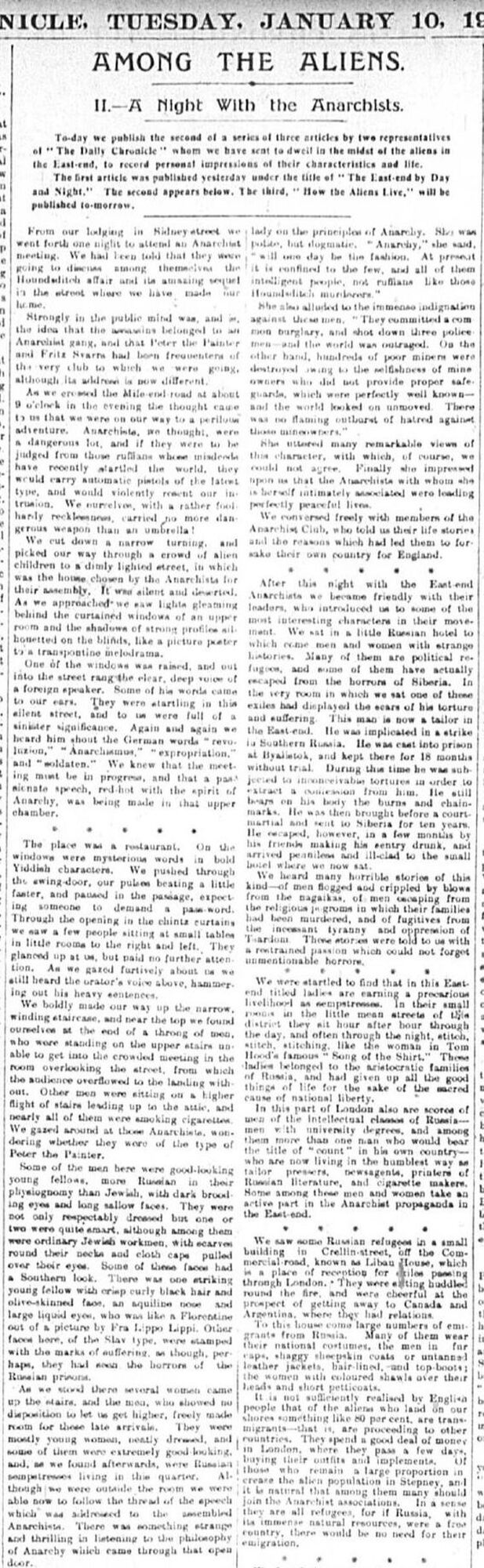 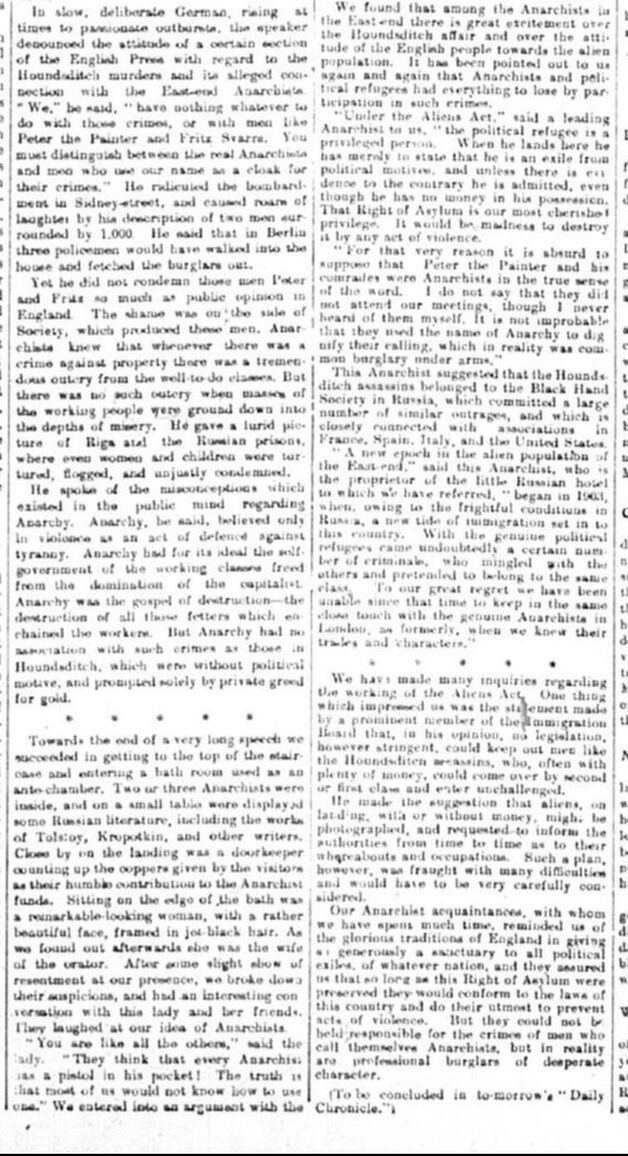 . Philip Gibbs made productive use of his sojourn in the East End - as well as his three co-authored articles for the Daily Chronicle, he also wrote two bylined pieces for the weekly Graphic, notably this account below of 'An Evening in an Anarchists' Club'. Again, Rocker is clearly the man that Gibbs heard speak. And the article's conclusion became renowned: 'These alien anarchists were as tame as rabbits. I am convinced they had not a revolver among them. And yet, looking back upon this adventure and remembering the words I heard, I am sure that this intellectual anarchy, this philosophy of revolution, is more dangerous to the state of Europe than pistols and nitro-glycerine. For out of that anarchist club in the East End come ideas more powerful in destruction than dynamite.' 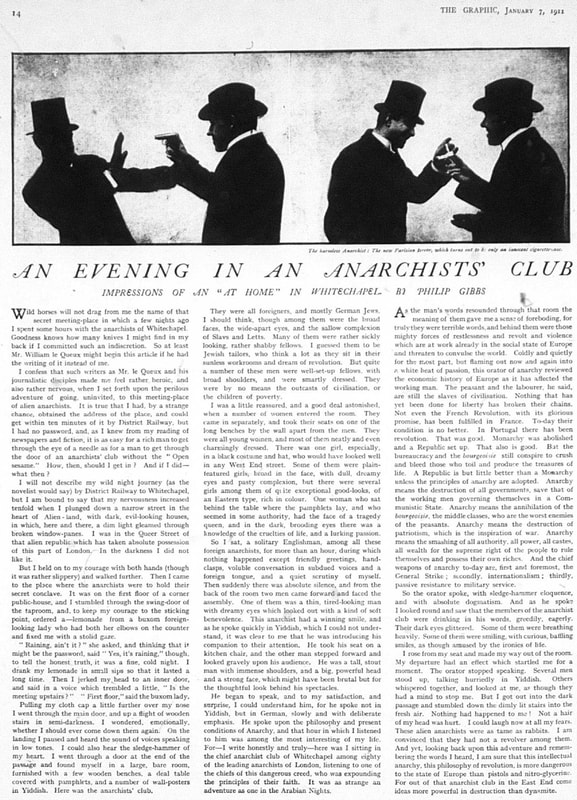 And I'm posting the columns of text individually here so it is more easily legible: 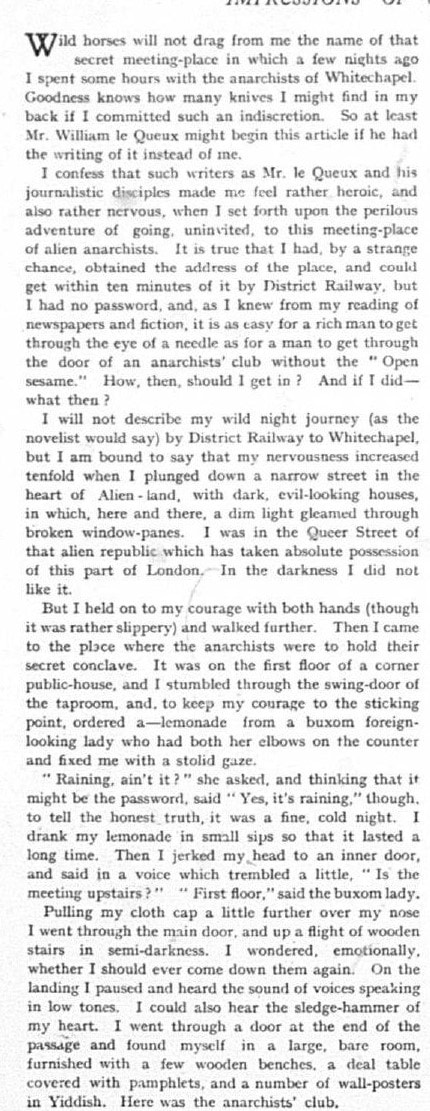 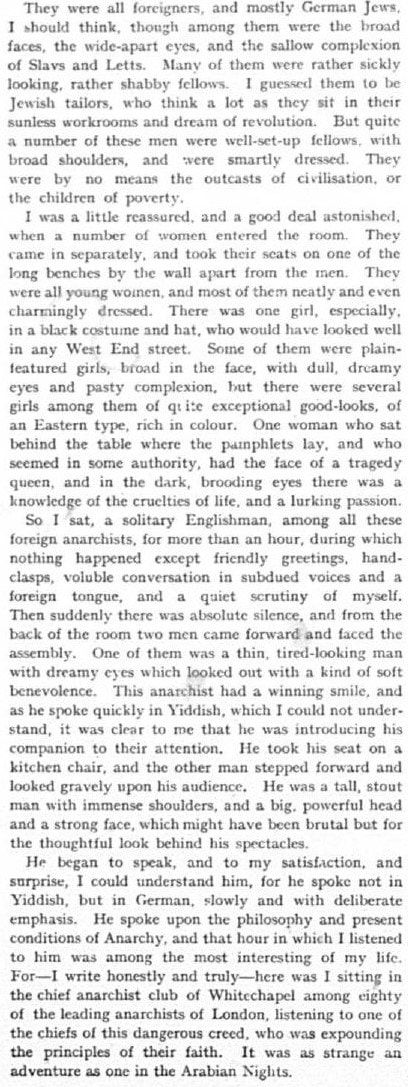 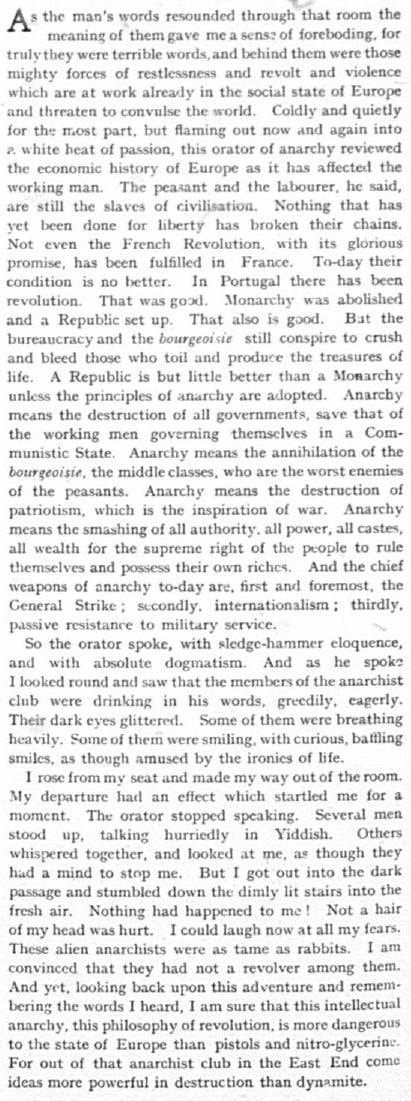 One at least of the mainstream papers took the trouble to talk at length to this prominent anarchist with 'sledge-hammer eloquence'. Rudolf Rocker expressed satisfaction with the write up of this interview he gave to the establishment minded Morning Post published in its issue of 7 January 1911 - here's the article with the title 'The Anarchist Leader':  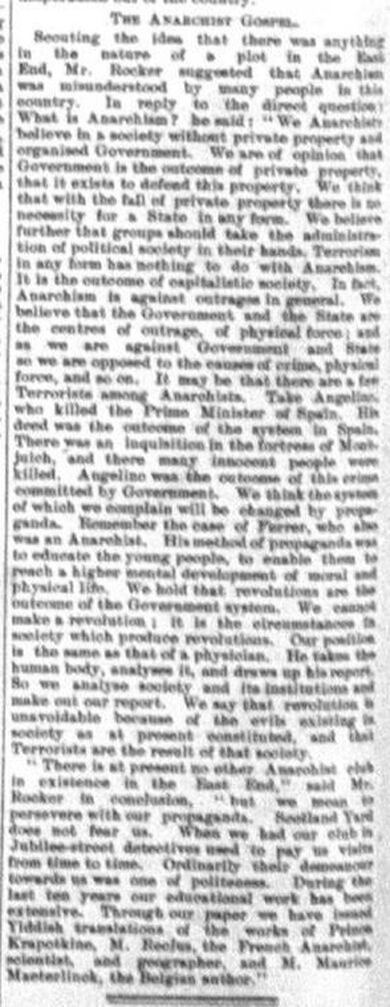 And let's close as we began, with one of Fermin Rocker's drawings of his father on the platform: 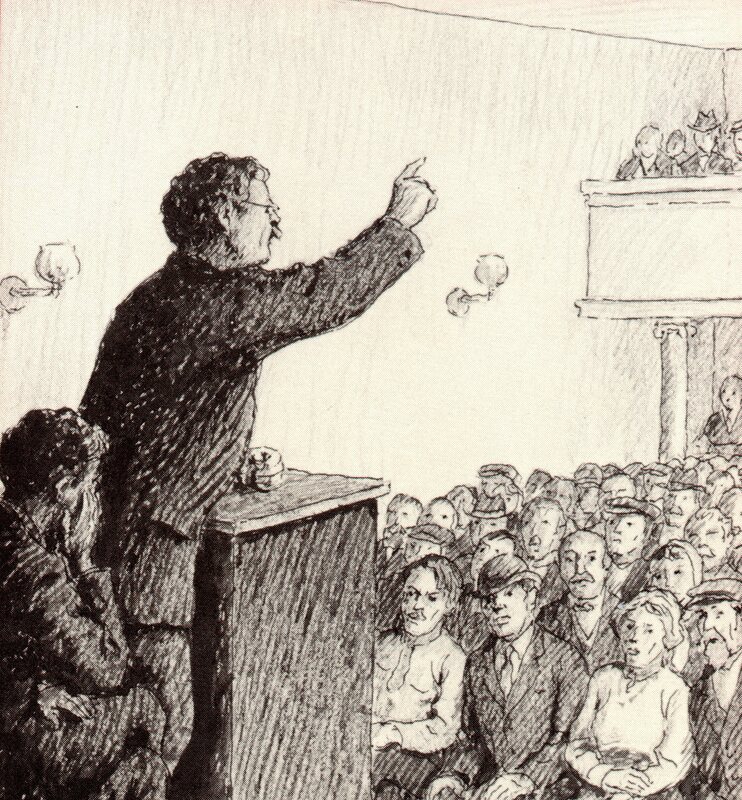 And a codicil, many years ago I interviewed Fermin Rocker (who was born in 1907) about his childhood memories of his father and the anarchist movement in the London of his childhood. Here it is:
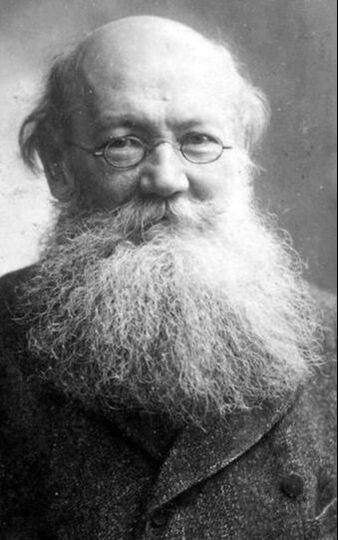
I've bought myself a Christmas present. I am perfectly content with those I've been given by family - but I've topped these up with something which appeals to my idiosyncratic interests. It's an original Kropotkin - at least, a letter written in the hand of, and signed by, Peter Kropotkion. That's him with the extravagantly bushy beard - a Russian aristocrat, geographer, political scientist and campaigner who is the most revered of anarchists. 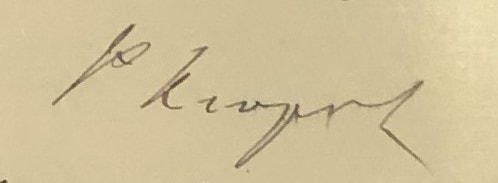 The letter was written in October 1890, when Kropotkin was in exile and living in Harrow (he later moved to Brighton). It's to Sydney Gimson, the secretary of the Liecester Secular Society who had clearly invited Kropotkin to deliver a lecture at the Leicester Secular Hall. 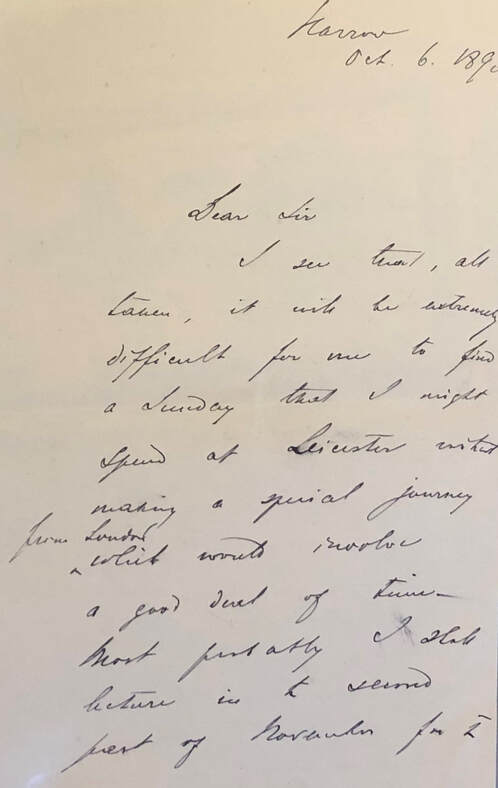 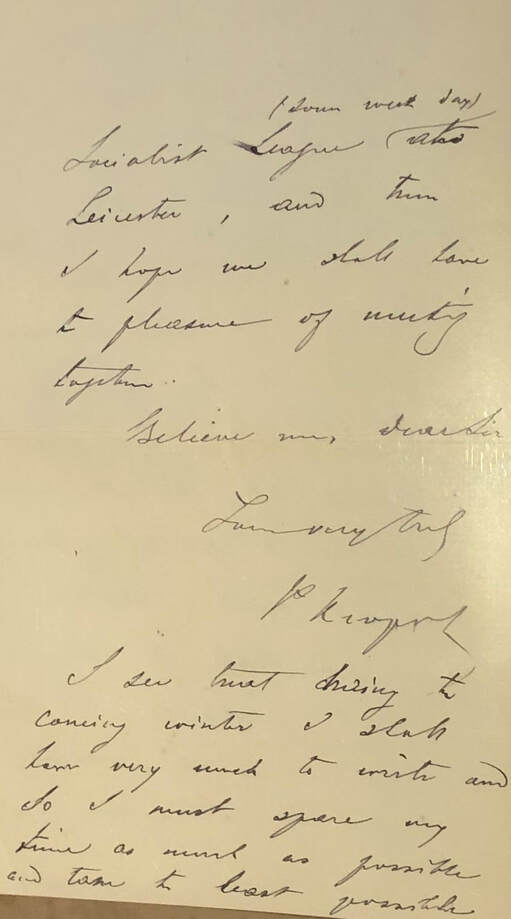 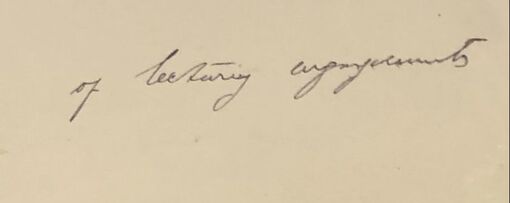 The Gimson family were mainstays of the Leicester Secular Society, and Sydney's father bankrolled the building of the Leicester Secular Hall - still standing! - which opened in 1881. I've not yet managed to work out whether Kropotkin ever got to address Leicester secularists. 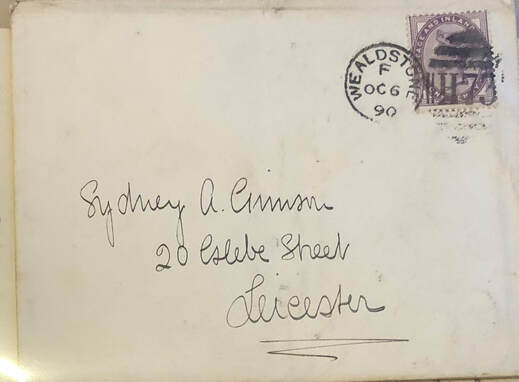 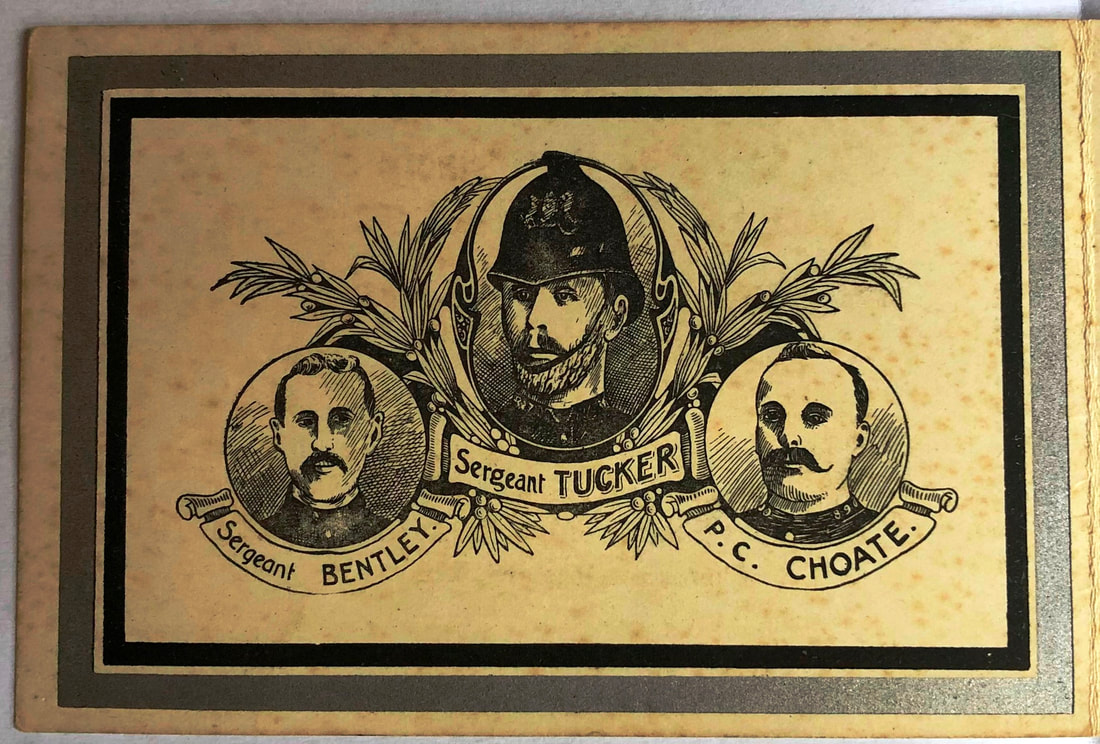 I'm doing some research into the spate of Latvian revolutionary 'expropriation' in London 110 years ago and I've come across some marvellous pieces of ephemera. The Latvian anarchists probably got away with a few robberies and wages snatches. But two robberies failed spectacularly - and tragically. One was the Tottenham Outrage of January 1909, when two heavily armed robbers stole the money being brought to pay the wages at a rubber factory. They got the cash - but were pursued over six miles by police, passers-by, local kids, the lot. The two robbers died or suffered fatal injuries. And two others were shot dead - a policeman and a ten-year-old boy. In December 1910, another group of armed Latvian emigres staged a much more sophisticated attempt to rob a jewellery shop in Houndsditch in the City of London. They were interrupted by local police, Three police officers were shot dead, and one of the robbers suffered fatal gunshot wounds at the hands of a comrade. There was a national sense of shock and anger. This folding mourning card paid tribute to the three murdered policemen. 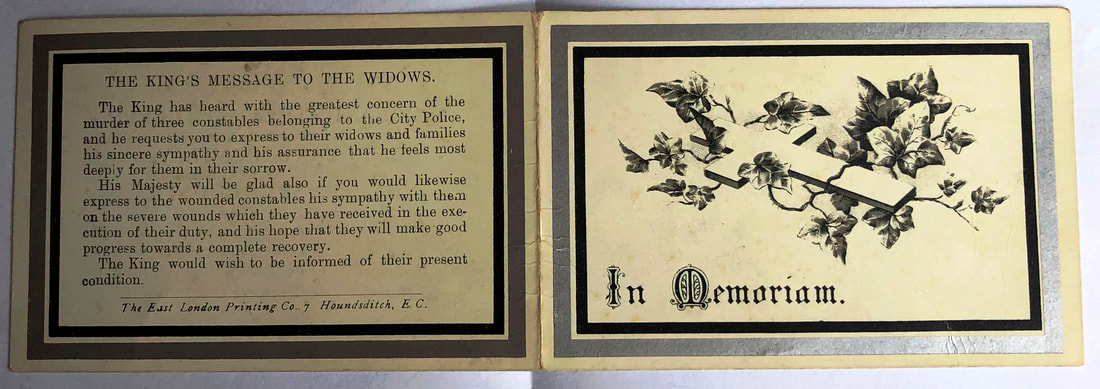 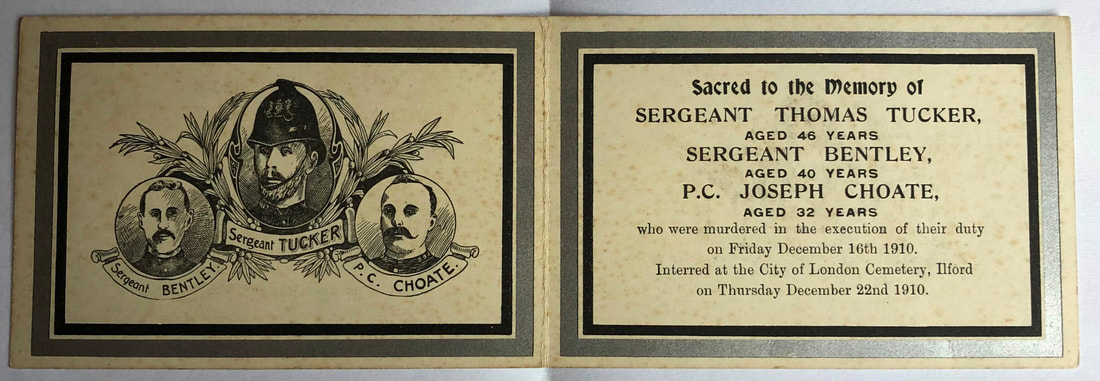 A few weeks later, two of the suspected Houndsditch gang were tracked down to a first-floor room at 100 Sidney Street in Stepney. Overnight the police surrounded the house and managed to get the other occupants out. The two men were well armed. The first shots rang out at 7:30 in the morning of 3rd January 1911- and the shoot-out continued for another six hours. The police were comprehensively outgunned, and Scots Guards were called in to help meet the volley of shots fired by the two men. Eventually the house caught fire. The fire brigade were not allowed to douse the flames. In the embers of the house, the bodies of the two gunmen were found - one had been shot and other died from suffocation. The Siege of Sidney Street was a sensation. This dramatic, illustrated account of the event was on sale within days.  And here's another wonderful artefact - a few days after the Siege, some of those allegedly involved were required to appear in court in committal proceedings relating to the Houndsditch shootings. This news photo shows the two women who appeared - Sara Trassjonsky and Luba Milstein - flanked by a warder and a prison matron. What a telling image! 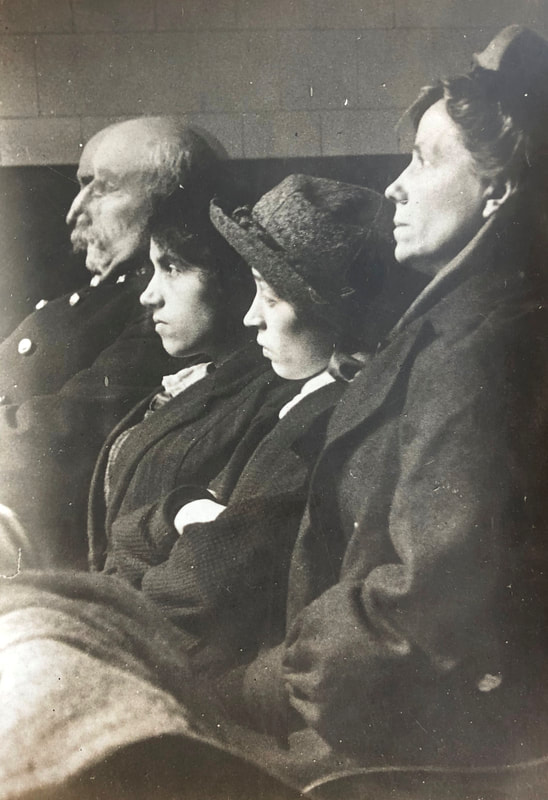
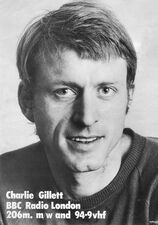
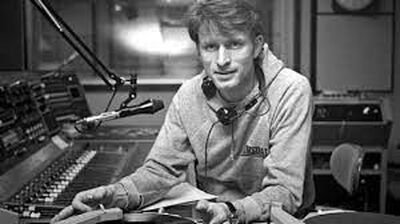
One from the archives! A chance finding and topical because a particular person celebrates his 80th birthday this month. That person is not, alas, Charlie Gillett - the broadcaster and authority on rock music who died in 2010. The photos above date from his Radio London days in the 1970s. I knew him much later when he had a weekly programme on the BBC World Service. A good guy! No, it's Bob Dylan's 80th. And going through Colin Ward's monthly Anarchy - as you do - in the issue for May 1968 (what a month!), I came across this article Charlie wrote about Bob: 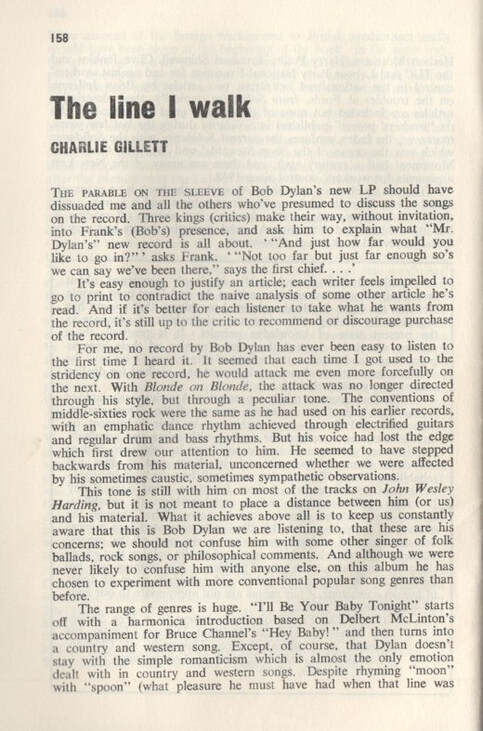 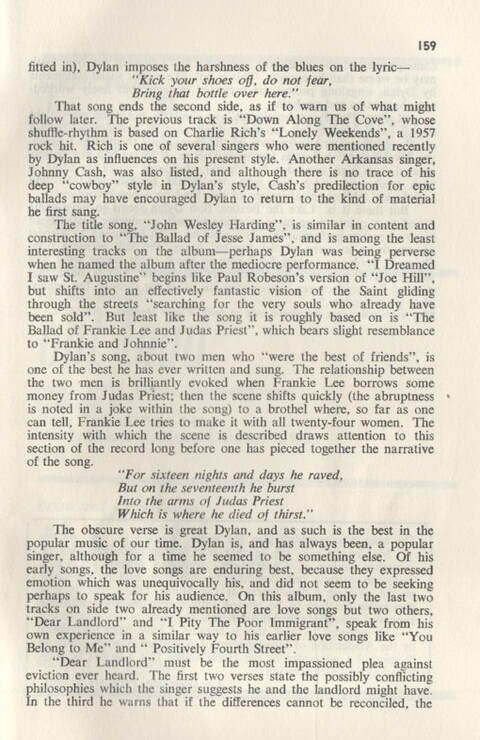 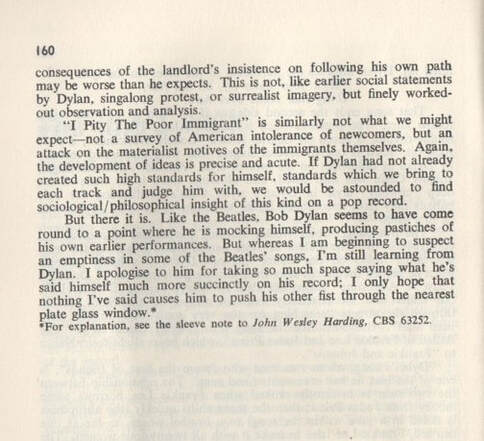 Oh, and Charlie's 80th would have been next February.
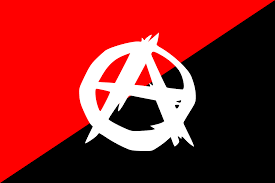
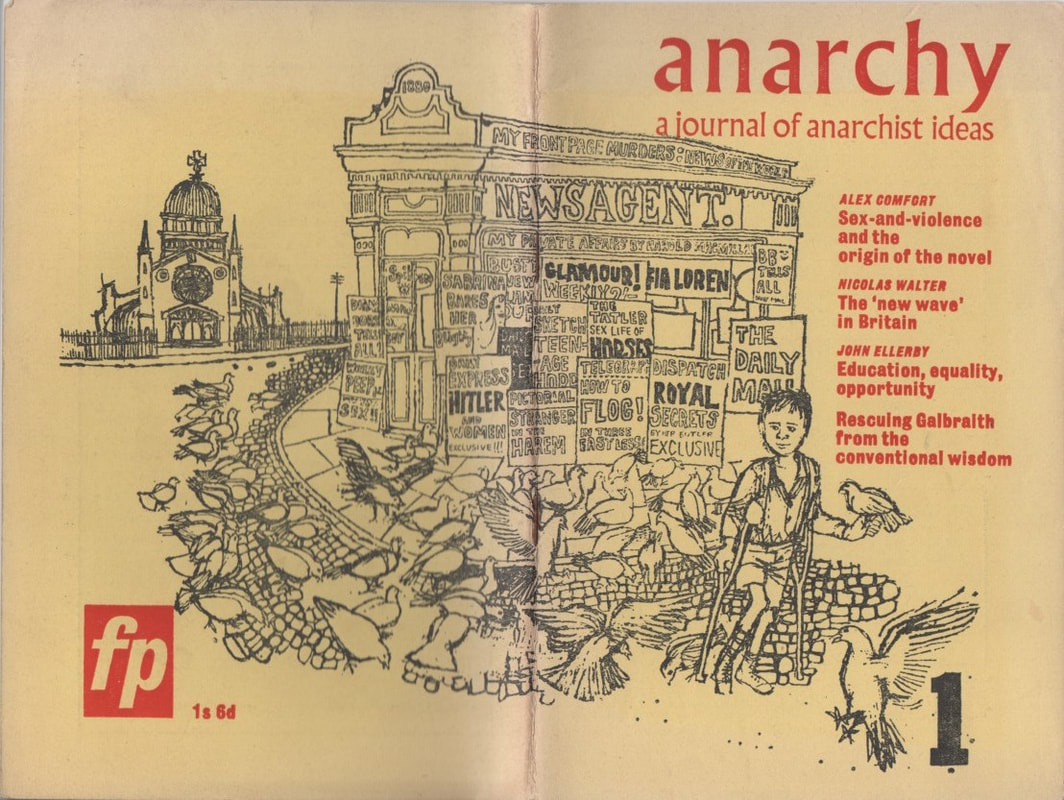 It's often described as the best ever anarchist journal - in English, at least. Colin Ward's monthly Anarchy - published by the Freedom Press - got going with this issue in March 1961. It survived until the close of that tumultuous decade. A second series under new editorship, nothing like as good, survived into the '80s. The first issue had a lead article on Galbraith's The Affluent Society - anonymous and so I guess by Ward himself. Other contributors included Ward's close intellectual allies, Alex Comfort and Nicolas Walter (whom I knew and admired). There's nothing in this issue to explain the journal's purpose - no political rally-cry - no partisan rhetoric. The contents spoke for themselves. The cover of this debut issue was by Michael Foreman, The next issue had a cover designed by Rufus Segar - a fairly tame design by his standards; he and the journal later became renowned for the magazine's innovative and striking front covers. Next year will see the sixtieth anniversary of the inception of Anarchy. I do hope the moment is marked! 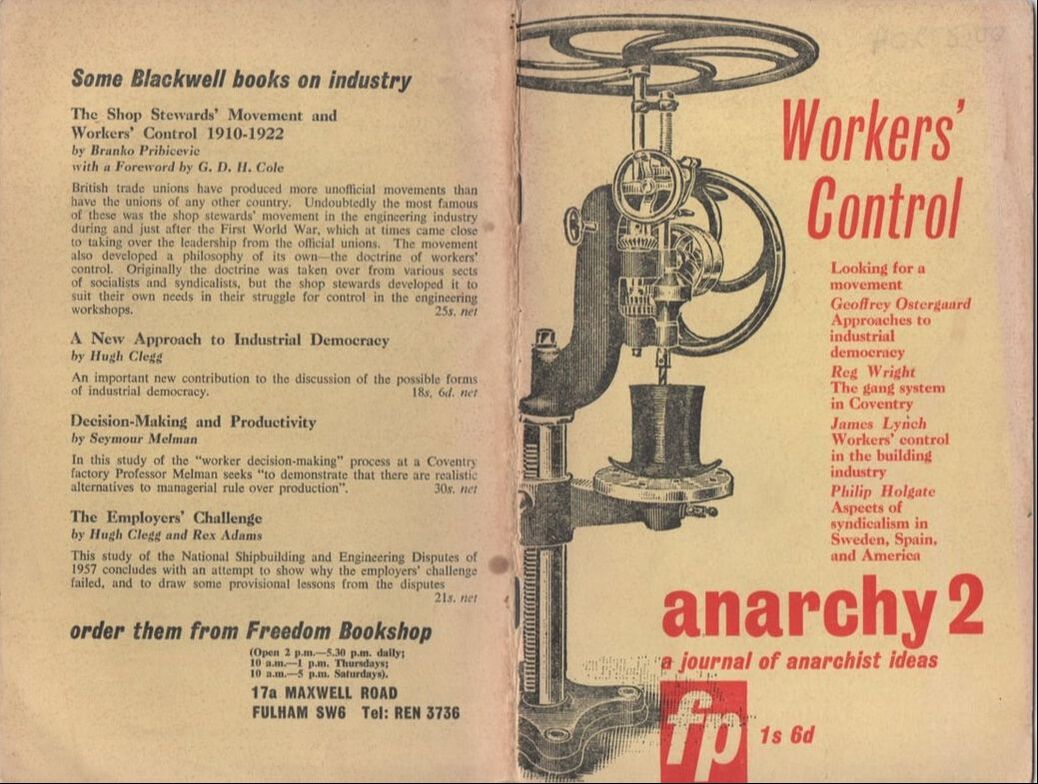 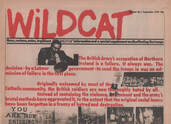 It feels a little strange, inappropriate almost, to buy from a second-hand bookshop copies of political papers that I would have bought at the time for a few pence. I suppose it's almost a way of communing with my own past. Anyway, while sifting around in a cardboard box marked 'Anarchy' at Black Gull Books in East Finchley at the weekend, I came across complete (I think) runs of two of the most innovative anarchist monthlies of the 1970s. Wildcat got going in September 1974 and ran for ten issues; Zero, put out by much the same bunch of people, I think, though with more emphasis on feminism, started publication in June 1977 and persisted - with increasing irregularity - for seven issues. Strange to say, I still have the odd copy of these titles that I bought back in the day - though most of what I picked up ended up deposited at the Modern Records Centre at the University of Warwick, including six issues of Wildcat and five of Zero. So most of what I've just bought I once had - and I guess my latest purchase will, I trust many years hence, end up in a library or archive somewhere. Having said all that, I am very happy to have a complete set, in great condition, of these really rather stylish and important papers, in design influenced by the alternative press and in agenda by the libertarian left - notable too for their keen sense of, and engagement with, the past. 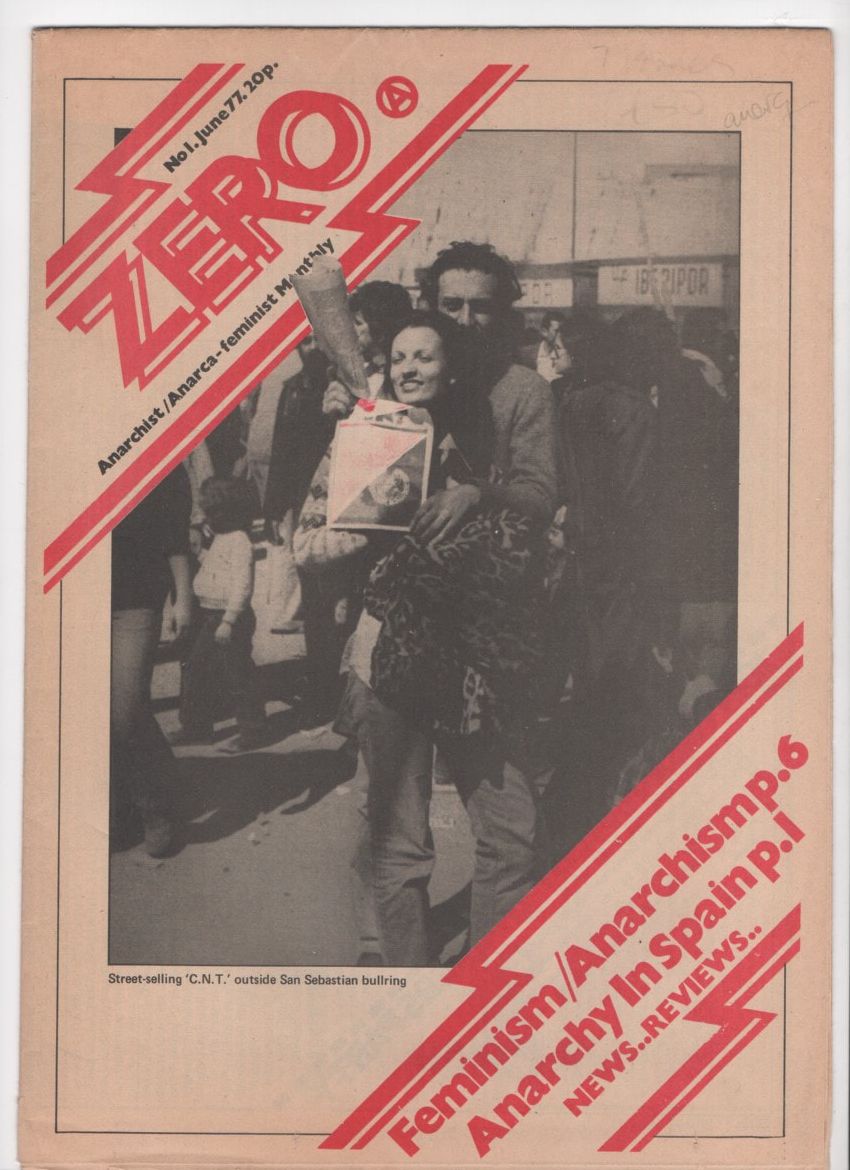 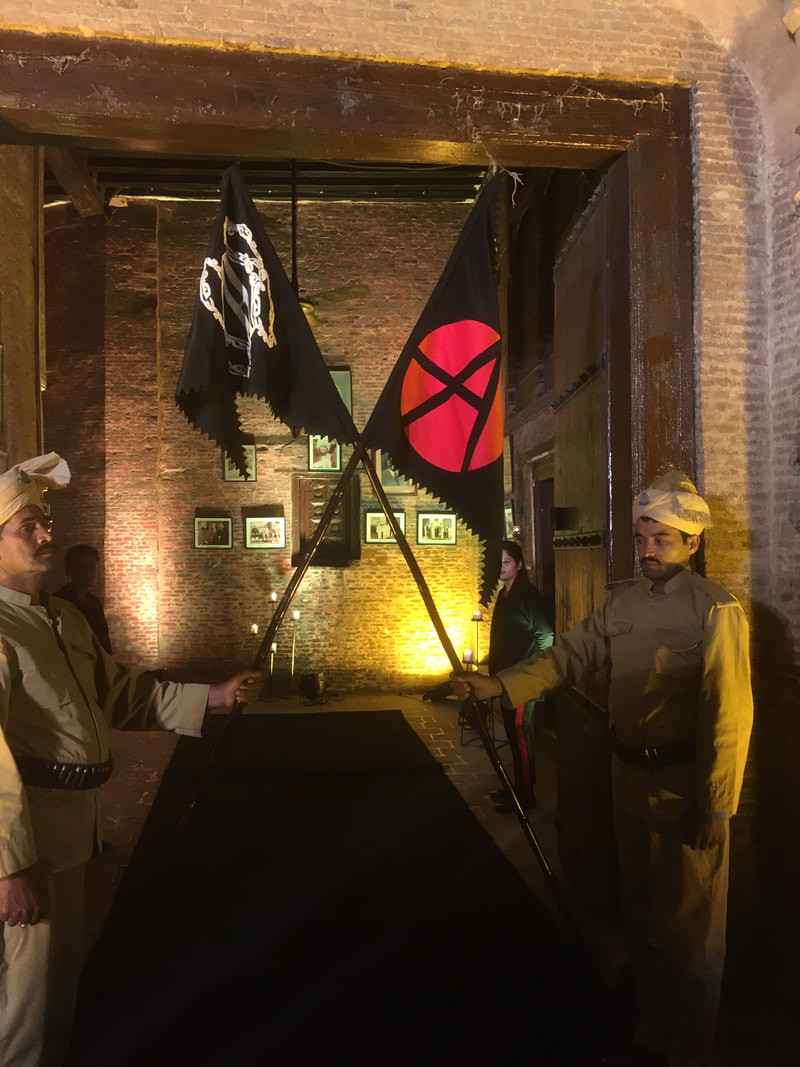 An A in a circle - and it's all in red and black. The symbol of anarchism ... the colours of anarchism ... so is this the flag of anarchism? Well, it's the most unlikely of settings. These flags on such ceremonial display flank the entrance of a glorious old haveli - a traditional mansion - in the walled city of Lahore, the heart of what's often described as Pakistan's cultural capital. And you can see the distinct echo of anarchist iconography - take these examples of anarchist emblems and flags:
 Surely the similarity between the traditional anarchist emblem and the flag on display in old Lahore can't be a coincidence. 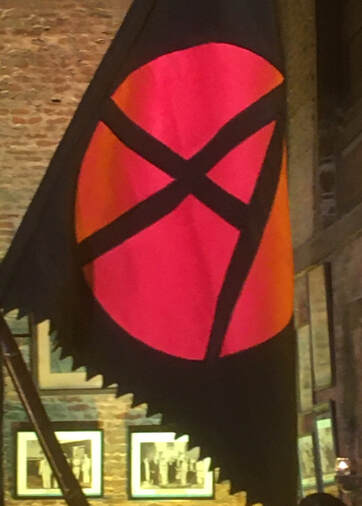 The haveli in question is often used for swish dinners and events promoting luxury brands. The flag is actually the emblem of a hugely expensive - really, really, expensive - brand of Swiss engineered and assembled watches which are being marketed to Pakistan's ultra-rich. And by a curious twist of fate, I ended up at this very dinner - but no, I didn't fork out the small fortune necessary to make a purchase.
So, it seems that this standard which bears all the trademarks of an anarchist emblem is simply a corporate brand identifier. How disappointing! But hang on a moment. In the 1860s and 70s, one of the strongholds of anarchism in the First International was among the watchmakers of the Swiss Jura. I cling to the belief that somehow or other there is a lineage between Bakunin's artisan supporters in the Swiss mountains and this striking red-and-black flag in old Lahore. 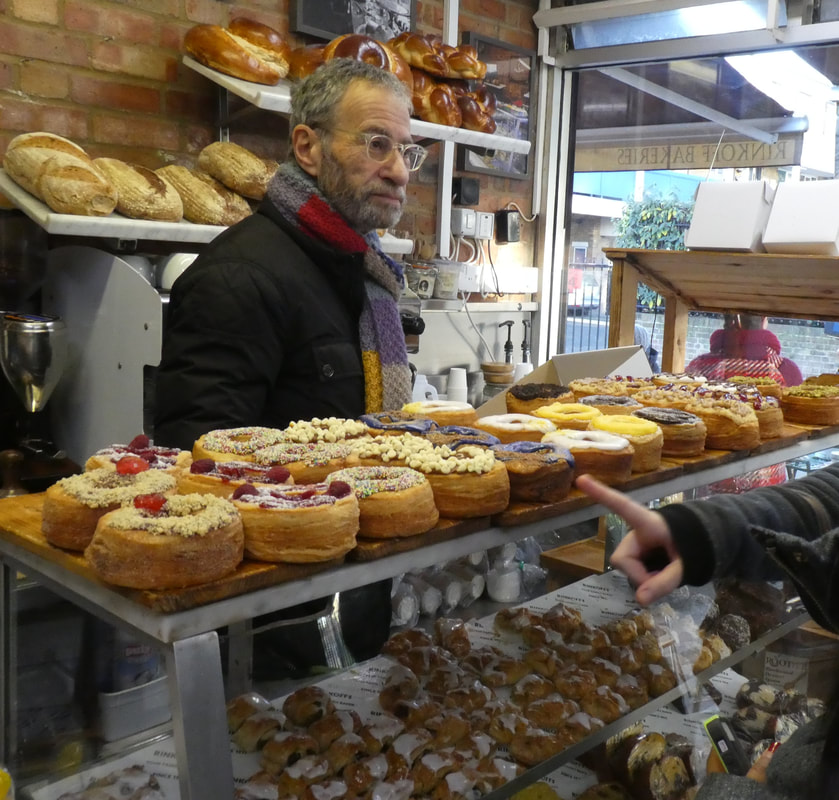 My New Year ramble has become an annual custom - this time (new camera in hand) there was a touch less serendipity about the route. I wanted to walk along Jubilee Street in Stepney, and visit one of the last surviving Jewish institutions in the old East End. The walk began at Aldgate tube station and took me along Commercial Road, the distinctly shabby main road heading east towards Canary Wharf. There are a few old mansion blocks still lining the street, but most of the businesses are given over to wholesale garment shops - and the cheap end of the business. Almost all are South Asian-run, but it's a continuation of what was the defining industry of the Jewish East End. Coincidence perhaps, but a curious and heartwarming one.
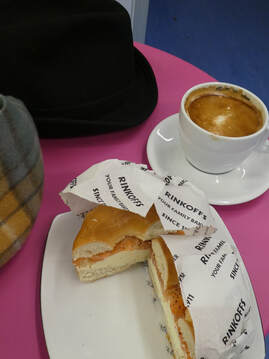
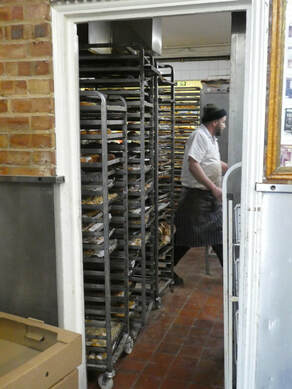
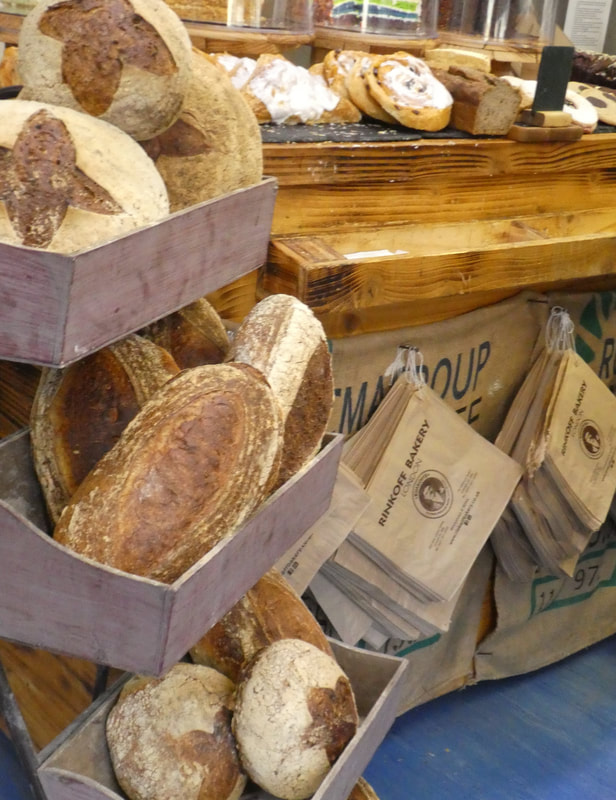
There's still a synagogue on Commercial Road - one of, I think, only three surviving in the East End where once were were 150 or more. The Congregation of Jacob dates back to 1903 though this building was consecrated only in 1921. It has an imposing frontage and by all accounts the interior is even more splendid - but this morning it was firmly shut. 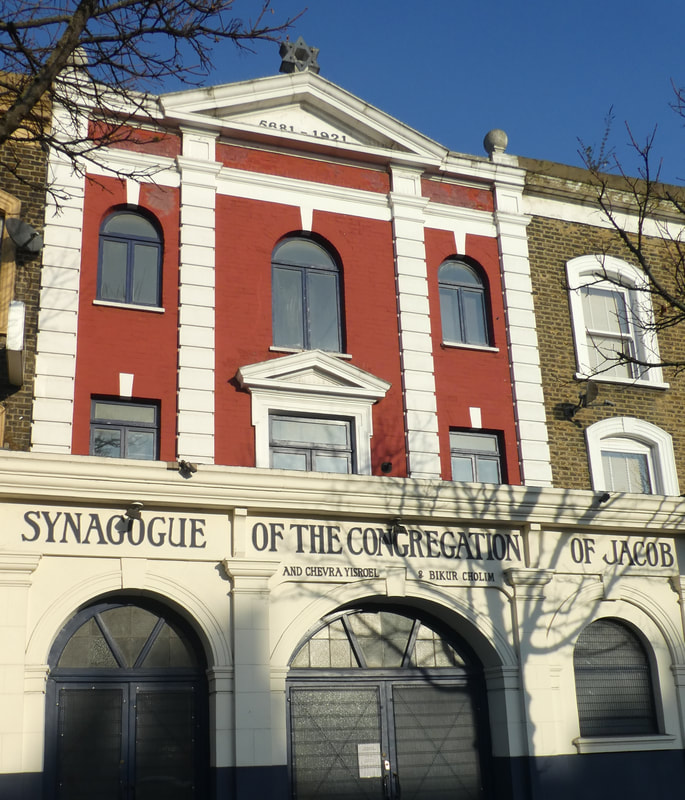 Jubilee Street runs from Commercial Road several hundred yards north to Whitechapel Road, and at the northern end is Rinkoff Bakeries. I'd never been there before. I'll certainly be going again. I had a coffee and a smoked salmon and cream cheese beigel. Excellent! And I brought back pastries for the family.
The place does good business. There are a few tables - both inside and out (and even on a nippy January morning most of the outside tables were taken) - and a steady stream of customers ... tourists, 'pilgrims', but mainly locals who want a take away cake, beigel or coffee. 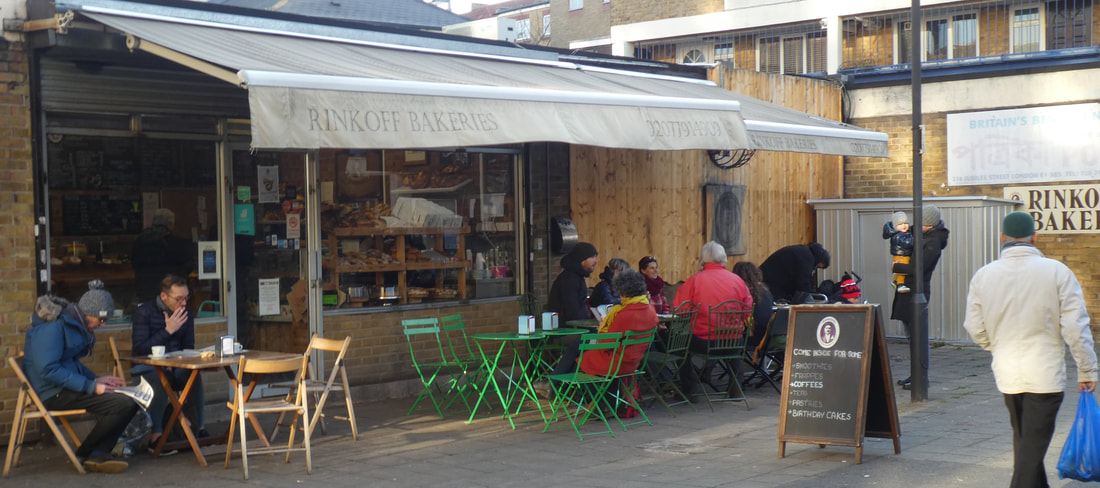
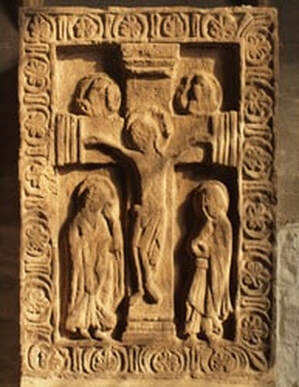
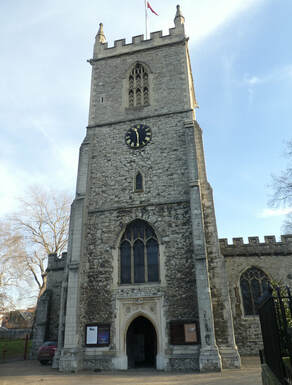
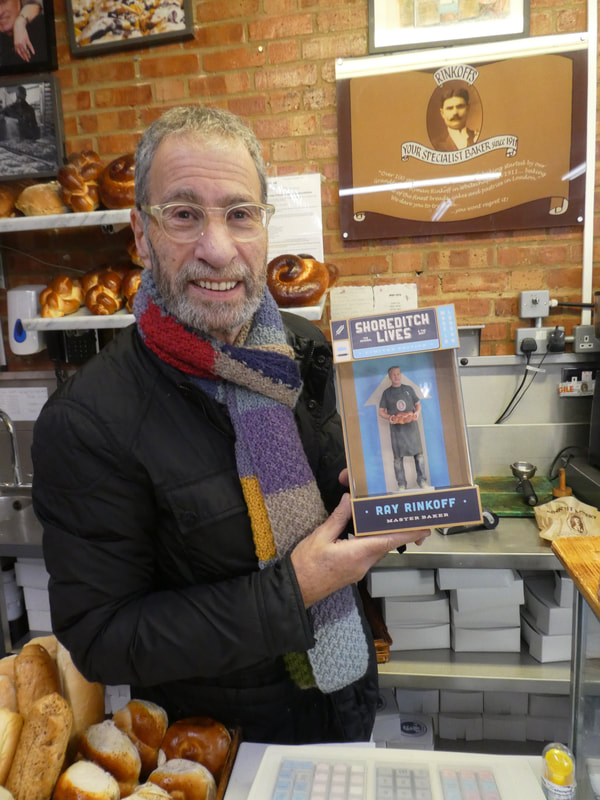 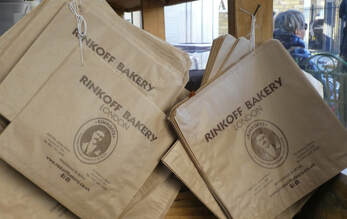 That's Ray above, with a model of himself in his days as a master baker. He trades a lot on tradition, but there's quality in the mix too. I had never heard of Rinkoffs until I started thinking about this walk - if you haven't been, do go! Jubilee Street has been knocked around a lot. There's only a short stretch towards the north end that looks a little as it would have done a century ago, when this area was overwhelmingly Jewish. 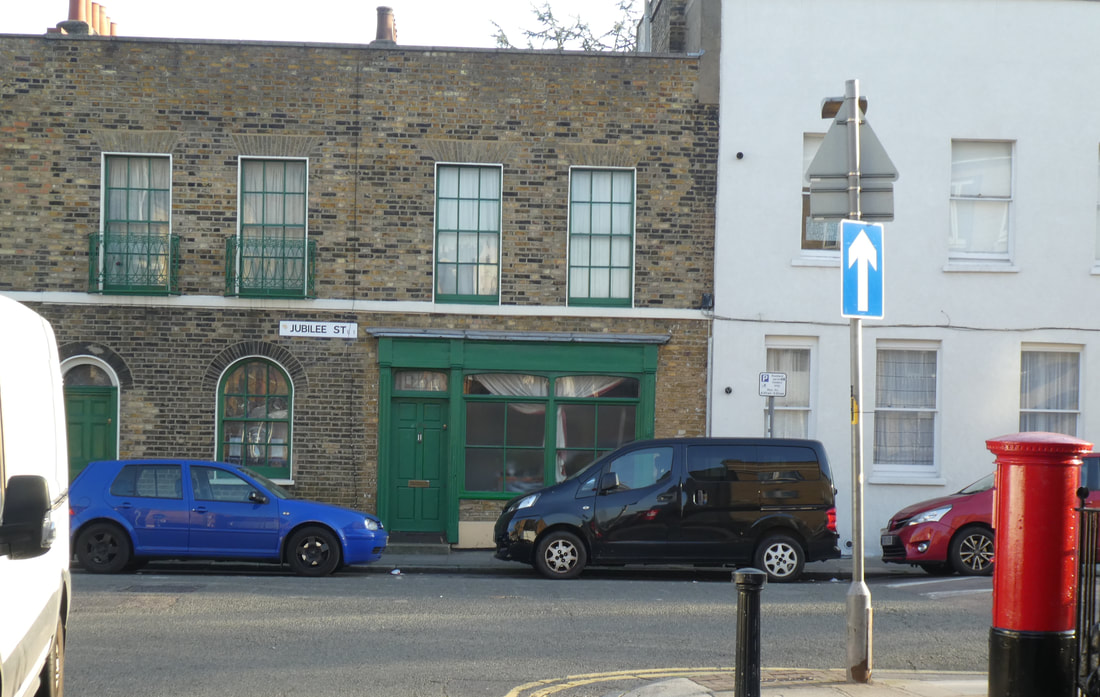 The street has a special place in the history of the East End - it was the epicentre of of the once formidable anarchist movement in this part of London. The Jubilee Street Club was established in 1906 and for eight years was both a social and educational centre. Rudolf Rocker was closely associated with the club, and such anarchist luminaries as Kropotkin and Malatesta spoke here. I once interviewed Nellie Dick (born Naomi Ploschansky) who as a young woman was active in the Jubilee Street Club and helped to organise a 'Modern School' here. There's a wonderful account of this and other London anarchist clubs, including a rather grainy photograph, in this research paper by the historian Jonathan Moses. It's worth a read. The old club building was demolished many decades ago and Jarman House, with its distinctive sky blue balconies, now stands on the site. 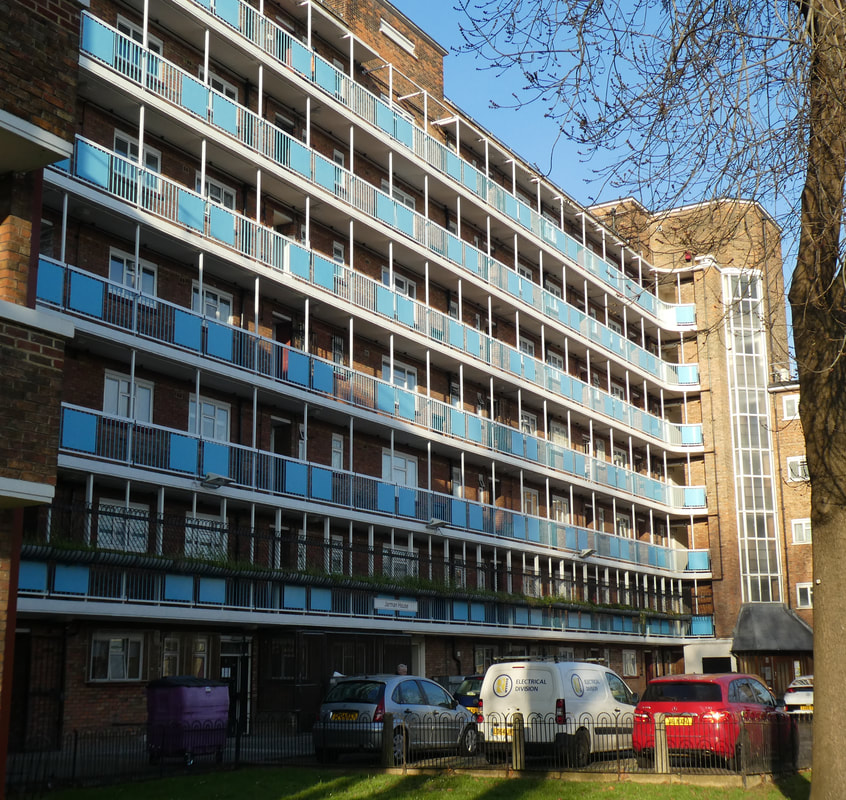 A little to the east lies Stepney Green, a wonderfully peaceful and historic spot. Rudolf Rocker and his family - including his younger son Fermin, an artist - once lived in a top floor flat here. By chance a few year ago, I had the opportunity to visit that same flat in Dunstan House when my friend Bill Schwarz was putting up here. Fermin's drawing of the building graced the cover of his memoir of his East End childhood, and you can see how little it has changed. 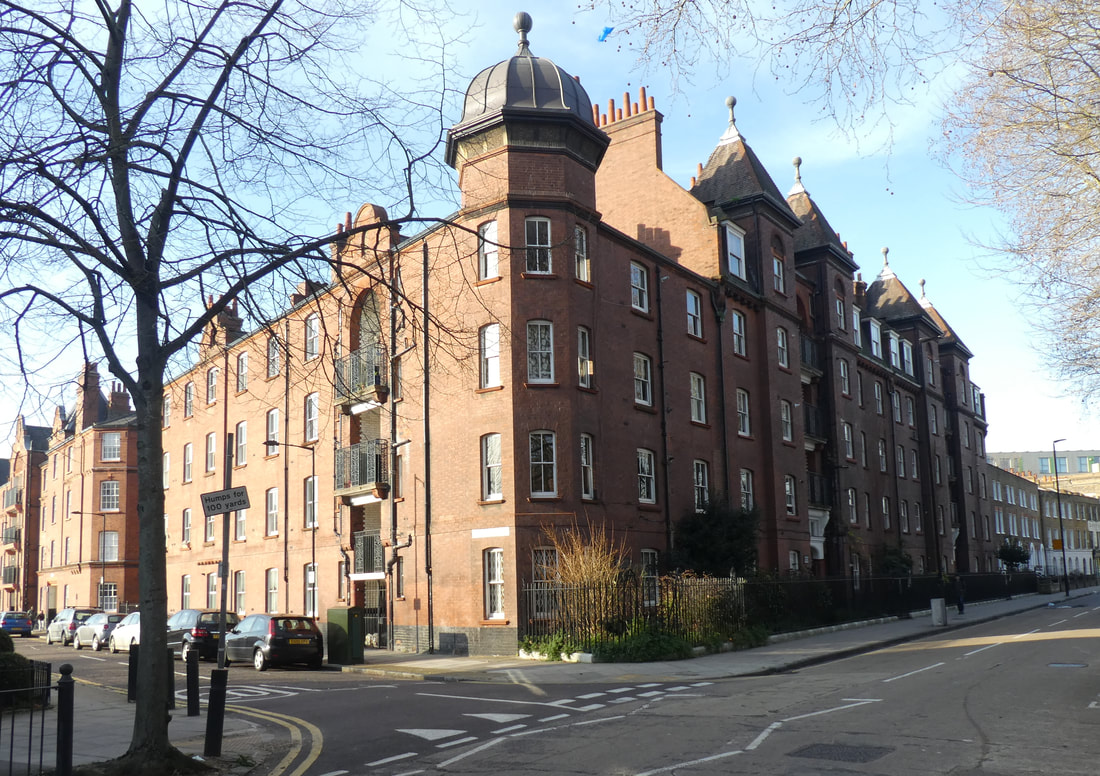 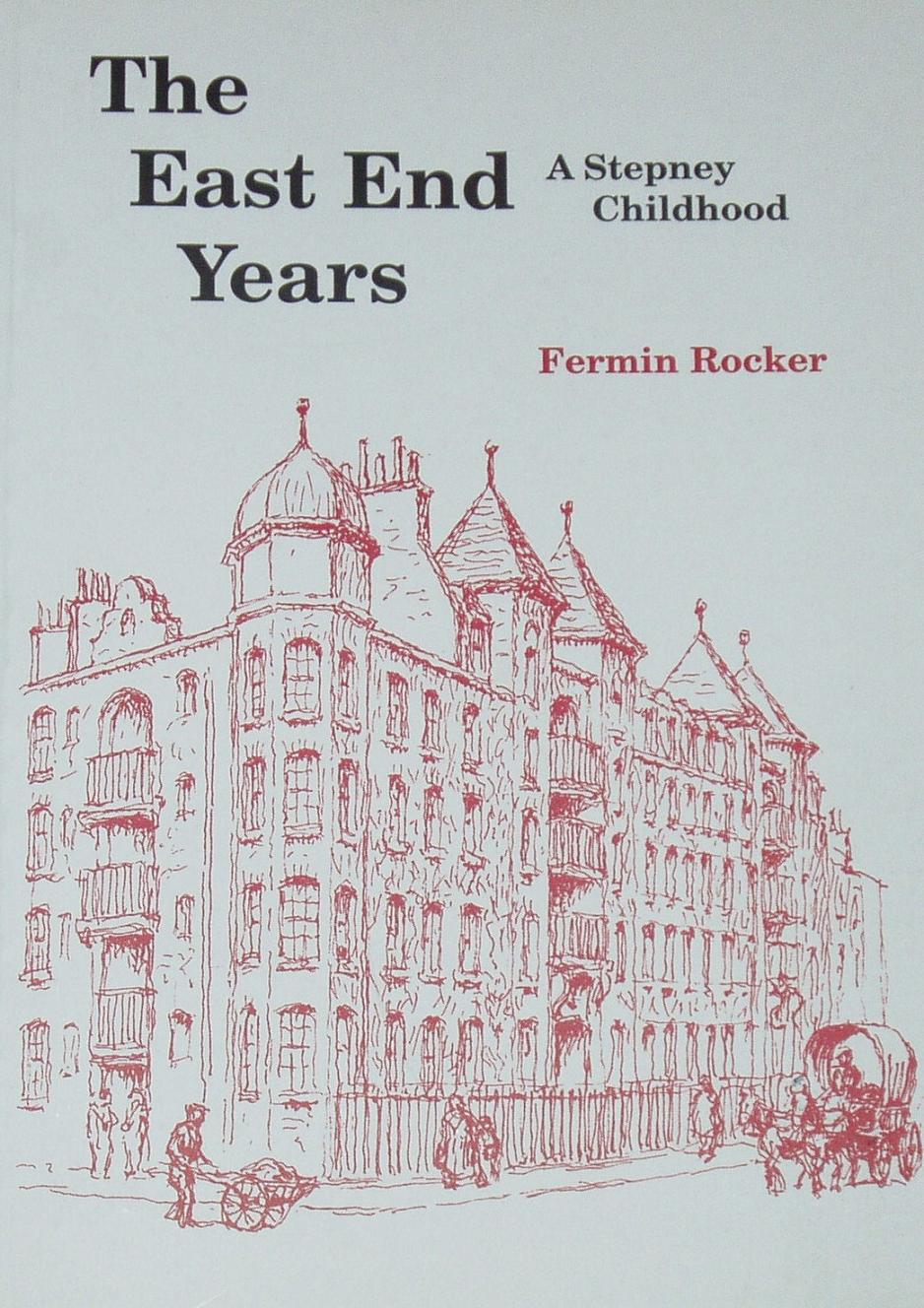 Just to the south is the church of St Dunstan and All Saints, Stepney - one of the few London churches which is genuinely medieval. In origin it is Anglo-Saxon and houses a tenth century rood, a representation of the crucifixion (the photo is from the church's website), which is believed to be a remnant of the church that St Dunstan himself may have founded here.
And as so often with old London churches, its memorials are testament to the human cost of Britain's Imperial ambitions. 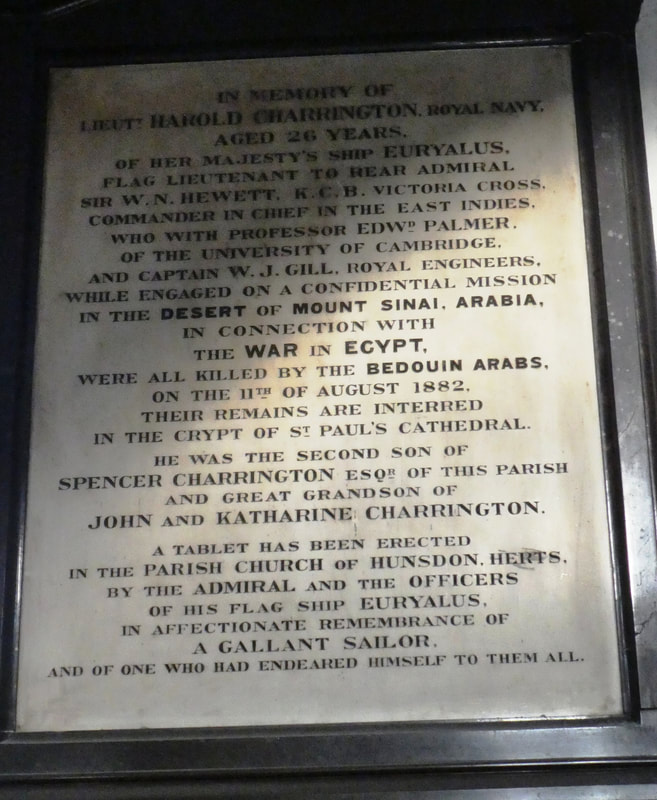 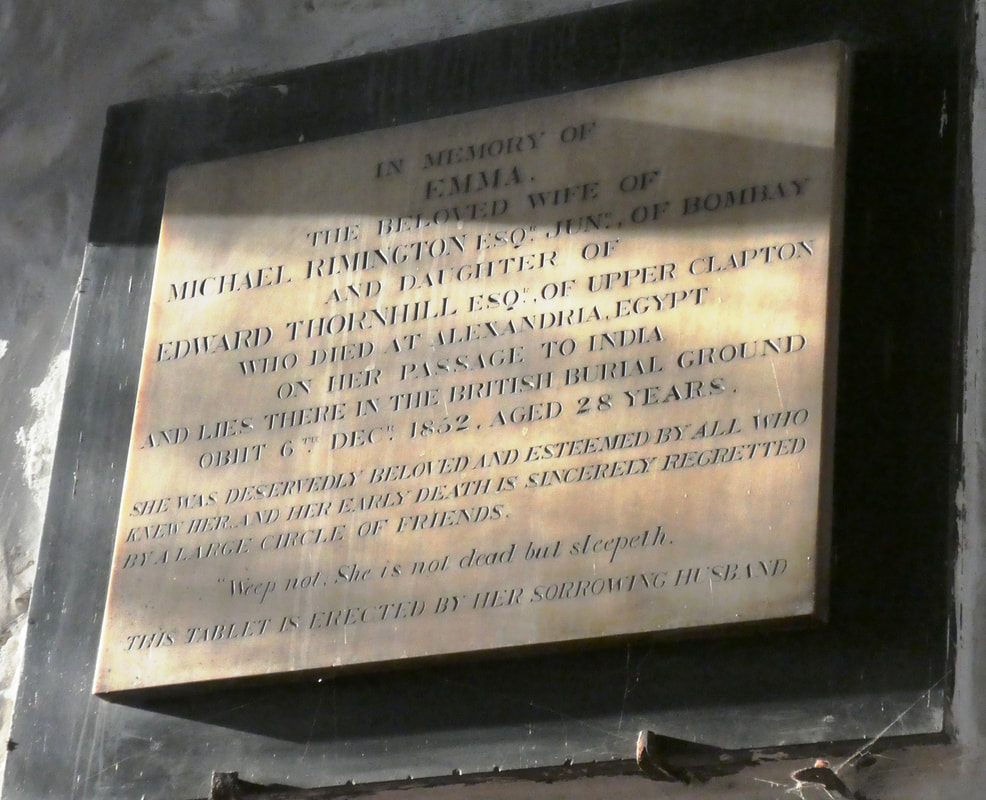 Just east of the church and its grounds, there's the sort of street that I just love - Durham Row, tiny post-war bungalows on one side, and (at a guess) mid-nineteenth century buildings on the other, several of which seem once to have been shops. And above one of these one-time shop windows, it's just possible to make out an inscription: E, Andrews, FLORIST. 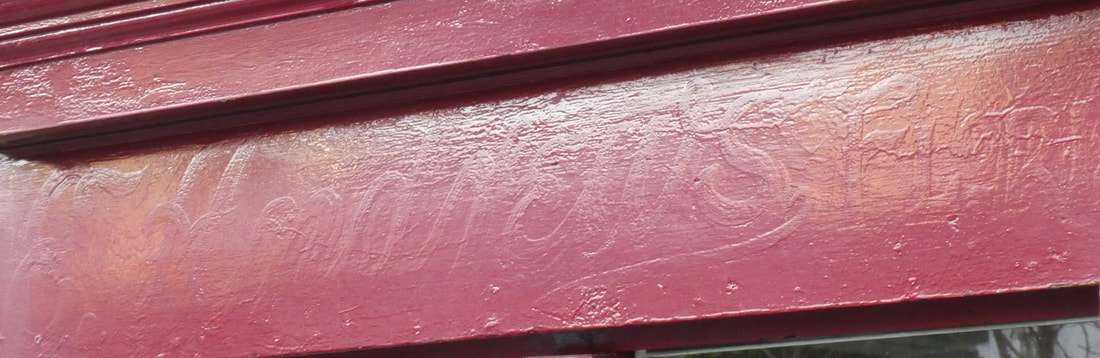 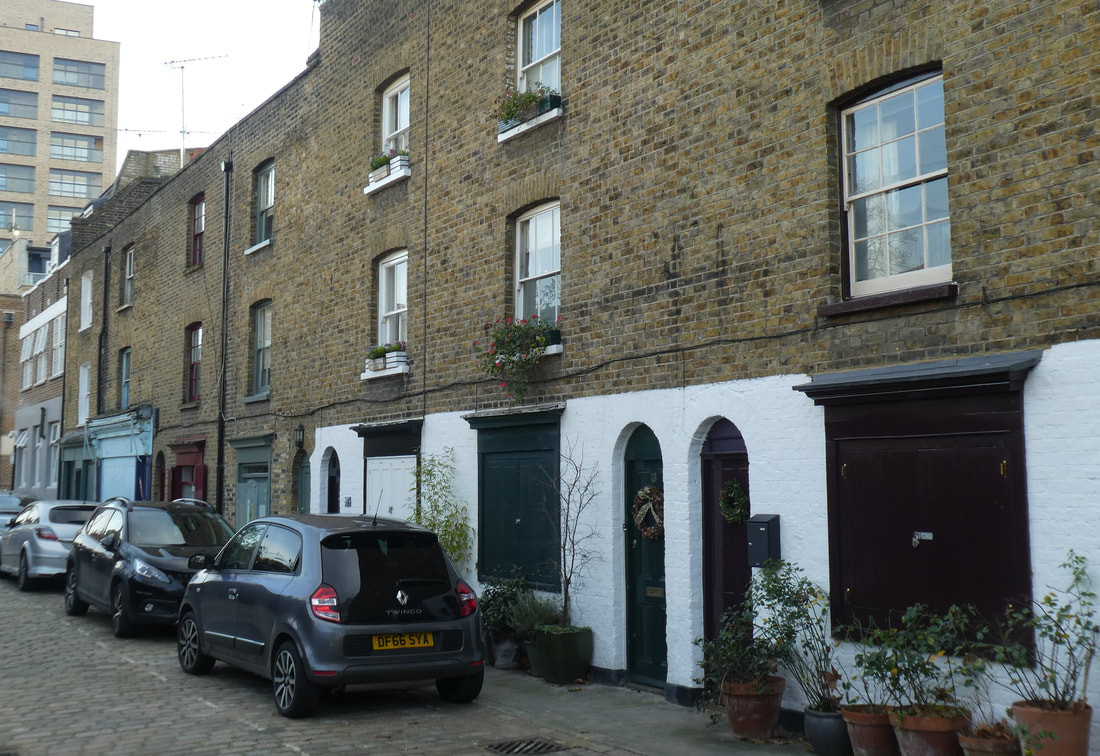 Another couple of hundred yards, and I reached the Regent's Canal - the end of my walk. Thanks for making the journey with me. And as I looked back, there was the City looming over the East End, looking almost enticing ... from a distance. 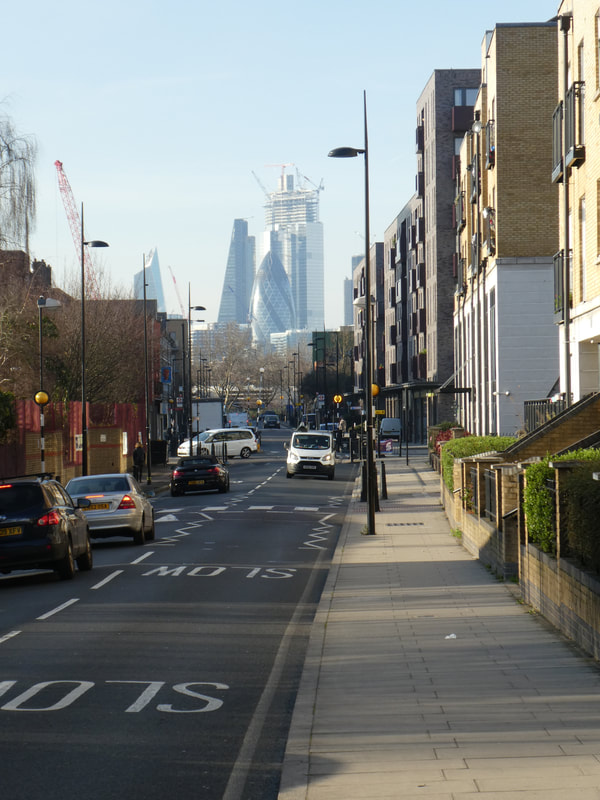 |
Andrew Whitehead's blogWelcome - read - comment - throw stones - pick up threads - and tell me how to do this better! Archives
April 2024
Categories
All
|
 RSS Feed